MAM
Yash Rohra flips the script at Represent

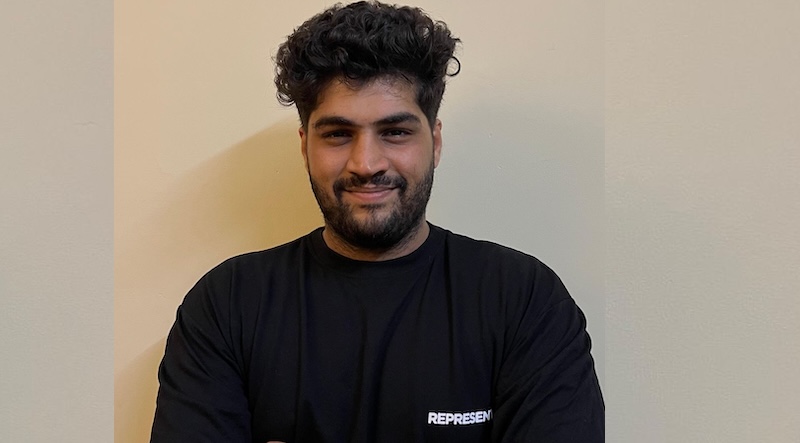
MUMBAI: The music marketing maven announced last month he has left Warner Music India to become head of marketing and streaming at Represent, the Mumbai-based artist management outfit that Forbes crowned a “top Indian music startup”. It is a strategic pivot that swaps Ed Sheeran and Dua Lipa for Anuv Jain and MC Stan—and international promotion for global export.
Rohra’s Warner stint was nothing short of spectacular. He helped shepherd Ed Sheeran’s Sapphire featuring Arijit Singh to number one, watched Rosé and Bruno Mars’s APT climb the charts, and oversaw Coldplay’s Indian invasion, which netted over 200m streams across all platforms in three months—one of the biggest jumps for an international act visiting India. He also championed Taambdi Chaamdi, the first proper Marathi electronic hit, taking it from viral moment to certified superhit.
The work brought him close to the machinery of global music promotion: collaborations with Diljit Dosanjh and Karan Aujla, partnerships with streaming platforms, and the arcane art of turning international releases into Indian chart-toppers. Rohra name-checks a dozen colleagues who “pushed, trusted, and shaped” his thinking on marketing and music. It reads like a Warner Music India roll call.

But Represent offered something Warner could not: the chance to reverse-engineer the playbook. Instead of importing hits, Rohra now exports them. His new roster includes Jonita Gandhi, Anuv Jain, MC Stan, Yashraj, Lost Stories and Jay Dhir—a motley crew of independent Indian artists who have built followings without major label backing. Represent, led by Aayushman Sinha (another Forbes-anointed “new age entrepreneur”), manages over 20 artists and has racked up more than 1,000 global brand collaborations. The company also dabbles in creator management, consulting, strategic partnerships and investments in direct-to-consumer businesses.
Rohra’s career arc traces the evolution of India’s music industry. He started as a music programmer and curator at BookMyShow in 2017, creating 1,200-plus international playlists and analysing user listening patterns to boost ticket sales for concerts and films. A stint in digital marketing at Mindstorm followed, managing accounts for Bath & Body Works India and Parachute’s Africa and Russia operations. Then came Hoopr, India’s first music licensing platform, where he spent two years as senior manager for music and content acquisition, building a library of 5,000-plus tracks with over 300 artists and launching “Sing To Sync”, India’s first toplining contest.
Warner was the natural next step—a chance to work with the biggest names in the business and learn how global music promotion actually functions. Now comes the hard part: applying those lessons to Indian artists trying to break international markets. It is one thing to promote Coldplay in India. Quite another to promote MC Stan in Los Angeles.
If Rohra can pull it off, he will have cracked the code that has eluded most Indian independent labels. If not, well, at least he got to work with Ed Sheeran first. The man knows his way around a chart.





Brands
33 per cent of women believe the salary scale is rigged: Naukri report
Voices @ Work study finds rising calls for equal pay audits and lingering bias
MUMBAI: Progress may be visible in India’s workplaces, but many women still feel the need to tread carefully. A new report by Naukri reveals that one in two women hesitate to disclose marriage or maternity plans during job interviews, worried that such information could influence hiring decisions.
The findings come from the second edition of Naukri’s annual Voices @ Work International Women’s Day report, titled “What Women Professionals Want.” Drawing insights from more than 50,000 women across over 50 industries, the survey sheds light on evolving workplace aspirations alongside the biases that continue to hold women back.
One of the report’s most striking insights is the growing demand for equal pay audits. The share of women calling for regular pay parity checks has climbed to 27 per cent this year, up from 19 per cent a year ago. The demand now stands alongside menstrual leave as the most sought after workplace policy.
Interestingly, the call for pay transparency grows louder higher up the income ladder. Nearly half of women earning between Rs 50 lakh and Rs 1 crore annually say equal pay audits are a priority, suggesting that pay gaps become more visible as women move up the career ladder.
At the same time, confidence and ambition appear to be rising. About 83 per cent of women say they feel encouraged to pursue leadership roles, a significant jump from 66 per cent last year. Cities in southern India appear particularly supportive, with Hyderabad leading the way as 86 per cent of respondents there reported encouragement to step into leadership positions. The education sector recorded the highest sense of encouragement at 87 per cent.
Yet the report also highlights a growing trust deficit around pay equity. Nearly one in three women, or 33 per cent, say they do not believe men and women are paid equally at their workplace. That figure has risen from 25 per cent last year, pointing to widening perceptions of disparity as careers progress.
Bias in hiring and promotions continues to be the biggest hurdle. About 42 per cent of respondents say workplace bias is the main challenge for women from diverse backgrounds. The concern is consistent across major metros, with Chennai and Delhi NCR reporting similar levels.
Reluctance to discuss personal milestones during hiring processes is also widespread. While 34 per cent overall said they hesitate to share marriage or maternity plans in interviews, the anxiety increases with experience. Among professionals with 10 to 15 years of work experience, the figure rises to 40 per cent.
Info Edge group CMO Sumeet Singh, said the data reflects both progress and unfinished work. “Behind every data point in this report is a woman who is ambitious. The fact that 83 per cent feel encouraged to lead is something to celebrate. However, the fact that one in two still hide their marriage or maternity plans in interviews tells us the work is far from done. As India’s leading career platform, it felt not just important but necessary for us to shine a light on these gaps through the second edition of our report,” he said.
The report suggests that while ambition among women professionals is growing, structural changes around pay transparency, fair hiring and supportive policies will be key if workplaces hope to keep pace.