Brands
WOW Skin Science unveils Color Cupid

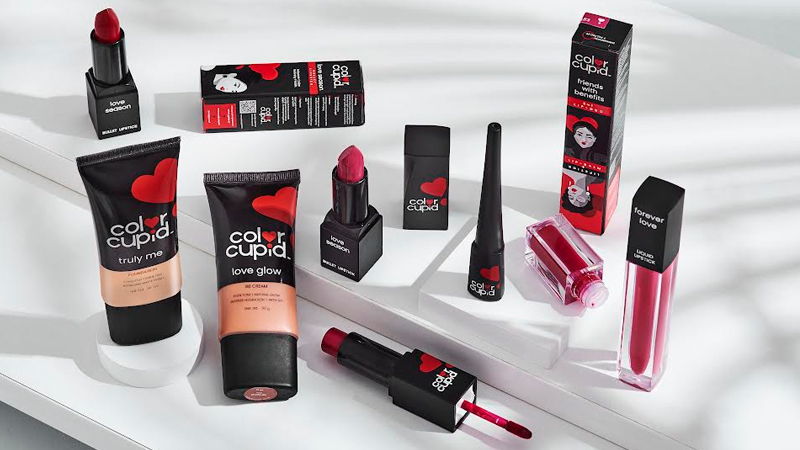
Mumbai: WOW Skin Science, a leading beauty and wellness brand renowned for its best-selling skin and hair care products, ventures into the cosmetics category with the launch of their new brand ‘Color Cupid.’ This innovative and multi-functional makeup brand, specially designed and curated for Gen-Z and Millennial audiences, celebrates the philosophy “Love every shade of me”. Color Cupid aims to empower users to embrace every aspect of their identity, encouraging self-expression and individuality beyond conventional beauty standards.
Given the changing consumption habits of modern Indian consumers, WOW Skin Science recognized immense potential for accessible makeup for GenZ consumers. Having understood GenZ’s desire for experimentation & self-discovery, they collaborated with leading makeup artists to create a range of differentiated, high-quality cosmetics that are versatile and accessible, supporting GenZ in their quest for self-expression.
Distinguishing itself in the competitive market, Color Cupid encourages individuals to revel in their unique beauty beyond conventional standards. Launching with an extensive range of nearly 40 SKUs across face, eyes, and lips categories, Color Cupid offers a comprehensive range of products. The eye portfolio includes Kajal and Eyeliner, while the lip portfolio features Bullet Lipstick, Liquid Lipstick, and India’s first Lip Duo – a unique combination of liquid lipstick with tinted lip balm. The face portfolio comprises foundation, primer, BB cream, and a makeup remover, providing versatile, high-performing options.

“With this launch, we aim to revolutionize the beauty industry by bridging the gap between your inner world and outer expression, helping you find the look that reflects who you are, without seeking validation or judgment,” expressed WOW Skin Science co-founder Manish Chowdhary. “We believe makeup should celebrate every facet of your identity, empowering you to love every shade of yourself. Our goal is to offer innovative, user-friendly products that enhance your natural beauty while simplifying your makeup routine. Color Cupid supports and champions the individuality of our consumers, encouraging them to embrace their unique beauty stories with confidence and joy.”
WOW Skin Science, renowned for its ‘Activated Naturals’ beauty and wellness products, continues to innovate and expand its offerings with the launch of Color Cupid. Color Cupid’s products will be available both online, through platforms like Amazon India and offline, spanning over 300 beauty advisor-led stores and 1000 plus makeup stores. The brand will focus on key regions such as East India, Delhi NCR, Punjab, Lucknow, Mumbai, Pune, and Vadodara. By establishing a robust presence across these targeted areas, the brand aims to ensure widespread availability and effectively propagate its brand philosophy ‘Love every shade of me.’




Brands
IndiGo names William Walsh CEO
Former IATA chief to take charge in August after Elbers exit, Bhatia steers interim

India’s biggest airline has moved fast and gone global. InterGlobe Aviation, which operates IndiGo, has tapped aviation heavyweight William Walsh as chief executive officer, subject to regulatory approvals, marking a sharp pivot as the carrier eyes its next burst of expansion.
Walsh, currently director general at the International Air Transport Association, will step down on July 31, 2026, and is expected to take charge by August 3. The appointment comes barely three weeks after Pieter Elbers exited the corner office, with Rahul Bhatia holding the fort in the interim.
The choice signals intent. Walsh brings decades of cockpit-to-boardroom experience, having led British Airways and later International Airlines Group, the parent of Aer Lingus, Iberia and Vueling. His tenure across carriers has been defined by hard resets, restructurings and cross-border consolidation—skills IndiGo may need as competition intensifies and scale becomes decisive.
Vikram Singh Mehta, chairman and non-executive independent director of IndiGo, said Walsh’s experience in managing large-scale airline operations and navigating complex market dynamics makes him well-suited to lead IndiGo in an increasingly competitive global aviation environment, adding that the appointment marks a new chapter as the airline scales in one of the world’s fastest-growing markets.
Rahul Bhatia said Walsh’s global perspective, operational expertise and customer-focused approach would be critical as IndiGo enters its next phase of expansion.
Walsh, widely regarded as one of the industry’s most influential figures, will oversee overall management and strategic direction, with a mandate spanning operational performance, network expansion, commercial strategy and customer experience. He is expected to work closely with the board and leadership team to sharpen IndiGo’s growth trajectory.
Walsh said IndiGo has a strong foundation and is well-positioned to capitalise on the evolving aviation landscape, adding that he looks forward to fostering a culture of excellence, innovation and sustainable value creation across the organisation.
A new captain, a bigger runway—and a market that rewards scale. IndiGo is lining up for its next take-off.









