MAM
WorldSpace brings ‘Brit Masala’ to Hyd. B’lore

BANGALORE: With a view to giving their audience a first-hand experience with some of their music programming ‘live’, WorldSpace Satellite Radio (WSSR) today announced concerts by Rishi Rich, Juggy D, Jay Sean, Veronica and Bombay Rockers; all artists of Indian origin, who have carved out a niche for themselves in the modern international music scene and have taken the drum beats and melodies of Indian music to all corners of the globe, under a monicker ‘Brit Masala’ at Hyderabad and Bangalore.
The other big names involved with the event are: (a) Art Mantram, who in a a 3-day event plan to showcase artisans music and culture named ‘Art Village’, (b) T Venkat Vardhnas DNA Networks who are the event producers (c) Pepsi (d) Nokia (e) Hutch (f) MTV-who will telecast a recording of the concert at a later date.

‘Brit Masala’ will of course be the culmination and the highlight of ‘Art Village’.
T Venkat Vardhan said that the TVC’s and the campaign about the event would commence tomorrow onwards, and he is confident of roping in 10-15,000 persons at each venue from as far as Chennai as an audience, who will pay Rs.300/- to Rs.500/- per head for the show. Tickets will be sold at WorldSpace lounges and Planet M outlets.




Brands
Wellbeing Nutrition ropes in Malavika Mohanan as brand ambassador
Actor fronts Marine Collagen and Skin Fuel Glutathione portfolio.
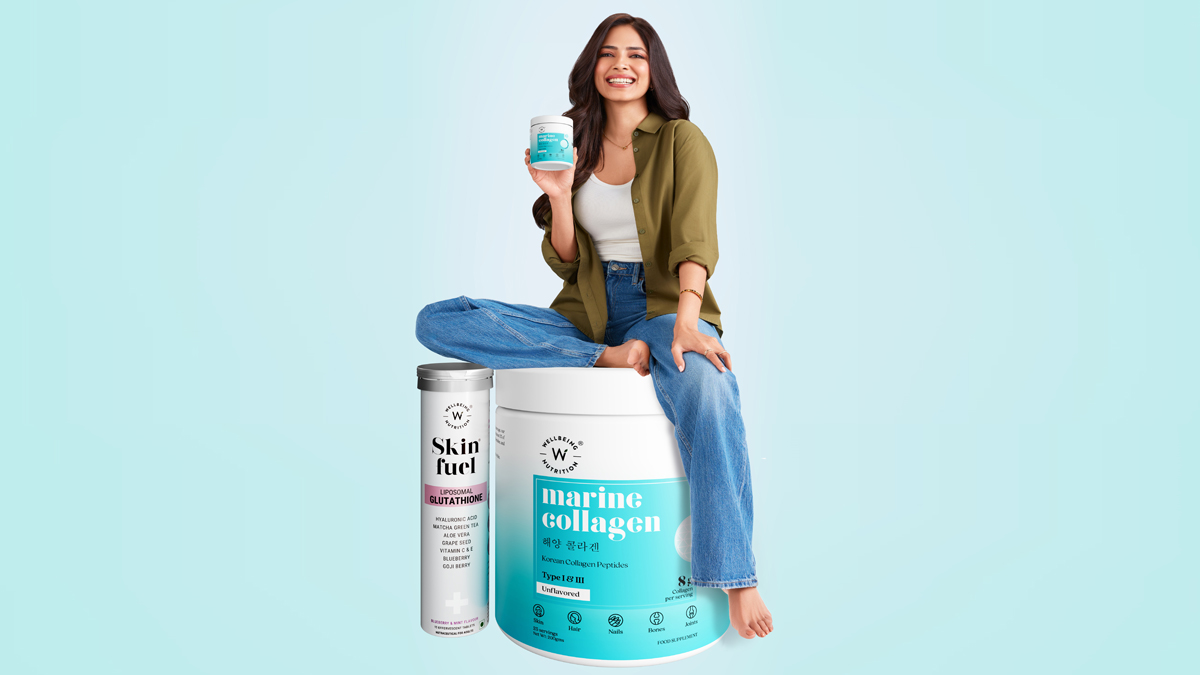
MUMBAI: Malavika Mohanan just became the face of inner glow because when your skincare starts in the bottle instead of the jar, even beauty gets a glow-up from the inside out. Wellbeing Nutrition has appointed acclaimed actor Malavika Mohanan as brand ambassador for its premium Korean Marine Collagen and Skin Fuel Glutathione range. The move signals a deliberate shift in the Indian ingestible beauty segment from surface-level routines to foundation-level nutrition that supports skin health from within.
The campaign positions collagen as the essential “beauty protein” that maintains elasticity and firmness, with daily supplementation reframed as a consistent ritual rather than a quick cosmetic fix. It aims to simplify the science behind collagen and build awareness around long-term skin nourishment.
Wellbeing Nutrition co-founder Saurabh Kapoor said, “In India, collagen is still largely viewed through a cosmetic lens, associated with glow and quick fixes. In reality, it is the primary structural protein of the skin, and we begin losing nearly 1 per cent of it every year in the late 20s. Yet a significant number of consumers remain unaware of its foundational role in long-term skin health. Our goal is to shift the conversation from fixing visible signs to feeding the foundation.”
Malavika Mohanan added, “For me, skincare has always been about consistency and taking care of myself in ways that go beyond just what I apply on my skin. I love the idea of supporting skin health from within, and that’s what drew me to Wellbeing Nutrition’s Marine Collagen and Skin Fuel Gluta.”
The Korean Marine Collagen uses nano-hydrolyzed peptides for better bioavailability, while Skin Fuel Glutathione complements the inside-out approach. The portfolio targets structure, brightness and resilience over time, backed by clinical research.
The ambassador announcement kicks off a broader collagen-focused roadmap for the brand, with planned innovations across formats and functional blends.
In an era where beauty routines are getting deeper than skin, Wellbeing Nutrition isn’t just selling supplements, it’s selling the quiet power of feeding your glow from the inside, one daily scoop at a time.







