Brands
Will boycott of Chinese apps unleash new possibilities for local ones?

NEW DELHI: Chinese apps such as TikTok, Helo, Zoom, Bigo, Shareit, etc., are widely used in India, some even enjoying a monopoly. But the ongoing standoff between India and China is hitting at the sentiments of Indian users.
Recently, Indian social reformer, Sonam Wangchuk, posted a video message on YouTube urging people to invest in ‘Made in India’ products and boycott Chinese products and mobile applications. It became a hit on
Twitter too, and in a short span, #boycottchineseapps #boycottchineseproducts started trending on social media.
The episode has resulted in a surge in downloads of homegrown apps like Roposo, Bolo Indya, Say Namaste, Mitro, and many others.

Fulcro founder and MD Sabyasachi Mitter believes, “The anti-China sentiment is very high at this point and many consumers are uninstalling Chinese apps like TikTok. However, this is more likely a temporary phenomenon and most users will again use these apps once the political tensions ease. Apps are valuable for both its functionality as well as community. Local apps need not just build great user experience but also focus on community growth. We must
remember that Telegram is a great messenger platform but has no user traction in India.”
In the last two years, Chinese apps have been dominating the Indian app market and they have risen from 18 to around 45 in the top apps category on Google play store.
Roposo has over 50 million users while Mitro is giving a tough competition to Tik Tok with over five million downloads. The recent growth in local apps has not only been about the number of downloads but also time spent.
Will advertisers be keen to invest in these apps despite their lower popularity?
Sabyasachi replies, “A large part of display advertising today is through SSPs and DSPS and as the apps get eyeballs their inventory will be targetable through programmatic. Brands are more focused on buying audiences and not choosing specific apps or portals to advertise on.”
Independent communications and marketing consultant Karthik Srinivasan, points out that advertisers usually look at the largest presence of their target audiences. “If the new made-in-India apps can convince advertisers that they do have a large pool of relevant target audiences, that could work. But these platforms are very new and are only growing the user base now. Compared to them, the established platforms have many more users that have been gained over the years. So, advertisers would naturally prefer a larger user base for their marketing.”
iProspect India AVP – digital buying and planning Mihir Mehta says, “Advertisers will always look for the next best app or platform to advertise. So, if some of these apps are boycotted, the next best app in terms of reach will excite them whether it is Indian or not.”
Makani Creatives MD and co-founder Sameer Makani opines that it is time to go for local and prefer local over foreign. “Advertisers can find alternatives to advertise on these apps as they can be cheaper in the market compared to existing social media giants. The Vocal for Local initiative is giving an opportunity for Indian apps and businesses to market-creating better possibilities,” he says.
However, the apps need to work on some areas if the want to retain eyeballs.
Mehta says, “Focus on awareness and discoverability of their app is important. Also, the attention span of users these days is very low. So, local apps should use this opportunity to better the product to be able to retain their customers.”







Brands
Faber-Castell India appoints Sunaina Haldar as director – marketing
With stints at Tata, SleepyCat and ADF Foods under her belt, Haldar is primed to redraw Faber-Castell’s brand story
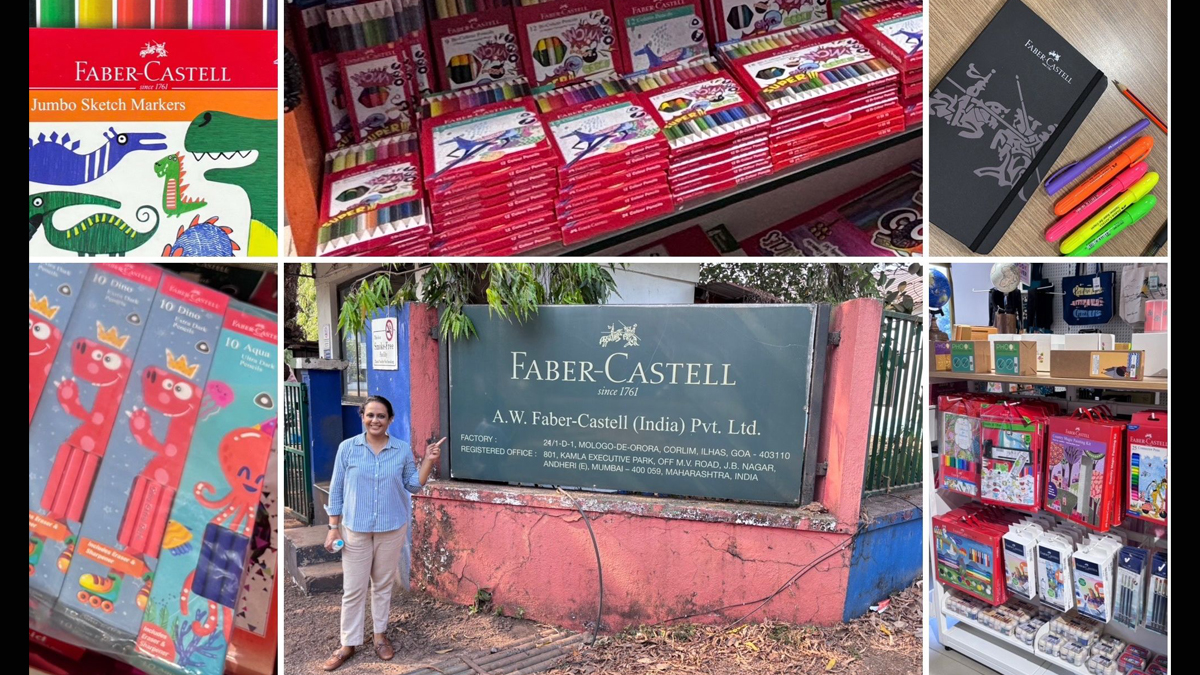
MUMBAI: Faber-Castell India has poached Sunaina Haldar from ADF Foods, appointing her director – marketing as the German stationery brand looks to muscle up in a category that is rapidly reinventing itself around creativity and self-expression.
Haldar hit the ground running. “My first couple of weeks have been incredibly energising, understanding consumers, visiting markets, engaging with retailers and immersing myself into the world of Faber-Castell Group,” she said.
She arrives with considerable firepower. At ADF Foods, Haldar ran marketing across India and international markets for a portfolio spanning Ashoka, Aeroplane, Camel and ADF Soul. Before that, she was vice-president – marketing at direct-to-consumer mattress brand SleepyCat, where she helmed brand, content and performance marketing. Her résumé also includes a stint leading marketing, new product development and CRM for Tata SmartFoodz at Tata Consumer Products, no small proving ground.
Between corporate roles, Haldar also operated as a fractional CMO for early-stage startups, building marketing strategy and operational structures from scratch, a signal that she knows how to move fast with limited resources.
With 18 years straddling FMCG, D2C and the startup world, Haldar now takes the reins at a brand that has long owned the classroom but is clearly hungry for the living room. In a stationery market where the pencil has become a lifestyle statement, Faber-Castell has picked someone who knows exactly how to sell that story.







