Digital Agencies
White Rivers Media celebrates 7 years of digital

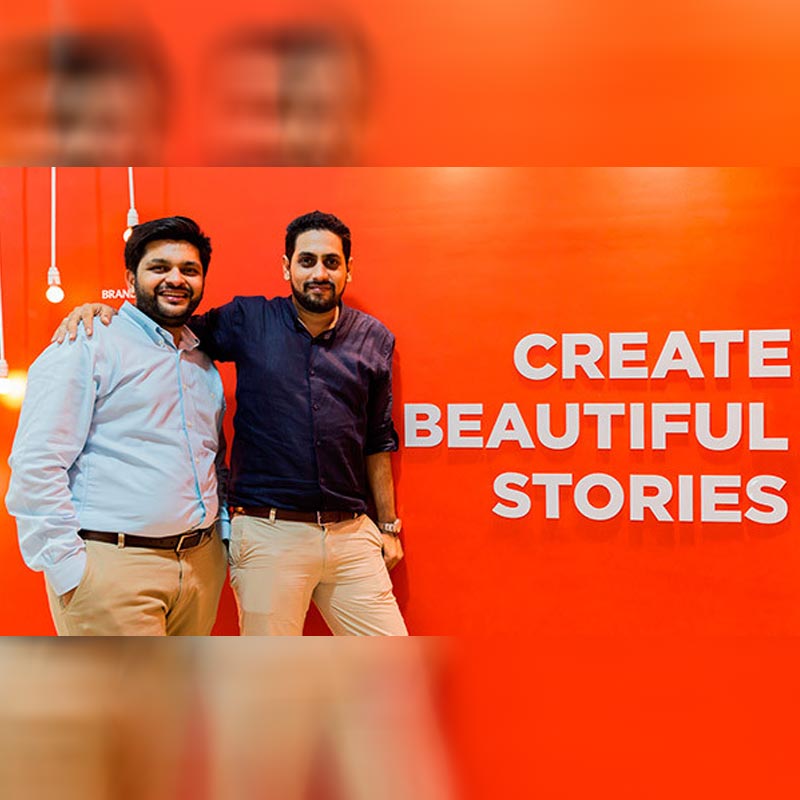
MUMBAI: Crossing another milestone on an exciting journey through the digital world, White Rivers Media celebrated its seventh anniversary on 7 August.
In the last year, the Mumbai- and Gurugram-based agency surpassed the 100-employee mark, through consistent on boarding of creative and management talent at every level, with a special focus on strong leadership at the top. This expansion has been facilitated by several new accounts across entertainment, finance, lifestyle, and B2B categories, further diversifying the agency’s portfolio.
White Rivers Media co founder and chief executive officer Shrenik Gandhi said, “For me, WRM has always been the opportunity to create an avant-garde organisation that prospers due to a mix of creative, media, and technology professionals. I foresee WRM as an agency that retains its start-up mentality of hunger and aggression – after all, that’s what has driven us to where we are now, and that’s what will we keep us on the path of success through continuous improvement. It is with this insatiable mindset that we launched our certified internal training programme, WRM ALPS, so that we continually feed the ambition and professional desire of the WRM family.”

White Rivers Media co founder and right brain Mitesh Kothari said, “7 marks our capability to stay relevant for our clients in a dynamic digital world. But 7 also marks our journey to stay updated with the latest digital marketing methods practiced around the world. So what really makes me happy about the WRM journey is our intention and indeed ability to leverage new tech with ideas that aren’t just creative, but also compelling.”
He added, “From MarTech innovations and alternate media inventory to programmatic advertising, we not only work closely with brands to see how they can benefit from the latest tech, but also with platforms to explore native innovations. There is a synergy that is born out of this endeavour, and that’s what facilitates true digital transformation for our clients’ brands. Looking forward, we’re focussing on leveraging voice, video, and vernacular, to blur the lines between a brand campaign and a user experience.”
In keeping with anniversary tradition, WRM also released a free eBook titled “Festive Marketing in 2019: The Ultimate Checklist”. It highlights the newest mechanisms in digital marketing that brands should incorporate in their festive campaigns, as well as practices that are still in vogue due to their continued effectiveness. Apart from being educational, the eBook also contains the views of industry stalwarts like Khyati Madaan, head of digital marketing at Red Chillies Entertainment, Divya Dixit, senior VP & head marketing, ALTBalaji & Sujoy Roy Bardhan, marketing and OAP head – Sony YAY!
The free eBook can be downloaded from: http://bit.ly/festiveebook
With awards, new clients, and fresh talent, White Rivers Media have all the tools they need to fulfill their ambition of charting an even more aggressive growth trajectory. It’s safe to expect some exciting innovations coming our way from this new chapter in the WRM story!




BENGALURU: For years, creative teams have learned to live with ambiguity. Vague comments, last-minute changes, feedback that arrives without context, clarity, or conviction. It became part of the job – something teams worked around rather than getting it solved.
But as we head into 2026, that tolerance is wearing thin.
Creative work today moves faster, scales wider, and involves more stakeholders than before. Teams are producing more content across more formats, often with distributed collaborators and tighter timelines. In this environment, guesswork is no longer a harmless inconvenience. It’s a cost – to time, to budgets, and to creative mindspace.
The real problem isn’t feedback, it’s how it’s given
Most creative professionals you see today will tell you they’re not against feedback. In fact, they rely on it. Good feedback sharpens ideas, strengthens execution, and pushes work forward. The problem is ‘unclear’ feedback. When someone says “this doesn’t feel right” without context, they aren’t just revising – they’re basically decoding. They’re guessing what the problem might be, trying different directions, and burning time in the process. Multiply that by a few stakeholders and a few rounds, and suddenly days disappear.
In 2026, when teams are expected to deliver faster without compromising quality, interpretation is a luxury most can’t afford.
Scale has changed rverything
Creative projects used to be smaller and simpler. A designer, a manager, maybe one client contact. Feedback loops were short, even if they weren’t perfect.
Today, the same project might involve internal marketing teams, agencies, freelancers, brand reviewers, and regional teams. Everyone has a say. Everyone leaves comments. And often, those comments don’t agree. More people reviewing work means alignment matters more than ever. Clear feedback isn’t just about being nice to creative teams, it’s about keeping projects moving when complexity increases.
Guesswork quietly wears teams down
One of the less talked-about impacts of unclear feedback is what it does to people.
When feedback is vague or contradictory, creatives second-guess their decisions. They hesitate. They overwork. They keep extra time buffers “just in case.” Over time, confidence drops. Ownership fades. Work becomes safer, not stronger. Creative energy gets spent on managing uncertainty instead of pushing ideas forward. And in an industry already grappling with burnout, unclear feedback adds unnecessary mental load.
Actionable feedback is a shared skill
Clear feedback doesn’t mean controlling creative decisions or dictating every detail. It means being specific enough that someone knows what to do next.
Actionable feedback answers three basic questions:
What exactly needs attention?
Why does it matter?
What outcome are we aiming for?
This applies whether you’re reviewing a video frame, a design layout, or a copy draft. The clearer the feedback, the fewer follow-ups it creates. In 2026, teams that treat feedback as a skill and not an afterthought, will move faster with less friction.
Tools shape behaviour (whether we admit it or not)
The way feedback is delivered is often dictated by the tools teams use. Comments buried in long email threads, messages split across chat apps, or notes detached from the actual work all contribute to confusion.
When feedback lives outside the work, context often gets lost. When it’s disconnected from versions and timelines, decisions get questioned. When it’s scattered, accountability disappears. More teams are starting to realise that feedback problems aren’t just communication issues, they’re workflow issues. How work moves between people matters just as much as the work itself.
From Opinions To Alignment
One of the biggest shifts happening in creative teams is a move away from purely opinion-driven feedback. Instead of “I like this” or “I don’t,” teams are asking better questions:
● Does this meet the brief?
● Does this solve the problem?
● Does this align with the goal?
This change reduces unnecessary back-and-forth and helps feedback feel less personal and more productive. It also makes decisions easier to explain and defend. As creative work becomes more strategic, feedback has to support that shift.
2026 Is About Fewer Loops, Not Faster Loops
There’s a misconception that speed means moving through feedback cycles faster. In reality, the most creative teams aren’t just accelerating loops, they’re reducing them. Clear, actionable feedback upfront leads to fewer revisions later. Clear approval stages prevent last-minute surprises. Clear decisions stop work from circling endlessly.
In 2026, efficiency won’t come from working harder or longer. It will come from designing workflows that respect creative time and attention.
Ending guesswork is a mindset change
Ultimately, ending creative guesswork isn’t just about better tools or processes. It’s about mindset. It’s about recognising that clarity is an act of respect – for the work, for the people doing it, for the time invested and for the mindspace used. It’s about moving from “figure it out” to “here’s what we’re aiming for.”
Creative teams that embrace this shift will find themselves not only delivering faster, but also enjoying the process more. And in an industry built on imagination, that might be the most valuable outcome of all.






