MAM
What People Really Notice During First Impressions (Hint: It’s Not What You Think)

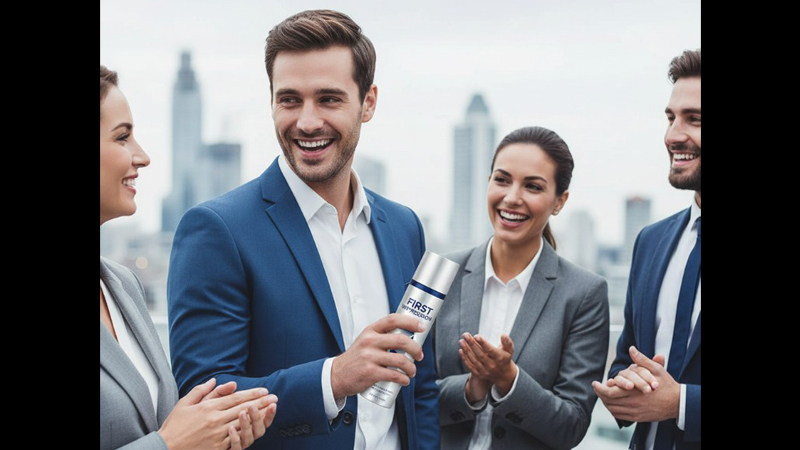
First impressions are formed within milliseconds of initial contact, yet the factors driving these rapid judgments are frequently misunderstood. Common assumptions suggest that clothing quality, physical attractiveness, or verbal introductions dominate first impression formation. However, psychological research reveals that subtler, often unconscious cues carry disproportionate weight in initial evaluations.
These overlooked factors operate largely outside conscious awareness for both the person being evaluated and the evaluator. Understanding which elements actually influence first impressions enables strategic preparation that substantially improves initial encounter outcomes in professional, social, and personal contexts.
Olfactory Signals Override Visual Information

Contrary to popular belief, scent is processed by the brain before visual information in first encounter situations. The olfactory system connects directly to the limbic system, which governs emotion and memory, bypassing the thalamus that filters other sensory input. This neural architecture means scent-based impressions form before conscious visual evaluation occurs.
Research has demonstrated that pleasant personal scent creates positive bias in subsequent evaluations, while unpleasant or absent scent generates negative bias that affects all other impression components. This effect operates below conscious awareness—evaluators typically cannot identify why they feel positively or negatively toward someone but attribute their impression to personality or competence rather than scent.
Body odor, even at levels below conscious detection thresholds, triggers negative impressions. Conversely, appropriate use of quality deo for men or deo for women that maintains freshness without overwhelming fragrance creates favorable conditions for positive impression formation.
The implication is clear: grooming investments that ensure personal freshness provide higher returns on first impression outcomes than investments in expensive clothing or accessories that capture more conscious attention but carry less subconscious weight.
Microexpressions Reveal Authentic State
Facial expressions are consciously controlled during first encounters, with individuals presenting practiced smiles and attentive expressions. However, microexpressions—fleeting involuntary facial movements lasting 40-200 milliseconds—reveal authentic emotional states and are detected subconsciously by observers.
These microexpressions communicate genuine confidence, anxiety, discomfort, or enthusiasm regardless of controlled expressions. Individuals who feel genuinely confident due to thorough preparation, including grooming adequacy, display different microexpressions than those performing confidence while harboring self-consciousness.
Grooming-related anxiety produces specific microexpression patterns. Concern about body odor, disheveled appearance, or inadequate preparation triggers facial tension and fleeting expressions of discomfort that undermine verbal confidence displays. These signals are processed by observers without conscious recognition but influence overall impression formation.
Elimination of grooming anxiety through reliable products and thorough preparation allows authentic confidence expression through natural, relaxed facial movements that enhance positive impressions.
Posture and Spatial Behavior Signal Status
Body posture and spatial behavior during initial encounters communicate perceived status and confidence levels more powerfully than verbal content. Individuals who feel adequately prepared adopt more expansive postures, maintain comfortable interpersonal distances, and move with greater fluidity.
Grooming insecurity produces characteristic postural changes: arms held closer to the body to minimize potential odor exposure, reduced gesturing, and maintenance of greater interpersonal distance. These adaptations occur largely unconsciously but are detected by observers who interpret them as low confidence or social anxiety.
The spatial dimension is particularly significant. Individuals confident in their freshness and presentation naturally adopt closer conversational distances that facilitate connection building. Those harboring grooming concerns unconsciously maintain excessive distance that impedes rapport development.
These behavioral patterns are established within the first 30 seconds of interaction and prove difficult to modify once set. Initial grooming adequacy that enables natural spatial behavior provides advantages throughout the subsequent interaction.
Vocal Characteristics Reflect Internal State
Voice quality, pace, and intonation patterns during first encounters reveal internal confidence levels regardless of verbal content. Anxiety produces measurable changes in vocal characteristics: higher pitch, faster speaking rate, and reduced vocal variety.
Grooming-related self-consciousness contributes to overall anxiety that manifests in voice quality. Even when grooming concerns are not the primary anxiety source, they increase baseline stress that affects vocal production. Elimination of this anxiety component through thorough grooming preparation improves overall vocal confidence.
Additionally, voice quality is affected by physical comfort. Individuals experiencing sweat discomfort or awareness of body odor display vocal tension that differs from those feeling physically comfortable. These subtle vocal cues are processed by listeners as general confidence indicators rather than being attributed to specific causes.
Handshake Quality and Skin Contact
Physical contact during initial greetings, particularly handshakes in professional contexts, provides information processed through multiple sensory channels simultaneously. Handshake firmness, duration, and hand condition all contribute to impression formation.
Skin moisture level during handshakes significantly affects impressions. Excessively sweaty palms create negative impressions associated with anxiety or poor hygiene. However, completely dry hands can also register negatively, being interpreted as cold or unfriendly.
Individuals using effective antiperspirants or deo for women and deo for men that manage moisture appropriately achieve optimal hand moisture levels for positive handshake impressions. This seemingly minor detail affects initial evaluation disproportionately due to the multisensory nature of physical contact.
Hand temperature, texture, and even scent transfer during handshakes contribute to impressions. Thorough grooming preparation ensures all these factors align favorably rather than working against positive impression formation.
Grooming Detail Attention Signals Competence
Visible grooming details are evaluated rapidly and interpreted as indicators of broader competence and attention to detail. Hair neatness, skin condition, nail cleanliness, and clothing maintenance are assessed within seconds and extrapolated to predict work quality and reliability.
This extrapolation occurs through stereotype activation. Cultural stereotypes link personal presentation quality to professional competence, conscientiousness, and reliability. These stereotypes may be unfair but operate powerfully in first impression contexts where limited information is available.
Interestingly, grooming perfection is not required or even optimal. Excessive grooming that appears time-intensive can generate negative impressions of misplaced priorities. The target is thorough attention to basics—cleanliness, freshness, and appropriateness—rather than fashion-forward presentation or meticulous styling.
Basic grooming adequacy signals that baseline professional standards are met, freeing evaluators to focus on substantive qualities. Grooming inadequacy, conversely, becomes the dominant impression component that overshadows other positive attributes.
The Congruence Principle in First Impressions
Psychological research on impression formation emphasizes congruence—alignment between different signal channels. When verbal, visual, vocal, and olfactory signals align consistently, impressions are clear and confident. When signals conflict, evaluators experience confusion that typically resolves toward the negative.
Grooming misalignment creates signal conflicts. Expensive professional attire combined with body odor or disheveled hair sends conflicting messages that generate negative impressions despite the positive clothing signal. The negative element disproportionately affects overall evaluation because it raises questions about judgment and awareness.
This explains why grooming basics matter more than individual clothing items or accessories. A modest but clean, fresh, and well-maintained presentation generates more positive impressions than expensive items combined with grooming oversights.
Achieving signal congruence requires systematic attention to all presentation elements rather than optimization of individual components while neglecting others.
Context Appropriateness Matters More Than Quality
Appropriateness to context affects first impressions more powerfully than absolute quality or expense. Overdressed individuals in casual contexts receive negative evaluations despite expensive clothing. Similarly, extremely casual presentation in formal contexts generates negative impressions.
This principle extends to grooming and scent choices. Heavy fragrances appropriate for evening social events become inappropriate in daytime professional contexts. Conversely, complete absence of deodorant use might be overlooked in casual settings but proves unacceptable in professional or formal situations.
Understanding context-specific grooming standards and adapting preparation accordingly demonstrates social awareness and cultural fluency. These qualities are themselves evaluated during first impressions and contribute to competence perceptions.
The Halo Effect and Grooming
The psychological halo effect causes single positive attributes to influence evaluation of unrelated qualities. Physical attractiveness research has extensively documented this phenomenon, but grooming adequacy generates similar effects.
Individuals who appear well-groomed are assumed to possess positive qualities in unrelated domains: intelligence, trustworthiness, competence, and likability. These attributions occur automatically and influence behavior toward the individual, creating self-fulfilling prophecies.
The mechanism operates through stereotype activation and cognitive efficiency. Rather than evaluating each quality independently, evaluators use readily available cues—including grooming—to infer other characteristics. Positive grooming impressions activate positive stereotypes that favorably bias subsequent interaction.
Importantly, grooming adequacy is more controllable than many other first impression factors. Physical features, height, and voice characteristics are largely fixed, but grooming represents an actionable domain where systematic preparation generates measurable returns.
Time Investment Analysis for First Impression Preparation
The time required for grooming preparation that optimizes first impression outcomes is substantially less than commonly assumed. Research on grooming routines indicates that 15-20 minutes of focused preparation addresses all critical elements:
Thorough cleansing eliminating any residual body odor
Application of effective deo for men or deo for women with proven duration
Hair arrangement ensuring neatness without requiring elaborate styling
Clothing selection and inspection for maintenance issues
Verification of overall presentation coherence
This modest time investment generates returns far exceeding the investment magnitude. First impressions influence employment decisions, relationship formation, business opportunities, and social network development—outcomes with substantial long-term value.
Conversely, time saved through rushed preparation often proves costly when poor first impressions limit opportunities or require extensive subsequent effort to overcome.
Common Misallocations in First Impression Preparation
Analysis of typical first impression preparation reveals systematic misallocation of effort toward lower-impact factors. Common patterns include:
Over-investment in clothing: Expensive items receive excessive attention relative to their impression impact, particularly when basic grooming is neglected. A ₹15,000 outfit combined with body odor generates worse impressions than modest clothing with thorough grooming.
Under-investment in scent management: Basic deodorant use is inconsistent or inadequate despite its disproportionate impression impact. Product quality and application technique receive insufficient attention.
Neglect of small details: Nail cleanliness, shoe condition, and accessory maintenance are overlooked despite their role in competence signaling.
Excessive focus on uncontrollable factors: Anxiety about physical features or other fixed attributes consumes mental energy better directed toward controllable preparation elements.
Reallocation of attention toward high-impact, controllable factors—particularly freshness maintenance and grooming basics—optimizes first impression outcomes within existing time and resource constraints.
Conclusion
First impression formation is driven primarily by factors operating outside conscious awareness for both parties. Olfactory signals, microexpressions, spatial behavior, and grooming details carry more weight than consciously noticed elements like expensive clothing or rehearsed introductions.
These findings have practical implications. Investment in reliable personal care products, including effective deo for women or deo for men, systematic grooming preparation, and attention to presentation basics generates higher returns than investments in premium clothing or accessories.
The science of first impressions reveals that success in initial encounters requires understanding of psychological mechanisms rather than intuitive assumptions about what matters. Those who align their preparation with actual impression formation processes achieve substantially better outcomes than those following conventional wisdom about first impression management.
Effective first impression preparation focuses on controllable, high-impact factors—particularly personal freshness, grooming consistency, and signal congruence—rather than attempting to optimize lower-impact elements or worrying about unchangeable characteristics. This evidence-based approach maximizes positive impression probability within realistic time and resource constraints.

Brands
Jubilant FoodWorks faces Rs 47.5 crore GST demand, plans appeal
Tax authorities flag alleged misclassification of restaurant services

MUMBAI: Jubilant FoodWorks Limited has landed in a tax tussle after receiving a GST demand of Rs 47.5 crore from the office of the additional commissioner of CGST and central excise in Thane, Maharashtra.
The order, issued under the provisions of the Central Goods and Services Tax Act, 2017, relates to an alleged incorrect classification of certain services under the category of restaurant services. According to the tax authorities, this classification resulted in a short payment of goods and services tax for the period between the financial years 2019-20 and 2021-22.
The demand includes Rs 47.5 crore in GST along with an equal amount as penalty, in addition to applicable interest. The order was received by the company on March 13, 2026.
In a regulatory filing to the BSE Limited and the National Stock Exchange of India Limited, the company said it disagrees with the order and believes its arguments were not adequately considered.
The company is preparing to challenge the decision and plans to file an appeal. It added that once the redressal process is complete, the demand is likely to be dropped.
Despite the sizeable figure attached to the notice, the company said it does not expect any material impact on its financials, operations or other activities.
The disclosure was signed by Suman Hegde, EVP and chief financial officer, who confirmed that the company received the order at 19:06 IST on March 13 and has already initiated steps to contest it.
The development places the quick service restaurant major in the middle of a tax debate that could hinge on how certain restaurant-linked services are classified under GST rules. For now, the company appears ready to take the matter from the tax office to the appeals desk.