MAM
What agencies need to do for their clients


GOA: Often clients are in a quandary when it comes to partnering with an agency. A session at Goafest 2016 organized by AAAI and the Advertising Club attempted to shed light on some of the factors that a client needed to look at when it came to a business partnership with an advertising agency. The Industry Conclave presented by Discovery Channel discussed the key elements that needed to be focused on when it came to what clients as well as agencies needed to do.
The topic of the day was ‘3 things the agency can do better’ with the speakers discussing client agency partnerships while highlighting some of the possible avenues where such partnerships could be strengthened by the agency.
Setting the tone for the discussion was Mondelez India MD Chandramouli Venkatesan who spoke about what agencies could do to make strong partnerships. Underlining four factors that were important for a better client-agency relationship, Venkatesan said that they included providing complementary strengths in addition to shared purpose and passion, trust and friendship. Inspired by the partnership between the famous duo Jay and Veeru in the Bollywood blockbuster Sholay, Venkatesan said, “It takes effort to create a partnership like Jay and Veeru. A partnership is a two way street. You get back exactly what you put in it”.

He further discussed the three key things that agencies could do for better partnerships. Outlining the importance of generating trust in this two way process was the main focus point which was the bedrock for honest and open communication. “Trust enables cutting-edge work. Trust is actually what enables the brave decision making you so often want to make,” he further added.
Citing examples of the risks that were taken by his company with three of its clients’ ads, namely, Cadbury Gorilla, Bournvita Taiyyari and Cadbury Dairy Milk Silk, Venkatesan said that his company believed that risks could be taken when there was trust in the relationship. The three main aspects required to earn trust were mainly through better decision making while keeping the client interest in mind; by being commercially responsible; and by not compromising on integrity.
To win the talent battle, agencies had to disrupt their talent model and must attract the best talent. “Ideas are temporary, talent is permanent. Talent gives rise to new ideas. One of the most important things is to build brand stewardship. It’s about quality and longevity of talent”, he said. “Ideas can work great, but not build stewardship.”
Another important thing that he stressed on was to build strong processes. Preparing for a strategic alignment at multiple levels, building project management capability and a strong team management was what the agencies need to invest in. “Process is a dreaded term in the agency world. Process is an enabler of creativity. Great partnerships always deliver outstanding results” concluded Venkatesan.
While on the other hand, United Breweries Ltd SVP marketing Samar Singh Sheikhawat pointed out that the agency as well as the client needed to know the business. A major part of understanding the client, according to Sheikhawat, was understanding the consumer. “With multiple realities in India, we ourselves don’t understand the entire world as it changes every now and then. Different countries have different business problems and hence different solutions. We have to know our consumers”, asserted Sheikhawat.
With the evolving medium of delivering messages, there was an observable explosion of content leading to multiplication of content and hence amplification of platforms to give out multiple content. Citing the example of how Kingfisher Buzz was launched he said, “With 99 per cent of males drinking beer, we noted that we have to also deliver something to the female population. The biggest challenge that we face is that our product does not deliver to a majority of the population”.
Agreeing with the key points mentioned by Venkatesan, he further added that the agencies need to have creative solutions to the common problems faced by the clients.
With key notes from FMCG and brewery companies, the next speaker on the row enlightened the audience about what an automobile client looked for in an agency. To maintain the status of the favourite hello and the hardest goodbye between the client and the agency, Volkswagen AG head of connections panning, media and international communications Oliver Maletz summed it up succinctly by saying that the agency should be the one entity that the client calls first and hangs up on last. He said, “Agencies need to focus more on thinking harder before becoming true business partners. They should know our business better than us”.
With competitive analysis, industry analysis, suability benchmarks and situational assessment, an agency could identify opportunities and reach a successful goal. “There are more opportunities now than what we had in the past. I think the agencies should be open to take risks”, he added.
He further advised that an agency should not innovate just for the sake of being innovative. It should deliver meaningful value to a meaningful number of people. With agencies approaching clients through a ‘selling’ perspective, Maletz pointed out that the agencies should stop selling their ideas, capabilities, companies, inventories, etc., to the clients. “Start helping us to sell our products and build a better brand. Be our business partner and stop selling yourself”, he added further. He concluded by saying, “Everything will follow with a good business partner”.
The evening of the Industrial Conclave wrapped up with a short panel discussion where the audience was encouraged to pose their questions to the experts via the Goafest 2016 app which had been specially designed to facilitate the best digital experience for the attendees of the festival.





Brands
Kaspersky and KidZania want Indian children to fight hackers before they hit their teens
Kaspersky and KidZania open a cyber investigation centre in Mumbai to teach children how to outsmart hackers
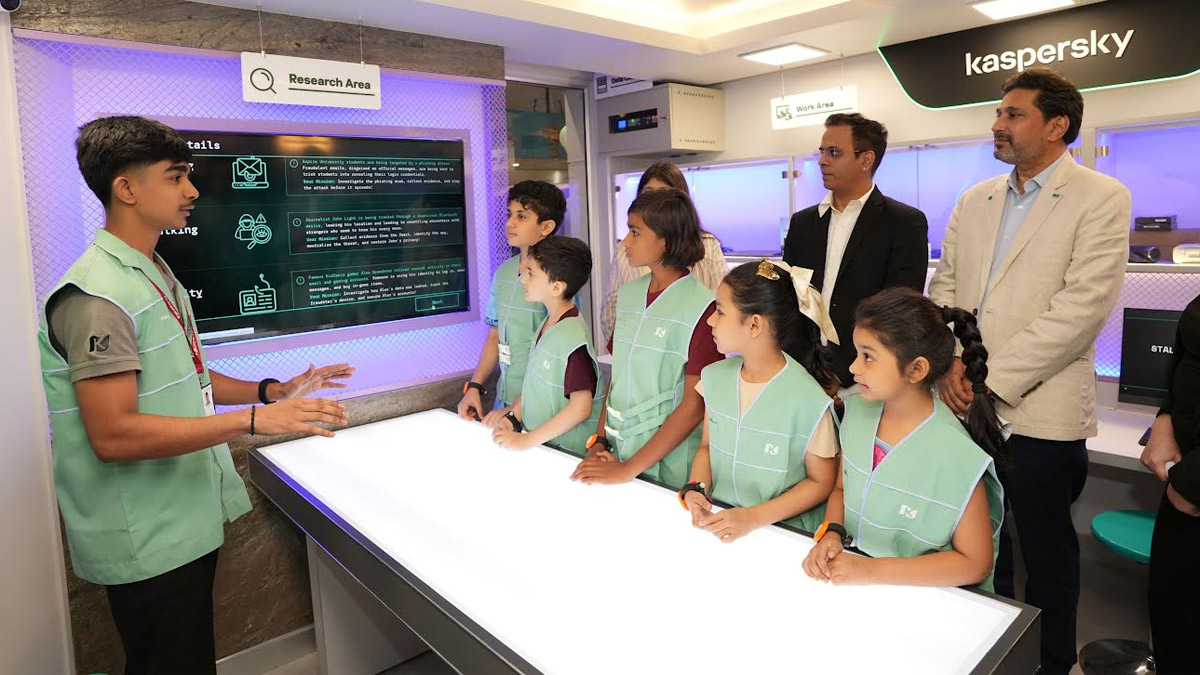
MUMBAI: India’s children are growing up online faster than anyone can protect them. Kaspersky, the global cybersecurity firm, is betting that the best way to fix that is to make six-year-olds feel like detectives.
The company has opened a Cyber Investigation Centre inside KidZania Mumbai at R City Mall, Ghatkopar, in what it is calling a first-of-its-kind cybersecurity role-play experience for children. Kids suit up in Kaspersky uniforms, sit down at dedicated workstations loaded with security software, and spend 20 minutes cracking simulated cases of phishing, identity theft and cyberbullying. Up to six children can play investigator at a time. Those who crack the case walk away with a personalised Kaspersky Cyber Investigator card — and a healthy suspicion of dodgy links.
The timing is not accidental. In India, 82.2 per cent of children have access to a mobile device by the age of 14. They use it to stream, game, chat and study. Most of them have never heard the word “phishing.”
“The earlier we equip children with the awareness and skills to navigate the digital world safely, the stronger our collective digital future becomes,” said Jaydeep Singh, general manager for India at Kaspersky. Tarandeep Singh Sekhon, chief business officer of KidZania India, put it more plainly: “Every parent today is thinking about how to prepare their child for a digital-first future.”
The partnership comes with commercial sweeteners. Visitors buying KidZania tickets get a complimentary two-month Kaspersky trial subscription. Annual pass holders get a full year’s subscription thrown in. Discount vouchers go out at the exit gates.
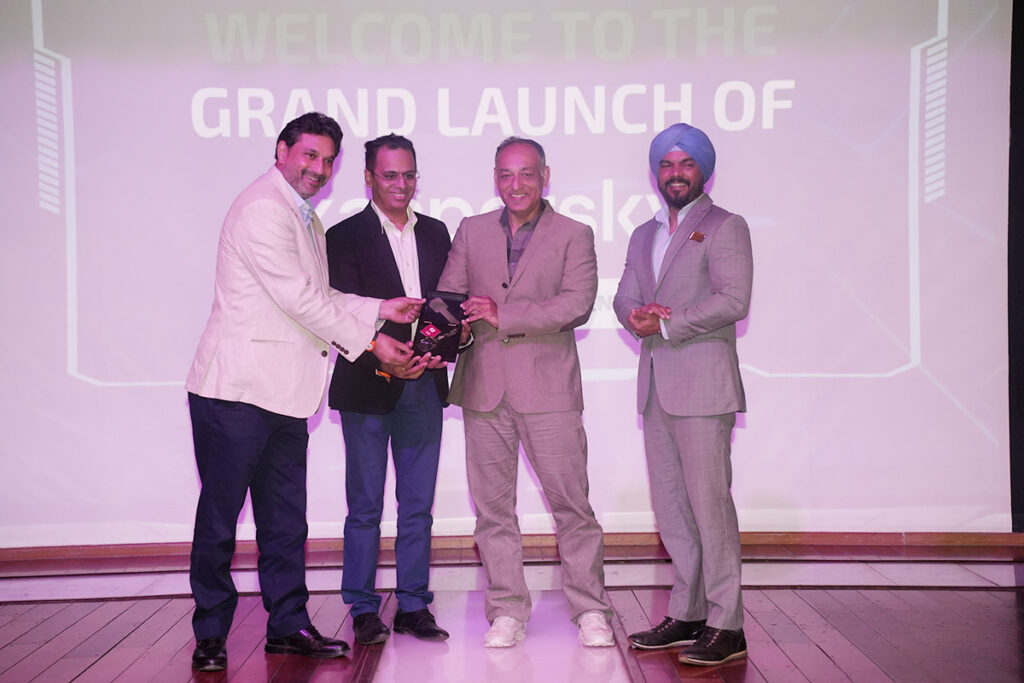
The launch ceremony leaned into KidZania’s theatrical DNA — a diya lighting, a dance performance, a key handover, a parade through the miniature city, and a ribbon-cutting at the new centre.
Cybercriminals, it turns out, do not discriminate by age. Kaspersky and KidZania are hoping that neither will the next generation of people trying to stop them.







