MAM
WeWork India launches ‘WeWork Workplace’, a tech-enabled space management solution

Mumbai: WeWork India, the country’s flexible workspace provider announced the launch of their brand new space management tool ‘WeWork Workplace’, in collaboration with Yardi, a workspace management solution. WeWork Workplace is the product in the market that can combine all space types (privately leased/owned, WeWork and WeWork shared/affiliate) within a single experience. Additionally, companies that may need overflow space will have the option to enable access to WeWork and WeWork affiliated locations for their employees globally.
At a time when India’s modern workforce with its evolving hybrid work culture faces a challenge of excess and underutilised office space, Workplace’s software stands out as a comprehensive solution. It offers enterprises a streamlined approach to integrate and manage space as well as optimise portfolios, along with access to more than 500 WeWork workspaces on one platform. This leads to effective cost saving for enterprises with the help of real time data analytics. In a world where the dynamics of work have undergone significant shifts, Workplace will help manage the workforce as well as the workspace, leading to greater productivity. The tech-enabled solution will further enhance the managed office segment, simplifying the digitisation of the workspace, and ensuring employees come in for meaningful collaborations. WeWork India will provide Workplace not only in its owned spaces but also at large technology parks in association with developers and directly for corporations for their occupied spaces. At present WeWork India is the only flex player with such an offering for managed offices. Workplace will help organisations manage their workforce rather than just workspace, and increase their productivity.
WeWork India CEO Karan Virwani said, “In an era where hybrid and flexible work culture take centre stage, space management plays a very crucial role for enterprises. There is an urgent need to scope out operational inefficiencies in a systematic manner, for businesses to thrive. Workplace is uniquely placed to help businesses optimise their functional office space requirements while elevating the office experience for its employees in an intentional way. It will facilitate real-time insights for data-driven decision-making. Our collaboration with Yardi, a renowned leader in real estate technology, underscores our commitment to delivering innovative solutions uniquely tailored to meet the evolving needs of modern businesses.”

WeWork Workplace includes several features that allow users to book desks and facilitate an effective office experience. Users can search for colleagues to discover their seating arrangements and plan their attendance schedule accordingly. With seamless integration with Microsoft Outlook and Google Calendar, Workplace enables users to conveniently book meeting rooms within the app. Not only that, it serves as a comprehensive central hub for daily scheduling and management, offering a convenient platform for important company announcements and real-time event updates. Workplace not only enhances employee and member experience but also propels the industry forward by enabling businesses to optimise space. Being a people-first platform, Workplace is equipped to quickly adapt to organisational shifts and office space strategies, thus facilitating a future-ready approach to work.
Ahead of launching Workplace, WeWork India ran a pilot program which garnered positive feedback from various enterprises, signalling the need for such robust space management tools. Further to the pilot, there are currently 30 accounts in use by over 6000 members in India, and over 830 accounts and over 151,000 members globally. With the introduction of WeWork Workplace, WeWork India reinforces its commitment towards enhancing member experience while also propelling the industry forward by enabling businesses to optimise space and embrace a future-ready approach to work. By driving innovation through customised product solutions, WeWork India will continue its growth trajectory in changing the landscape of flexible workspaces in the country.
To know more about Workplace, click here for the admin view demo and here for the employee view demo.






MAM
Early Summers, Early Campaigns: How Beverage Brands Are Rethinking Marketing Strategies for Weather-Led Demand
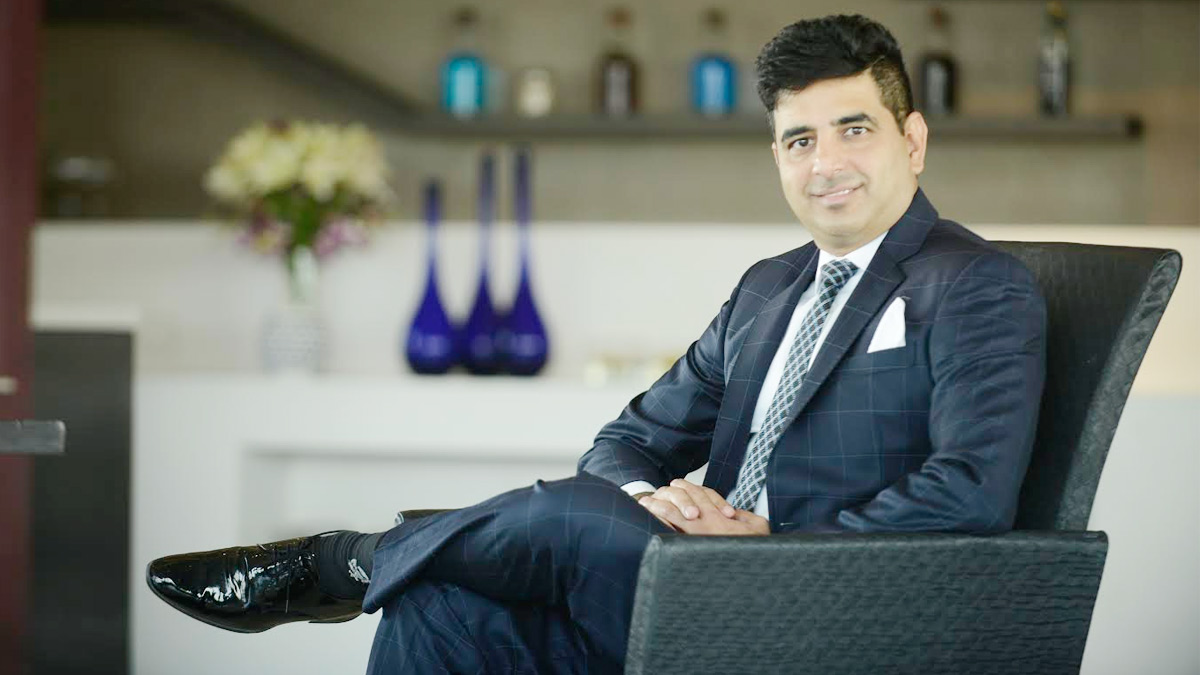
SLMG Beverages Private Limited joint managing director Paritosh Ladhani.
MUMBAI: As Sun climbs up the hemisphere, summer has clearly arrived in India. On 7th March 2026 Delhi registered a maximum temperature of 35.7 degrees Celsius which is the highest reading logged for the first week of March in the last 50 years. Climate Change has been prolonging summers by causing earlier spring warming, delayed autumn cooling, and more frequent, intense heatwaves that persist for much longer periods.
In an endeavor to stay ahead of the curve, Beverage Brands are shifting from fixed seasonal marketing tactics to weather responsive strategies backed by data-driven insights, flexible campaigns, and diversified portfolios to capitalize on unruly temperature spike. In 2025, India’s beverage market experienced a massive, heat-triggered surge with carbonated drinks and ice cream volumes spiking 20–25 per cent in the March quarter itself on the back of hottest February in 125 years.
Clearly campaign timelines are being advanced to reap the seasonal shift in line with the jumping mercury. In the Indian context where Cricket is nothing short of religion, big ticket tournaments like T20 World Cup, Indian Premier League, ICC Champions Trophy provide plethora of opportunities to calibrate marketing campaign designs and associated business strategies to associate refreshment with community viewing both outdoor and indoors. A new trend that has taken the world by storm is that of booking the theatres for bonhomie viewing. It has also opened avenues for joint marketing initiatives by the Multiplex and Beverage Brands.
Price disrupting small potions and value packs tend to drive significantly higher volumes owing to volumetric flexibility and affordability to the consumers. Ramping up of cold supply chains for transit and at point of sales (POS) are strategic business imperatives that again define success of beverage brands.
In the era of AI and Big Data it is easy to track and calibrate messaging based on daily or weekly weather changes. Geo-targeted digital advertisement campaigns are also being run during heatwaves to make the business and marketing imperative very contextual. These pre-emptive strategies fueled by real time data and technology immensely help beverage brands to adjust supplies to the areas that are likely to generate more demand.
Novelty brings premium to the FMCG Sector and Beverage Brands are no exception. Newer SKUs build up excitement in consumers besides imparting the scope of frequent revitalization of brand marketing campaigns. Ensuring continuum of supply chain across material suppliers, logistics providers, distributors/wholesalers, and retailers become a strategic business strategy imperative for beverage brands during peak season.
Carbonated drinks among other beverages including packaged mineral water sell like hotcakes in summers, a period where holiday season gives big impetus to sales volumes. Tying up with air carriers railways, amusement parks, malls, convention centers for inclusion in the onboard beverage deck also holds a big window of opportunity for brands.
Limited period diversification into special summer categories entailing juices and functional beverages to capture the broader hydration market is also a business cum marketing imperative that beverage brands eye on. This also brings to fore the responsible side of the brand placing the compass on wellness of consumers.
Seasons are cyclic, hence summers are inevitable. Further, due to anthropogenic climate change, summers surely have been staging prolonged appearance that keep bringing beverage brands on to their drawing boards frequently for strategizing business and marketing campaigns that are agile, refreshment-focused, visually dominant in retail, affordable, and optimally promoted through seasonal campaigns in above and below the line media.








