Brands
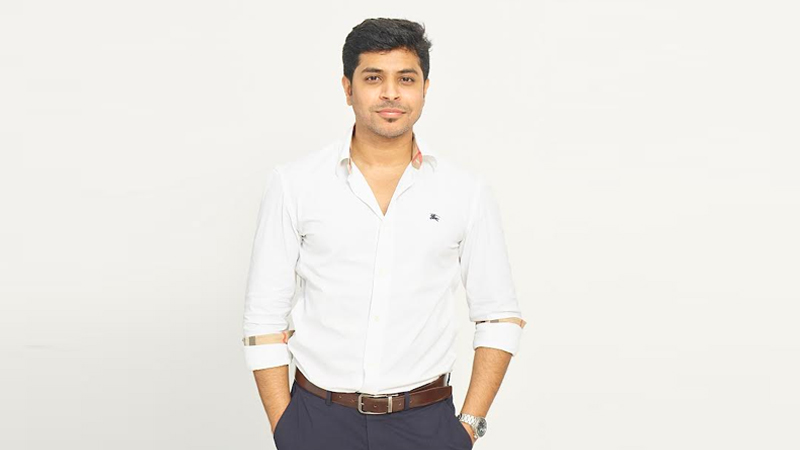
Weekend Unwind with Ayuvya Ayurveda’s Pawanjot Kaur


Mumbai: With another weekend upon us, it is time to unwind with the latest Q&A edition of Indiantelevision.com’s Weekend Unwind — a series of informal chats that peek into the minds of business executives through a fun lens in an attempt to get to know the person behind the title a little better.
In this week’s session, we have Ayuvya Ayurveda CTO & co-founder Pawanjot Kaur, who began her journey as a coding enthusiast at Punjab Engineering College, where she developed automation tools and gained confidence in her technical abilities. After graduation, she founded Innovatia Marketing and Technology, working with 50-plus startups across diverse sectors. However, a personal battle with eczema in 2019 led her to Ayurveda, inspiring her to co-found Ayuvya in 2020 with Astha Jain and Tanishk Pandey. Their mission is to bridge ancient Ayurvedic wisdom with modern healthcare, making authentic solutions accessible to a global audience.
Ayuvya Ayurveda, headquartered in New Delhi, offers a range of Ayurvedic wellness and skincare products, including its flagship weight gainer, iGain+. The brand is committed to expanding its reach through both online and offline channels, particularly in tier two to four cities while educating customers about Ayurveda’s long-term benefits over conventional treatments. With ambitious goals, including reaching ₹500 crore in revenue within three years, the company aims to empower the Ayurvedic industry and enhance the well-being of its customers worldwide.

Without further ado, here it goes…
Your mantra for life
My mantra for life is: “Innovate with purpose, grow with integrity.” I believe that blending innovation-driven technology with a holistic approach creates a meaningful impact. True progress happens when we use creativity not just for advancement, but with a purpose that benefits others.
A book you are currently reading or plan to read
I am currently reading “Zero to One” by Peter Thiel. The book dives into the process of creating innovative products and scaling businesses by thinking differently and focusing on progress that moves from nothing to something truly unique. It’s all about building the future through bold ideas. However, one of my all-time favorite books is Atomic Habits, which emphasizes the power of small habits in driving massive, positive changes over time.
Your fitness mantra
My fitness mantra is: “Balance the body, calm the mind, nourish the soul.” I believe true fitness goes beyond physical strength; it’s about maintaining equilibrium in all aspects of life. By keeping the body active, fostering mental clarity, and nurturing inner peace, you achieve a holistic sense of well-being that empowers you to thrive.
Your comfort food
My comfort food is khichdi and dal rice with ghee. It’s delicious and gentle on my gut, providing a sense of warmth and nourishment. Plus, it helps balance my dosha, making it the perfect go-to meal for comfort and well-being.
A quote or philosophy that keeps you going when the chips are down
“Every experience, good or bad, teaches us something important.” Each moment, whether it brings joy or challenges, is an opportunity to learn and grow. Embracing this mindset fosters resilience and keeps me focused, knowing that every experience contributes to personal growth and wisdom.
Your guilty pleasure
My guilty pleasure is overworking. I often dive deep into tasks and projects, pushing myself beyond my limits. While it feels productive, I’ve come to realize that balance and rest are essential for long-term success and overall well-being.
The last time you tried something new
The last time I tried something new was just last week, as a tech co-founder of Ayuvya Ayurveda, when we experimented with integrating machine learning algorithms into our customers’ browsing behaviors. For me, trying new things isn’t just about the outcome—it’s about the learning process and the opportunities it creates. It’s a powerful reminder that at the intersection of tradition and technology, there’s endless potential for discovery and innovation.
A life lesson you learned the hard way
A life lesson I learned the hard way is that technology should enhance traditional wisdom, not replace it. I’ve realized that user trust is paramount, especially in healthcare. Building that trust requires a careful balance of innovation and respect for established practices, ensuring that we prioritize the well-being of our customers while leveraging the best of modern technology.
What gets you excited about life?
What gets me excited about life is the thrill of unlocking new ways to enhance well-being every day. The challenge of bridging two seemingly disparate worlds, the time-tested practices of Ayurveda and the rapidly evolving tech landscape, keeps me on my toes. It feels like solving a complex puzzle, where each piece we fit brings us closer to creating a healthier, more balanced world.
What’s on top of your bucket list?
At the top of my bucket list is to see Ayuvya become a household name in health and wellness, recognized globally for seamlessly blending Ayurvedic wisdom with cutting-edge technology. Achieving this vision would mean making a meaningful impact on people’s lives and promoting a healthier, more balanced way of living.
If you could give one piece of advice to your younger self, what would it be?
If I could give one piece of advice to my younger self, it would be: “Dive deep into the roots of knowledge. True understanding comes from self-exploration and thorough study.” This approach would have provided a stronger foundation from the start, leading to more meaningful and impactful innovations. It’s a principle that continues to drive our research and development at Ayuvya today.
One thing you would most like to change about the world
The one thing I’d most like to change about the world is the adverse impact of technology on nature. As a tech entrepreneur, I’ve seen firsthand how innovation can sometimes come at the cost of our environment. I believe we must find ways to integrate technology with sustainability, ensuring that progress does not come at the expense of our planet.
An activity that keeps you motivated and charged during tough times
During tough times, I turn to a combination of yoga and nature walks to stay motivated and charged. These activities help clear my mind, rejuvenate my spirit, and reconnect me with my purpose, allowing me to approach challenges with renewed energy and perspective.
What lifts your spirits when life gets you down?
What lifts my spirits when life gets me down are the heartfelt reviews from our customers at Ayuvya. These genuine reminders of the positive impact we’re making reignite my passion for our mission. Knowing that our work is improving lives gives me the motivation to keep pushing forward, no matter the challenges.
Your go-to stress buster
My go-to stress buster is practicing yoga and meditation, followed by immersing myself in nature. This combination helps me realign with Ayurvedic principles of balance and connection. Yoga energizes my body, and meditation calms my mind while being in nature restores a sense of peace and harmony.



Brands
Microsoft faces worst quarter since 2008 financial crisis
Cloud giant battles soaring AI costs and fierce competition from nimble startups.

MUMBAI: When the tech titan starts looking a little wobbly, even the Magnificent Seven can feel the tremors because Microsoft is currently starring in its own sequel, “Clouds and Doubts.” Microsoft is on track for its worst quarterly performance since the 2008 global financial crisis, according to Bloomberg, as investors grow increasingly uneasy about rising capital expenditure and intensifying competition from nimble AI firms. The company has been pouring money into AI infrastructure, yet markets are questioning when these hefty investments will finally deliver stronger revenue growth.
At the same time, investors are shifting away from traditional software stocks amid fears that AI startups such as Anthropic and OpenAI are developing autonomous agents capable of replacing established products, including those from Microsoft. Jonathan Cofsky, portfolio manager at Janus Henderson Investors, noted growing concern that customers may bypass Microsoft and deal directly with AI vendors, potentially disrupting its core business and putting pressure on pricing and margins.
Microsoft’s stock has tumbled 25 per cent in the first quarter, putting it on course for its largest drop since a 27 per cent fall in the fourth quarter of 2008. It has also emerged as the weakest performer among the so-called Magnificent Seven technology stocks, while a broader index tracking the group has fallen 14 per cent over the same period. The shares slipped a further 1.7 per cent after markets opened on Friday, marking a potential fourth consecutive session of declines.
Cofsky pointed out that Microsoft has become more capital intensive and that improved investor confidence will hinge on assurances that software growth will not slow materially. Despite the sell-off, the stock is now trading at less than 20 times projected earnings over the next 12 months, its lowest valuation level since June 2016. Its valuation remains slightly above that of the S&P 500 Index, although it has recently traded at a discount to the broader benchmark for the first time since 2015.
Bloomberg data shows Microsoft’s capital expenditure, including leases, is expected to surge to $146 billion in fiscal 2026, up around 66 per cent from $88 billion in fiscal 2025. Spending is projected to climb further to $170 billion in fiscal 2027 and $191 billion in fiscal 2028, based on average estimates. Investors are growing cautious about such levels of spending without clearer signs of stronger growth.
Microsoft’s Azure cloud division has reported a slight slowdown in growth compared with the previous quarter, while its Copilot AI product has seen limited user traction, prompting internal changes aimed at improving performance. Ben Reitzes, an analyst at Melius Research, warned in a March note that Microsoft’s upside in Azure could be constrained as the company works to address challenges related to its AI models and Copilot offering, adding that these issues are unlikely to be resolved in the short term.
Of the 67 analysts covering Microsoft, 63 maintain buy ratings, three hold ratings and one a sell rating. The average 12-month price target of $592 implies a potential upside of more than 64 per cent, the highest on record based on data going back to 2009. The stock is also trading below its 200-day moving average by the widest margin since 2009.
Reitzes suggested the dominance of buy ratings may indicate complacency among analysts, while highlighting risks in Microsoft’s productivity and business processes segment as well as its More Personal Computing division. In contrast, Tal Liani of Bank of America reinstated coverage with a buy rating, citing durable multi-year growth prospects across cloud and AI. Jake Seltz, portfolio manager at Allspring Global Investments, maintained that Microsoft retains strong long-term value and that its AI strategy is likely to be validated over time, viewing near-term concerns as a potential opportunity for longer-term investors.
The report highlights a growing divergence in market sentiment, with optimism around long-term AI potential weighed against immediate execution risks and investor uncertainty. In the world of big tech, even the mightiest clouds can have silver linings but right now, Microsoft’s investors are scanning the horizon for clearer skies.