Digital Agencies
WATConsult focusses on purpose-driven marketing

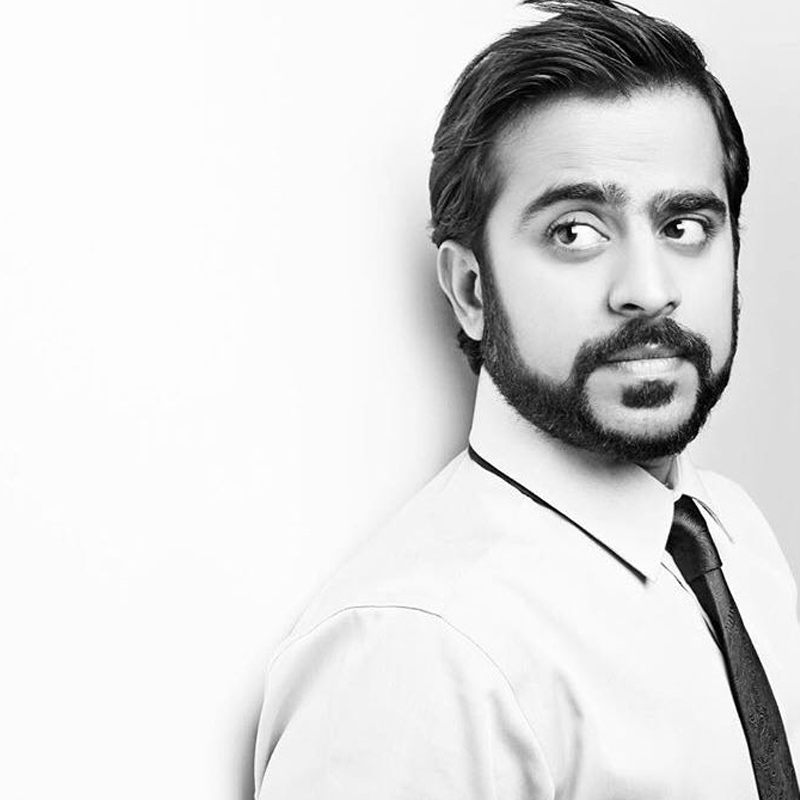
MUMBAI: When Rajiv Dingra started with WATConsult, which is today one of the prime agencies in India, digital media was nothing but a bud in the nascent stage that could very well have been nipped if not given the right ingredients to bloom. To give context, in his own words, social media giant Facebook was still available only for university students having a ‘.edu’ id, YouTube was even younger, and Instagram was not even born.
It was the year 2007 and a certain marketing manager of a well-known bank, which Dingra refrains from naming, had looked the man straight into the eyes to say, ‘I don’t think digital media is going to be a big thing in the future'. Flash forward 12 years ahead, digital media is not only a ‘big thing’ but a substantial part of each brand’s marketing mix. And WATConsult has been one of the prime players to not only contribute to but also smartly leverage its massive success. The agency, which is a part of the well-known Dentsu Aegis Network, won several international accolades last year including a Grand Prix at the Prague International Festival, and a shortlist at Cannes Lions. The agency celebrates its 12-year anniversary on 10 January and Dingra looks all set to conquer the coming years in a grander way.
Sitting in his comfortable cabin that has a wooden chess board placed right across his table and some cool action figures lining up the space behind that, Dingra comes across as a man who knows what he's up against. His eyes have a certain charm and glint, which speak volumes for his amiable personality. He is happy when he speaks about his and WATConsult’s success and has passion brimming in his words as he reflects on the way ahead.

“These 12 years have been a long-winding journey. In fact, in hindsight we did not think that it will take this long for digital media to come where it is today (smiles). But we are glad that it has reached where it has in these 12 years,” says Dingra recounting WATConsult’s steps in the industry. “I think in our initial years in the industry, from 2007 to 2011, we were focused on being a social media specialist agency. In the next three years we transformed into a full-service digital agency. From 2015 onwards, we have invested into a lot of technology, data, and ORM. This prowess has only been increased from then."
He adds, “I think, the last year has been our biggest high, as we finally broken the glass ceiling. Our work has been noticed worldwide. As a digital agency very few, in fact, none in India can boast about the sort of achievements that we got in 2018. I believe nobody has been awarded, in the same year, a London International Award, a Prague International Award, and a nomination at Cannes. It’s a very illustrious list.”
WATConsult surely had a stupendous 2018, but unlike many would believe, it wasn’t a fluke or something that just happened overnight. Dingra and his team had been working towards it since the past three years at least. He shares, “We have been investing in creative trainings for our team and upgrading them to suit the needs of all media, be it mobile, e-commerce, technology, or video. We have also been increasing our staff strength and are now a strong family of 377 members. It not only makes us the largest digital media agency within DAN network but also one of the larger agencies in the country.”
The agency also bagged some big clients like Riso and Domino’s. “We worked across several different aspects of digital right from e-commerce to mobile, to technology-enabled work and a lot of video content. We must have made at least 150 digital films, which were more than a minute long. We saw a growth of 30 to 35 per cent. That’s what kept us in good step as an agency, he says.
And obviously the laurels followed. On being asked if the agency is working towards winning awards only or is also seeking creative satisfaction, he says that awards can’t come without a person actually being satisfied with one’s work. “In fact, it is important to emphasise that how difficult it is to win at international platforms. It is extremely difficult to even reach to that level and compete. It requires great focus and great effort, which goes beyond your regular campaigns, to create something that wins there. It means you not only have to be satisfied with what you have done but you have to feel that you have done something pathbreaking,” Dingra quips.
He adds, “You do not participate in such competitions for the sake of vanity. It has unimaginable positive impact beyond just getting fame or new businesses. The biggest impact is on internal team members who suddenly start to push the bar and work harder towards innovating new content.”
Highlighting what remains the prime focus for him and his team while working on such campaigns, Dingra shares, “At the international award shows ‘impact’ always performs better. Be it impact on society or people; things that improve the behaviour of people and change lives for better perform better. They might look purpose-driven on the outside, but inside they just highlight what the brand’s purpose is.”
He revealed that at WATConsult their aim is to involve the brands in the creative purpose. "We are creating campaigns that are around experience and technology. For us it is not performance-driven but purpose-driven marketing," he says excitedly.
WATConsult has had a fabulous upward growth trajectory till now and digital media is growing in parallel. That means the competition is increasing and so is the trust of brands on such agencies. Dingra himself shares that in the coming two years, digital will amount to one-fourth of the total ad-spends made by any brand. So, how is he planning to maintain the stead?
“I think 2019 is going to be a key year for us. We want to push further on the path that we are already on, which is the path of creative excellence. We don’t want 2018 to be a one-off year here we performed good at the global awards. We definitely want to up that benchmark in 2019. We believe that we are going to do a lot of interesting work in form of good video content and reach age social platforms—leveraging gaming platform like PubG, or video platform Tik Tok. We will experiment with new platforms, new technologies, and in general a new way of communicating on digital media,” Dingra mentions.
Dingra is certainly proud of WATConsult’s illustrious journey and is looking forward to an amazing year and beyond.




BENGALURU: For years, creative teams have learned to live with ambiguity. Vague comments, last-minute changes, feedback that arrives without context, clarity, or conviction. It became part of the job – something teams worked around rather than getting it solved.
But as we head into 2026, that tolerance is wearing thin.
Creative work today moves faster, scales wider, and involves more stakeholders than before. Teams are producing more content across more formats, often with distributed collaborators and tighter timelines. In this environment, guesswork is no longer a harmless inconvenience. It’s a cost – to time, to budgets, and to creative mindspace.
The real problem isn’t feedback, it’s how it’s given
Most creative professionals you see today will tell you they’re not against feedback. In fact, they rely on it. Good feedback sharpens ideas, strengthens execution, and pushes work forward. The problem is ‘unclear’ feedback. When someone says “this doesn’t feel right” without context, they aren’t just revising – they’re basically decoding. They’re guessing what the problem might be, trying different directions, and burning time in the process. Multiply that by a few stakeholders and a few rounds, and suddenly days disappear.
In 2026, when teams are expected to deliver faster without compromising quality, interpretation is a luxury most can’t afford.
Scale has changed rverything
Creative projects used to be smaller and simpler. A designer, a manager, maybe one client contact. Feedback loops were short, even if they weren’t perfect.
Today, the same project might involve internal marketing teams, agencies, freelancers, brand reviewers, and regional teams. Everyone has a say. Everyone leaves comments. And often, those comments don’t agree. More people reviewing work means alignment matters more than ever. Clear feedback isn’t just about being nice to creative teams, it’s about keeping projects moving when complexity increases.
Guesswork quietly wears teams down
One of the less talked-about impacts of unclear feedback is what it does to people.
When feedback is vague or contradictory, creatives second-guess their decisions. They hesitate. They overwork. They keep extra time buffers “just in case.” Over time, confidence drops. Ownership fades. Work becomes safer, not stronger. Creative energy gets spent on managing uncertainty instead of pushing ideas forward. And in an industry already grappling with burnout, unclear feedback adds unnecessary mental load.
Actionable feedback is a shared skill
Clear feedback doesn’t mean controlling creative decisions or dictating every detail. It means being specific enough that someone knows what to do next.
Actionable feedback answers three basic questions:
What exactly needs attention?
Why does it matter?
What outcome are we aiming for?
This applies whether you’re reviewing a video frame, a design layout, or a copy draft. The clearer the feedback, the fewer follow-ups it creates. In 2026, teams that treat feedback as a skill and not an afterthought, will move faster with less friction.
Tools shape behaviour (whether we admit it or not)
The way feedback is delivered is often dictated by the tools teams use. Comments buried in long email threads, messages split across chat apps, or notes detached from the actual work all contribute to confusion.
When feedback lives outside the work, context often gets lost. When it’s disconnected from versions and timelines, decisions get questioned. When it’s scattered, accountability disappears. More teams are starting to realise that feedback problems aren’t just communication issues, they’re workflow issues. How work moves between people matters just as much as the work itself.
From Opinions To Alignment
One of the biggest shifts happening in creative teams is a move away from purely opinion-driven feedback. Instead of “I like this” or “I don’t,” teams are asking better questions:
● Does this meet the brief?
● Does this solve the problem?
● Does this align with the goal?
This change reduces unnecessary back-and-forth and helps feedback feel less personal and more productive. It also makes decisions easier to explain and defend. As creative work becomes more strategic, feedback has to support that shift.
2026 Is About Fewer Loops, Not Faster Loops
There’s a misconception that speed means moving through feedback cycles faster. In reality, the most creative teams aren’t just accelerating loops, they’re reducing them. Clear, actionable feedback upfront leads to fewer revisions later. Clear approval stages prevent last-minute surprises. Clear decisions stop work from circling endlessly.
In 2026, efficiency won’t come from working harder or longer. It will come from designing workflows that respect creative time and attention.
Ending guesswork is a mindset change
Ultimately, ending creative guesswork isn’t just about better tools or processes. It’s about mindset. It’s about recognising that clarity is an act of respect – for the work, for the people doing it, for the time invested and for the mindspace used. It’s about moving from “figure it out” to “here’s what we’re aiming for.”
Creative teams that embrace this shift will find themselves not only delivering faster, but also enjoying the process more. And in an industry built on imagination, that might be the most valuable outcome of all.







