Brands
Valentino Garavani, the couturier who ruled glamour, bows out at 93

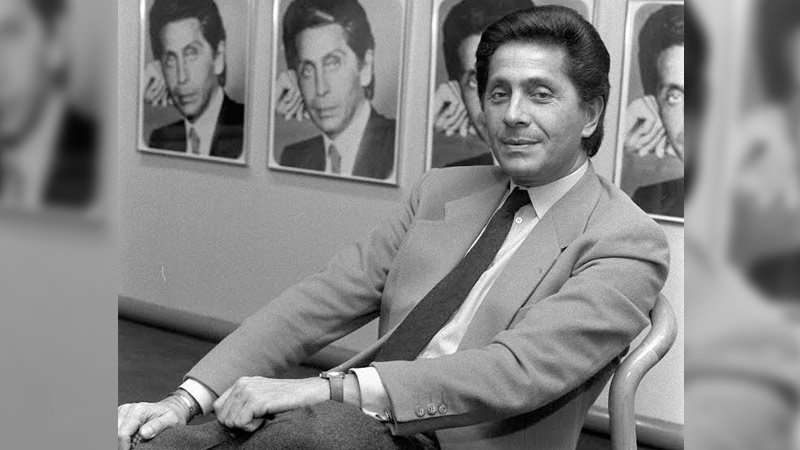
ROME: Rome did not wake up quietly on Monday. Valentino Garavani, the man who made elegance a discipline and glamour a calling, has died at 93, drawing the final line under haute couture’s most gilded chapter. In an industry addicted to reinvention, Valentino never chased change. He commanded it, in silk, satin and an unmistakable shade of red.
Born in Voghera in 1932, Valentino trained in Paris under Jean Dessès and Guy Laroche before returning to Italy to launch his fashion house in Rome in 1960. It was a deliberate homecoming. Paris taught him technique, but Rome gave him mythology. What followed was not merely a label but a worldview, rooted in discipline, drama and unapologetic beauty.
The house took flight after Valentino met Giancarlo Giammetti, then an architecture student. Their partnership became one of fashion’s most durable alliances. Valentino shaped the dream. Giammetti built the machine. Together, they turned an atelier on Via Condotti into a global luxury empire synonymous with Italian refinement and jet-set excess.


Valentino’s visual language was defiantly romantic. While fashion flirted with grunge, minimalism and irony, he doubled down on craftsmanship, bows, embroidery and gowns engineered to command rooms. At the centre of it all was Rosso Valentino, a vivid, operatic red that became his signature and a permanent fixture on runways and red carpets.
Yet restraint was also part of his arsenal. His 1968 White Collection, entirely devoid of colour, announced his mastery just as loudly. It also caught the attention of Jacqueline Kennedy, who commissioned Valentino to dress her for her wedding to Aristotle Onassis. The moment sealed his place as couturier to power and poise.
Valentino dressed not trends but women who shaped eras. Elizabeth Taylor, Audrey Hepburn, Sophia Loren, Marella Agnelli and Princess Margaret wore his creations as armour. Later generations followed. Julia Roberts’ black-and-white Valentino gown at the 2001 Oscars became a red-carpet benchmark. Anne Hathaway, Jennifer Lopez, Lady Gaga and Zendaya turned to the house when impact mattered.
The business grew alongside the myth. Valentino SpA expanded into ready-to-wear, accessories, footwear and fragrances, becoming a global luxury name. The company was sold in 1998 and later passed to Mayhoola for Investments, but Valentino remained creatively dominant until his retirement.
His final couture show in Paris in 2008 was staged as theatre. Models emerged one after another in identical red gowns before Valentino took his last bow. It was not nostalgia. It was control.
The fashion world paid tribute. Gucci said on X: “We at Gucci are deeply sorry to hear of the passing of Valentino Garavani, a pioneering couturier and an icon of Italian fashion.” Donatella Versace called him “a true maestro who will forever be remembered for his art.” Cindy Crawford described him as a “master of his craft,” Gwyneth Paltrow said his passing felt like “the end of an era,” Italian Prime Minister Giorgia Meloni hailed him as “an undisputed master of style and elegance and eternal symbol of Italian haute couture,” and Maison Valentino posted: “His unique style and innate elegance will remain forever… His life was a beacon in the ceaseless pursuit of beauty, and guided by that same beauty, we will continue to honor his memory with our deepest devotion.” Ralph Lauren added: “We all knew him by his first name—Valentino, a romantic name he lived up to through the artfulness of the collections he designed and the passion for beauty that inspired him for so many decades… His memory will live on through the timeless beauty of the world he created.”

In an industry now driven by speed and spectacle, Valentino’s legacy feels almost subversive. He believed elegance could be permanent, beauty could be exacting and fashion could still aspire to grandeur.
The emperor has left the building. The red remains.




Brands
ITC Sunfeast Farmlite launches Sugar Free Cookies range
New variants offer guilt-free indulgence for health-conscious snackers.

MUMBAI: ITC Sunfeast Farmlite is sweetening the deal for biscuit lovers who want to have their cookie and eat it too without the sugar. The better-for-you biscuits range from ITC Foods has expanded its portfolio with the launch of an all-new Sugar Free Cookies line, aligning with the company’s vision of ‘Help India Eat Better’. The range is designed for consumers who are rethinking sugar in their daily snacking but refuse to compromise on taste and indulgence.
The collection debuts with two tempting variants: Choco Nut Cookies and Hazelnut & Oats Cookies. Both are a source of protein and contain no trans-fat, while the Hazelnut & Oats variant is also lactose-free.
ITC Ltd. vice president (marketing), biscuits, foods division, Suraj Kathuria said, “At Sunfeast Farmlite, we believe mindful snacking should never come at the cost of indulgence. With this launch, we are catering to the growing need for guilt-free snacking while delivering a rich, satisfying cookie experience.”
ITC Ltd. vice president & head of food sciences for foods division Dr Shantanu Das added, “We have applied robust food science to develop cookies that are sugar-free while preserving the taste and texture consumers love.”
Each cookie comes in convenient single-serve packs to maintain texture and freshness. Both variants are available in 100g packs priced at ₹100 and can be found on quick-commerce platforms including Blinkit, Swiggy Instamart, and Zepto.
In a market increasingly leaning towards healthier choices, ITC Sunfeast Farmlite’s new Sugar Free Cookies prove that cutting sugar doesn’t mean cutting joy. For the health-conscious yet indulgent snacker, this could be the perfect bite-sized solution.






