Brands
Vadilal’s Gandhi family settles disputes to scoop up a sweeter future


MUMBAI: After years of frosty relations, the Gandhi family—owners of India’s beloved Vadilal ice cream brand—have struck a peace deal to end their corporate meltdown. On 29 March, Vadilal Industries announced a comprehensive family settlement between three branches of the dynasty that promises to restructure management while bringing the iconic Vadilal brand under direct company control. The company made this known through a regulatory filing with the Bombay stock exchange.
The fourth-generation Gandhis had been locked in a bitter corporate feud with “diverse interests, different ambitions and varying perceptions” about the strategic direction of the company. These disputes had spilled into multiple legal battles before the National Company Law Tribunal and its appellate body, with at least nine separate appeals pending (Company Appeal Nos. 221, 223, 338, 339, 340, 341, 376, 377 of 2024 and 18 of 2025).

Under the new arrangement, the three family branches—led by Rajesh Gandhi, Virendra Gandhi, and Devanshu Gandhi—will each appoint one director to the board, creating a power-sharing formula designed to maintain “equality of interests.”

These nominees will be complemented by four non-executive directors, including at least three independent directors, ensuring family members remain in the minority on the seven-person board.
The three branches will have equal representation on board committees on a rotational basis and similar representation rights on subsidiary boards. Each branch will maintain information and inspection rights, including access to audited financials, quarterly statements, and monthly management information.
Professional managers will need to submit annual business plans and budgets to the family members at the start of each financial year.
All current executive leadership will step aside. Rajesh Gandhi and Devanshu Gandhi will resign as managing directors but remain as executive directors. Kalpit Gandhi will step down as chief financial officer and non-executive director, while Deval Gandhi will also leave her non-executive directorship. Janmejay Gandhi, a 46-year-old MBA graduate from the University of Technology, Sydney and described as a “dynamic business leader” with experience in finance and strategy, will join as an executive director representing the Virendra Gandhi branch.
The icing on the cake involves a composite scheme of amalgamation merging three promoter-owned companies—Vadilal International Pvt Ltd (VIPL), Vadilal Finance Company Pvt Ltd (VFCPL), and Veronica Constructions Pvt Ltd (VCPL)—into Vadilal Industries. Critically, this will bring ownership of the Vadilal brand, currently licensed from VIPL until 2028, directly under the company’s control.
The merger’s financial details reveal interesting valuations. VIPL, which owns the trademark and had revenue of Rs 589.81 lakh against assets of Rs 2,627.87 lakh as of 28 February 2025, is valued highest in the share-swap deal. Its shareholders will receive 3,241 Vadilal Industries shares for every 100 VIPL shares. Meanwhile, VFCPL shareholders will get 317 shares for every 10 held, and VCPL shareholders will receive 116 shares for every 5 shares they own. The valuations were provided jointly by GT Valuation Advisors and PwC Business Consulting Services, with a fairness opinion from ICICI Securities.

The agreement includes robust governance mechanisms, with the three branches sharing affirmative voting rights on key matters affecting the company. These matters include corporate restructuring, capital changes, decisions regarding the Vadilal brand, creation of joint liabilities on promoters, delisting of securities, and liquidation or winding up of the company or material group companies.
The family branches will have significant influence over the appointment of independent directors, CEO, CFO and other key managerial personnel, with unanimous consent required from all branches for such appointments, reappointments, or removals. The company will adopt formal policies for the appointment of independent directors and professional management personnel.
A new dividend policy ensures investors aren’t left feeling cold—the company will distribute at least 10 per cent of consolidated profits in 2024-25, rising to between 20 per cent and 25 per cent from 2025-26 onwards. The agreement also allows for the adoption of an employee benefit scheme with stock options, though limited to 0.5 per cent of total post-issue paid-up capital for any individual.
Future funding for the company will follow a specific waterfall mechanism: first through internal accruals or debt, then through rights issues (requiring unanimous branch consent), and finally through preferential allotments with branch approval.
The agreement includes strict transfer restrictions with rights of first refusal should any family member wish to sell shares. Tag-along rights are triggered if a third-party purchaser acquires more than 10 per cent of the company’s share capital and subsequently transfers shares to a competitor. These special rights fall away if a branch’s holding drops below 10 per cent of the company’s share capital on a fully diluted basis.
Three new independent directors—Shalini Raghavan, Shivakumar Dega and Nagarajan Sivaramakrishnan—will join the board, along with non-executive director Gaurav Marathe. Additionally, Rajesh Pandya will serve as a non-executive director until the litigation withdrawal date.
The entire arrangement is contingent upon shareholder approval via postal ballot and the resolution of the ongoing litigation before the National Company Law Tribunal and Appellate Tribunal. The amended articles of association will incorporate all relevant terms of the agreement, replacing the existing articles entirely.
For a company that began as a humble ice cream stall in Ahmedabad in 1926 and has since grown into a major player in ice cream, frozen desserts, and processed foods, this professionalisation marks a watershed moment. After nearly a century of family management, Vadilal appears ready to trade family fights for market might—ensuring its frozen treats remain anything but its business prospects.







Brands
Rakesh Menon joins Paytm as avp – lending
Fintech product leader takes on new role after building digital lending, payments and credit products across fintech ecosystem
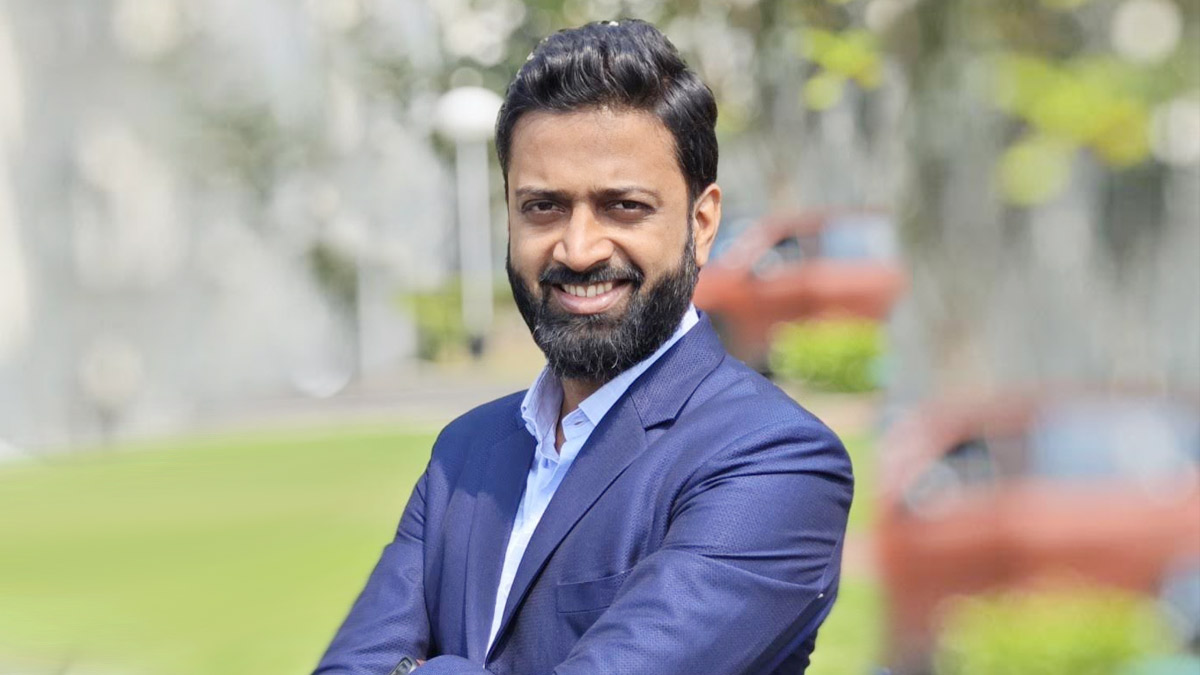
MUMBAI: Rakesh Menon has joined Paytm as assistant vice president – lending, taking on a new role focused on strengthening the company’s lending and credit products.
Prior to this, Menon worked at Profectus Capital Pvt Ltd as chief manager – payments based financing and digital lending.
At Profectus, he designed and launched digital credit products for merchants with variable cash flows, including overdraft-linked and revenue-share lending models. He led end-to-end LOS–LMS API integrations with payment partners and aggregators, enabling real-time underwriting, disbursal and repayment workflows.
He also worked on funnel optimisation initiatives using journey analytics, improving onboarding, KYC and disbursal conversion by 35 per cent. He developed ecosystem partnerships for transaction-data-based credit assessment and automated settlement systems, and collaborated with credit and data science teams to strengthen risk models and early delinquency detection.
Menon standardised partner onboarding and API frameworks, reducing go-live timelines by 40 per cent and improving digital scalability.
Before Profectus Capital, he worked at PayU as senior manager – presales lead – enterprise business from August 2022 to August 2023. He set up a national presales function for fintech and digital commerce clients, aligning solutions such as EMI, BNPL, BBPS and offer engines to merchant requirements.
He also helped improve conversion rates by around 15 per cent through merchant persona mapping, demo frameworks and structured sales playbooks, working closely with product and go-to-market teams.
From April 2019 to July 2022, Menon served as business unit head – SMB – direct acquisitions at Worldline, where he built the SMB online payments vertical from scratch. The business scaled to Rs 2,500 crore in annual transaction volume, growing at 45 per cent year-on-year.
During this period, he introduced paperless onboarding processes including eKYC and eSign, developed partner dashboards and CRM automation systems, and integrated platforms such as Shopify, WooCommerce and Tally to expand merchant adoption.
Across roles, Menon has worked across digital lending, payments and merchant financing, with experience in product development, ecosystem partnerships, API integrations and fintech-led growth strategies.
At Paytm, he will focus on scaling lending products and strengthening digital credit infrastructure within the company’s financial services ecosystem.
His appointment comes as fintech firms continue to expand their lending and embedded finance offerings in a competitive market.







