MAM
US ad spend up 6.5% to $131.1 bn in 2010: Kantar Media


MUMBAI: Total ad expenditure increased 6.5 per cent in 2010 and finished at $131.1 billion, according to data released by Kantar Media which provides strategic advertising and marketing information.
Ad spending during the fourth quarter of 2010 was up by seven per cent versus last year, propelled by the long-tail of small advertisers outside the Top 1000.
Kantar Media US senior VP research Jon Swallen said, “The feel good headline is the ad economy grew by 6.5 per cent in 2010. The more comprehensive assessment is that increased spending has not benefitted all sectors equally. While television media have recouped their losses from the 2009 advertising downturn, several other large segments are still 15 to 20 per cent below their 2008 peaks.”

Measured Ad Spending By Media : TV ad spending remained robust as spot TV expenditure jumped by 24.2 per cent in 2010 due to the biennial surge in political advertising, a revived automotive category and a pronounced budget allocation shift among retail bank advertisers.
Spanish language TV spending rose 10.7 per cent, assisted by the World Cup event. Higher sell out levels helped lift cable TV expenditure by 9.8 per cent and healthy demand from CPG marketers and credit card companies pushed Network TV spending ahead by 5.3 per cent.
Internet display advertising increased 9.9 per cent compared to the prior year, the second largest growth rate among media sectors. Outdoor advertising was close behind with a gain of 9.6 per cent.
Improvements in radio advertising were tilted towards local markets. National spot radio brought in 18.6 per cent more ad dollars versus 2009 and local radio achieved a 4.9 per cent increase. For each of these, higher spending was driven by the financial service, media and auto dealer categories.
Growth rates for print media trailed the overall ad market. Expenditure in consumer magazines were up a modest 3.3 per cent while national newspapers rose 2.7 per cent, primarily due to publishing expansion at the Wall Street Journal. Ad spending in local newspapers sank 4.6 per cent versus a year ago despite a small uptick in the volume of space sold. Local newspaper spending has now declined for 21 consecutive quarters.
Measured Ad Spending By Advertiser: Spending among the ten largest advertisers in 2010 reached $16,345.8 million, a 3.7 per cent increase compared to last year. Among the Top 100 marketers, a diversified group accounted for close to one-half of all measured ad expenditures, and investments climbed 8.8 per cent.
For the eighth consecutive year, Procter & Gamble was the top advertiser with spending of $3,123.9 million, up 17.7 per cent compared to a year-ago period.
L’Oreal posted the largest rate of increase among the Top Ten with expenditures soaring 30.6 per cent to $1,112.4 million. The company boosted marketing support broadly across its portfolio of mass market and prestige cosmetics brands.
Among auto manufacturers, Ford Motor upped its total ad budgets by 11.1 per cent to $1,132.2 million. Rival General Motors reduced spending slightly, down 1.3 per cent to $2,130.7 million. For both companies, exceptionally high levels of ad support in Q4 2009 timed to the leading edge of the auto sales rebound made for difficult comparisons in Q4 2010 and pulled down the full year growth rates.
AT&T raised expenditures by 12.1 per cent to $2,092.8 million as it continued to expand marketing efforts for its residential and mobile TV services. Verizon Communications trimmed ad spending 15.2 per cent to $1,823.2 million.
Significant reductions were seen in the ad budgets of Pfizer (down 11.7 per cent to $1,228.7 million) and Johnson & Johnson (down 7.5 per cent to $1,139.7 million).
2010 vs. 2009
Rank Company 2010 ($Millions) 2009 ($Millions)% Change
1 Procter & Gamble Co $3,123.9 $2,653.8 17.7%
2 General Motors Corp $2,130.7 $2,157.9 -1.3%
3 AT&T Inc $2,092.8 $1,867.0 12.1%
4 Verizon Communications $1,823.2 $2,149.7 -15.2%
5 News Corp $1,368.4 $1,238.8 10.5%
6 Pfizer $1,228.7 $1,391.5 -11.7%
7 Time Warner Inc $1,193.6 $1,200.0 -0.5%
8 Johnson & Johnson $1,139.7 $1,232.6 -7.5%
9 Ford Motor Co $1,132.2 $1,019.0 11.1%
10 L’Oreal Sa $1,112.4 $852.0 30.6%
TOTAL $16,345.8 $15,762.3 3.7%
Measured Ad Spending By Category: Expenditures for the ten largest advertising categories increased by 6.5 per cent and totaled $74 billion. Automotive was the leading category in both dollar volume and growth rate, finishing 2010 at $13 billion, up 19.8 per cent. Category spending grew almost twice as fast as new vehicle sales (19.8 per cent versus 11.1 per cent), reflecting a fiercely competitive marketing environment for manufacturers and dealers.
Telecom was the second largest category with 2010 budgets rising a modest foir per cent to $8,751.5 million. Lower spending by wireless carriers and satellite TV companies was offset by higher outlays from cable TV service providers.
Package goods advertising remained active at year end as a broad range of manufacturers sought to defend market share against value-priced store brands and generics. Expenditures for Personal Care products were up 11.7 per cent to $6,161.0 million and the Food and Candy category rose 7.1 per cent to $6,672.3 million.
Ad spending for Financial Services increased six per cent to $7 billion. In the aftermath of the financial crisis, marketing activity has picked up noticeably for products related to debt (credit cards, consumer loans) while advertising budgets for savings related segments have lagged (investments, retail banking).
Only two of the Top Ten categories experienced year-over-year declines. Direct Response budgets fell by 5.8 per cent to $6 billion. Pharmaceutical expenditures dropped 8.2 per cent to $4 billion, the lowest dollar amount for this category since 2003.
Branded Entertainment: Kantar Media continuously monitors Branded Entertainment within network prime time and late night programming. The tracking identifies brand appearances and measures their duration and attributes. Given the short length of many brand appearances, duration is a more relevant metric than a count of occurrences for quantifying and comparing the gross amount of brand activity that viewers are potentially exposed to in the programme versus the commercial breaks.
In the fourth quarter of 2010, an average hour of monitored prime time network programming contained six minutes, fifty seven seconds (6:57) of in-show brand appearances and 14:50 of network commercial messages. The combined total of 21:47 of marketing content represents 36 percent of a prime-time hour.
Unscripted reality programming had an average of 14:19 per hour of brand appearances as compared to just 4:50 per hour for scripted programmes such as sitcoms and dramas. Late night network talk shows had an average of 10:31 per hour. The combined load of brand appearances and network ad messages in these late night shows was 25:22 per hour, or 42 per cent of total content time.




Brands
Jubilant FoodWorks faces Rs 47.5 crore GST demand, plans appeal
Tax authorities flag alleged misclassification of restaurant services
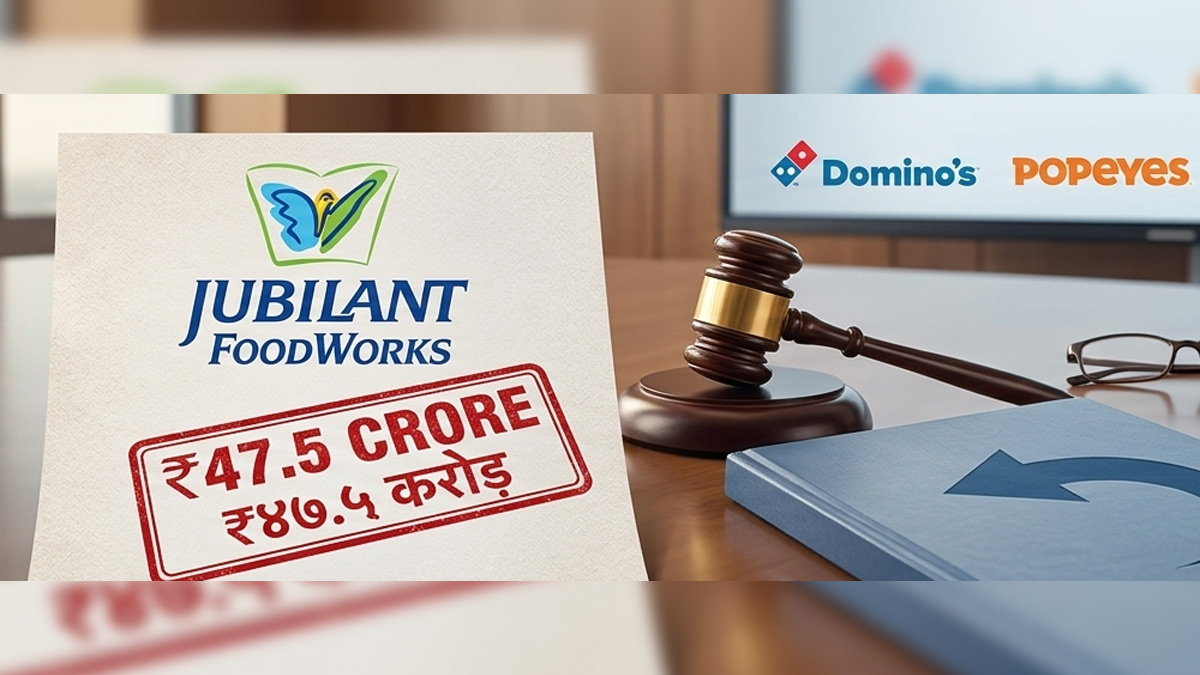
MUMBAI: Jubilant FoodWorks Limited has landed in a tax tussle after receiving a GST demand of Rs 47.5 crore from the office of the additional commissioner of CGST and central excise in Thane, Maharashtra.
The order, issued under the provisions of the Central Goods and Services Tax Act, 2017, relates to an alleged incorrect classification of certain services under the category of restaurant services. According to the tax authorities, this classification resulted in a short payment of goods and services tax for the period between the financial years 2019-20 and 2021-22.
The demand includes Rs 47.5 crore in GST along with an equal amount as penalty, in addition to applicable interest. The order was received by the company on March 13, 2026.
In a regulatory filing to the BSE Limited and the National Stock Exchange of India Limited, the company said it disagrees with the order and believes its arguments were not adequately considered.
The company is preparing to challenge the decision and plans to file an appeal. It added that once the redressal process is complete, the demand is likely to be dropped.
Despite the sizeable figure attached to the notice, the company said it does not expect any material impact on its financials, operations or other activities.
The disclosure was signed by Suman Hegde, EVP and chief financial officer, who confirmed that the company received the order at 19:06 IST on March 13 and has already initiated steps to contest it.
The development places the quick service restaurant major in the middle of a tax debate that could hinge on how certain restaurant-linked services are classified under GST rules. For now, the company appears ready to take the matter from the tax office to the appeals desk.