MAM
US ad, mkting trade groups urge Congress to pass spam law

NEW YORK: The American Association of Advertising Agencies (AAAA), the Association of National Advertisers (ANA), and the Direct Marketing Association (The DMA) have issued an open letter. This urges Congress to immediately pass national anti-spam legislation.
The open letter underscores an increased collaboration among the three groups to curb the growing spam epidemic and protect legitimate commercial e-mail communication. Last month, the AAAA, ANA and the DMA released a set of practices for businesses that defend and enhance the viability of legitimate e-mail marketing.
The letter reads, “Spam is a serious and complicated problem. It requires a national solution to protect the national marketplace. We, urge you to pass the CAN-SPAM Act (S. 877) or the Reduction in Distribution of Spam Act (H.R. 2214). Immediate action is required to go after the bad guys on spam and avert a crisis that will bring legitimate electronic commerce to a screeching halt.”
“37 inconsistent state spam laws and proposals for a do-not-e-mail list or labeling represent a knee-jerk reaction to the spam crisis. These approaches do nothing to reduce the intrusion of spam piling up in consumers’ inboxes. What’s worse, they mandate inconsistent standards that make compliance by honest businesses extraordinarily burdensome. If Congress fails to act, commercial e-mail communication—a promising vehicle for conducting commerce—will be severely injured. Based on the latest US Census Bureau data, some 12 per cent of the current $138 billion Internet commerce marketplace is driven by legitimate commercial e-mail. This translates into a minimum $17.5 billion spent in response to commercial e-mails in 2003 for bedrock goods and services such as travel, hotels, entertainment, books, and clothing.”





Brands
Jubilant FoodWorks faces Rs 47.5 crore GST demand, plans appeal
Tax authorities flag alleged misclassification of restaurant services
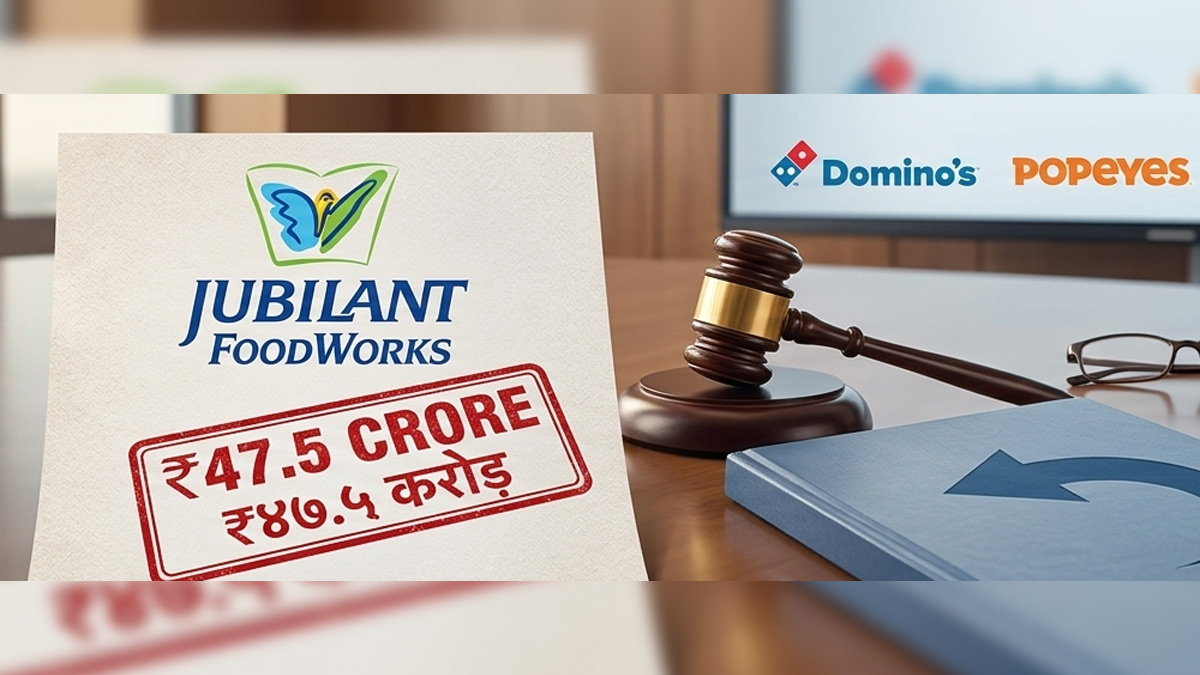
MUMBAI: Jubilant FoodWorks Limited has landed in a tax tussle after receiving a GST demand of Rs 47.5 crore from the office of the additional commissioner of CGST and central excise in Thane, Maharashtra.
The order, issued under the provisions of the Central Goods and Services Tax Act, 2017, relates to an alleged incorrect classification of certain services under the category of restaurant services. According to the tax authorities, this classification resulted in a short payment of goods and services tax for the period between the financial years 2019-20 and 2021-22.
The demand includes Rs 47.5 crore in GST along with an equal amount as penalty, in addition to applicable interest. The order was received by the company on March 13, 2026.
In a regulatory filing to the BSE Limited and the National Stock Exchange of India Limited, the company said it disagrees with the order and believes its arguments were not adequately considered.
The company is preparing to challenge the decision and plans to file an appeal. It added that once the redressal process is complete, the demand is likely to be dropped.
Despite the sizeable figure attached to the notice, the company said it does not expect any material impact on its financials, operations or other activities.
The disclosure was signed by Suman Hegde, EVP and chief financial officer, who confirmed that the company received the order at 19:06 IST on March 13 and has already initiated steps to contest it.
The development places the quick service restaurant major in the middle of a tax debate that could hinge on how certain restaurant-linked services are classified under GST rules. For now, the company appears ready to take the matter from the tax office to the appeals desk.