Digital
Unleashing global influence on social media, AI, and inclusive marketing magic!

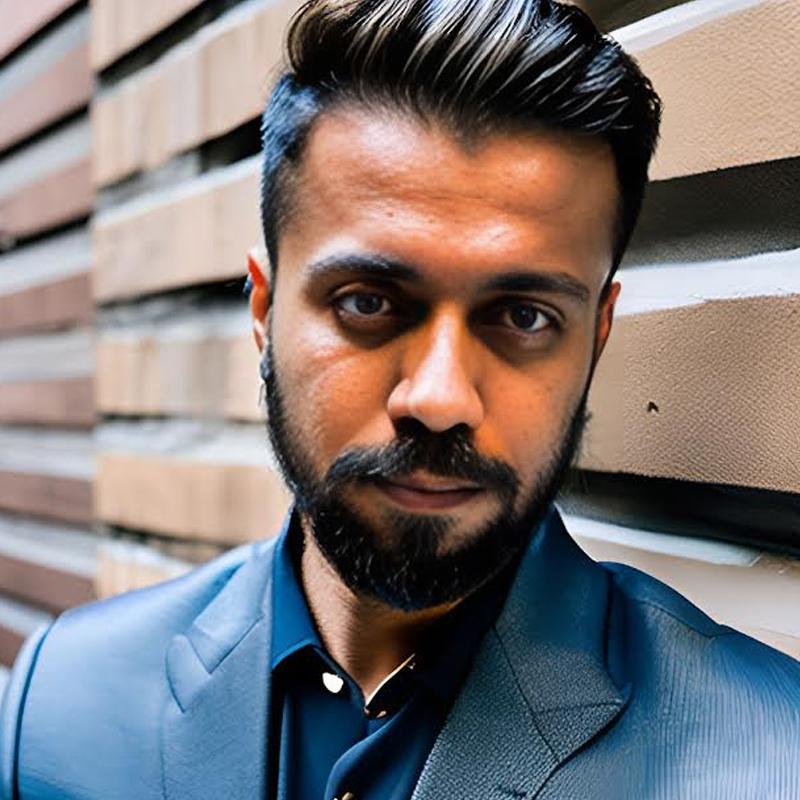
Mumbai: With its vision to be the HYPE Capital of the world and work with brands, content creators, and celebrities across the globe, The Hype Capital envisions a connected world where people and brands can effortlessly share ideas, build relationships, and collaborate on a global scale. The company believes that technology should enhance human connections, break down barriers, and promote inclusivity.
The company has a wealth of experience working with some of the most renowned companies and individuals in this field and has a comprehensive understanding of sports, F&B, nightlife & entertainment industries. Anil Kumble, Harbhajan Singh, Cheteshwar Pujara, and Robin Uthappa are a few of the reputed cricketers The Hype Capital is working with. The company has also collaborated with companies including Crickstore, sLick Entertainment, Nustart Sports, Tenvic Sports, Spektacom Technologies, St. Anthony’s Goa, O’Aido Goa, Bobby’s Fat Fish Goa, HappyGrub, Redroom, and others.
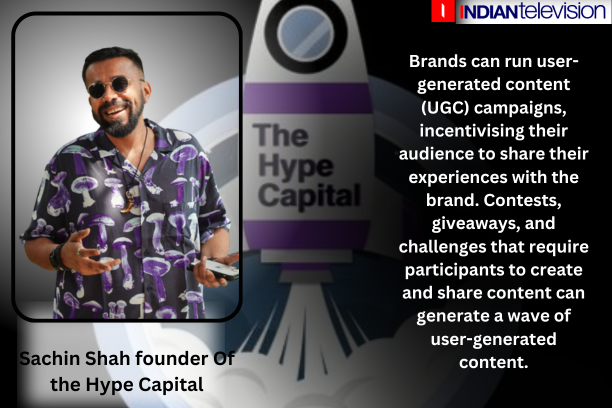
Indiantelevision.com in an email interaction spoke to Sachin Shah founder Of the Hype Capital to connect people and brands globally through technology for inclusive collaboration.

On the role of the user, segmentation helps in creating targeted social media campaigns
By dividing the target audience into distinct groups based on demographics, interests, behaviours, and preferences, businesses can tailor their content and messaging to resonate with each segment. This approach ensures that the right message reaches the right audience, increasing engagement and conversions. Segmentation allows for personalised communication, allowing brands to address specific pain points and provide relevant solutions. It also enables marketers to optimise their ad spend by focusing resources on the segments that are most likely to convert, resulting in higher ROI and campaign effectiveness.

On the key advantages of using social media for business marketing compared to traditional methods
In today’s ever-evolving digital landscape, social media has emerged as an indispensable component of marketing strategies. With an overwhelming number of active users on popular platforms like Facebook, Instagram, and Twitter, the race to captivate audiences and foster meaningful engagement has reached new heights.
Social media allows real-time, two-way communication between businesses and their audience, fostering engagement, and building relationships. It provides a platform for immediate feedback, enabling brands to adapt their strategies and offerings based on customer insights. Besides that, social media offers a higher level of targeting and segmentation options, ensuring that businesses can reach their ideal audience with precision. Also, social media is cost-effective, allowing businesses to reach a wide audience at a fraction of the cost of traditional advertising. Lastly, social media provides extensive data analytics and reporting, allowing businesses to measure their performance, track conversions, and optimise their marketing strategies in real-time.

On the role, storytelling plays in building a strong social media presence
Storytelling allows brands to connect with their audience on an emotional level and create a narrative that resonates with their values and aspirations. Storytelling humanises the brand, making it relatable and engaging. By sharing compelling stories, brands can capture attention, evoke emotions, and build a community of loyal followers. Storytelling can be leveraged through various content formats such as videos, blog posts, and social media posts. It is essential to craft narratives that align with the brand’s identity and values, keeping the audience at the centre. Authenticity, creativity, and consistency are key to successfully leveraging storytelling for a strong social media presence.

On disruptive technologies, such as augmented reality or virtual reality, changing the landscape of social media marketing
In the fast-paced world of social media marketing, disruptive technologies have revolutionised how brands and marketers engage with their target audience. And, the emergence of disruptive technologies has brought about significant transformations in various industries, including social media marketing. Modern technologies have fundamentally altered how businesses interact with their target audiences, opening up new marketing and advertising options. Virtual reality, artificial intelligence, and augmented reality are just a few examples of disruptive technologies that have substantially changed how social media marketing is done.
AR and VR offer immersive experiences that engage and captivate audiences in ways traditional media cannot. Brands can leverage AR filters, interactive 3D experiences, and virtual tours to showcase products, create memorable brand interactions, and enhance customer engagement. These technologies provide opportunities for virtual product try-ons, experiential marketing campaigns, and virtual events, bringing brands closer to their audience and driving deeper connections. AR and VR also facilitate social sharing, as users are more likely to share unique and immersive experiences, amplifying brand reach and virality.
Additionally, social media marketers can benefit greatly from the data-driven insights provided by AI-powered analytics. AI algorithms are excellent at seeing patterns, trends, and correlations in vast amounts of data processed in real time, providing marketers with in-depth audience insights. These insights are essential for streamlining targeting tactics, improving content strategy, and identifying untapped growth potential. Brands and marketers may make well-informed decisions and succeed in the changing world of social media marketing by utilising data-driven insights.
On businesses encouraging their audience to generate and share content related to their brand
Brands can run user-generated content (UGC) campaigns, incentivising their audience to share their experiences with the brand. Contests, giveaways, and challenges that require participants to create and share content can generate a wave of user-generated content. Secondly, businesses can actively engage with their audience by responding to their comments, acknowledging their contributions, and featuring their content on official brand channels. This recognition motivates the audience to continue generating and sharing content. Lastly, businesses can collaborate with influencers or brand ambassadors who can inspire and encourage their followers to create and share content related to the brand. By fostering a sense of community and appreciation, businesses can effectively stimulate audience-generated content. It is a tough nut to crack, and requires a lot of patience, but when has phenomenal results in the long run.
On best practices for maximising return on investment (ROI) through social media advertising
Defining clear objectives and key performance indicators (KPIs) is essential to measure the effectiveness of campaigns accurately. Businesses should align their advertising goals with their overall marketing objectives. Secondly, thorough audience research and segmentation enable businesses to target the right audience with tailored messaging, optimising conversion rates. Thirdly, continuous monitoring and optimisation of campaigns based on real-time data are critical to maximise ROI. Regularly analysing campaign performance, testing different ad formats, and refining targeting parameters contribute to ongoing improvement. Lastly, leveraging remarketing techniques to re-engage with interested audiences and utilizing A/B testing to optimise ad creative and copy can significantly improve ROI in social media advertising. The key takeaway is that brands should have well-defined goals, experiment a lot, analyse the data of the experiments and improvise.
On the ways of brands currently utilising Artificial Intelligence (AI) in their social media advertising and marketing strategies
AI-powered algorithms analyse vast amounts of data to generate actionable insights, enabling brands to optimise targeting, content creation, and ad placements. AI-powered chatbots provide personalised customer interactions, handle inquiries, and offer recommendations. AI also plays a role in content curation, analysing trends, and user preferences to suggest relevant content. Additionally, AI assists in sentiment analysis, monitoring brand mentions, and social listening, allowing brands to proactively respond to customer feedback and manage their online reputation effectively. As AI continues to advance, brands are exploring new possibilities such as predictive analytics, dynamic ad optimisation, and voice recognition technologies to further enhance their social media advertising and marketing strategies.
On AI assisting social media marketers in generating and delivering more impactful content for brands and marketers
By analysing vast amounts of data, AI algorithms can identify patterns, trends, and user preferences, allowing marketers to create highly relevant and personalised content. AI-powered tools provide insights into optimal posting times, and content formats, and even suggest content ideas based on audience interests. AI also aids in automating repetitive tasks, freeing up marketers’ time to focus on strategy and creative aspects of content creation. Additionally, AI-driven image recognition and natural language processing enable brands to create visually appealing content and craft compelling messaging that resonates with their audience. Overall, AI empowers social media marketers to deliver more relevant, engaging, and impactful content that drives audience engagement and achieves desired marketing outcomes.
On the key steps which businesses need to be taken when faced with a social media crisis
When faced with a social media crisis, businesses should act swiftly and strategically to mitigate potential damage. The following key steps can help navigate through a crisis effectively:
a. Monitor and Assess: Actively monitor social media platforms to identify the issue and gauge its severity. Understand the sentiment, reach, and impact of the crisis on the brand’s reputation.
b. Respond with Transparency: Respond promptly and transparently, addressing concerns and providing accurate information. Acknowledge any mistakes or issues and offer a genuine apology if necessary.
c. Centralise Communication: Designate a central spokesperson to handle communication and ensure a consistent message across all channels. Avoid conflicting statements and provide regular updates to keep stakeholders informed.
d. Engage with the Audience: Engage with affected individuals directly, offering support and assistance. Show empathy, address concerns, and provide reassurance where appropriate.
e. Monitor and Manage Sentiment: Continuously monitor social media platforms, addressing negative sentiment and responding to queries or comments promptly. Engage in constructive conversations and actively participate in the resolution process.
f. Learn and Improve: Once the crisis is resolved, conduct a thorough review to identify lessons learned. Update crisis management protocols, refine social media strategies, and implement measures to prevent similar situations in the future.

Digital
Content India 2026 opens with a copro pitch, a spice evangelist and a £10,000 prize for Indian storytelling
Dish TV and C21Media’s three-day summit puts seven ambitious projects before an international jury, and two walk away with serious development money
MUMBAI: India’s content industry gathered in Mumbai this March for Content India 2026, a three-day summit organised by Dish TV in partnership with C21Media, and it wasted no time making a statement. The event opened with a Copro Pitch that put seven scripted and unscripted television concepts before an international panel of judges, and by the end of it, two projects had walked away with £10,000 each in marketing prize money from C21Media to support development and international promotion.
The jury, comprising Frank Spotnitz, Fiona Campbell, Rashmi Bajpai, Bal Samra and Rachel Glaister, evaluated a shortlist that ranged from a dark Mumbai comedy-drama about mental health (Dirty Minds, created by Sundar Aaron) to a Delhi coming-of-age mystery (Djinn Patrol, by Neha Sharma and Kilian Irwin), a techno-thriller about a teenage gaming prodigy (Kanpur X Satori, by Suchita Bhatia), an investigative crime drama blending mythology and modern thriller (The Age of Kali, by Shivani Bhatija), a documentary on India’s spice heritage (The Masala Quest, hosted by Sarina Kamini), a documentary on competitive gaming (Respawn: India’s Esports Revolution, by George Mangala Thomas and Sangram Mawari), and a reality-horror competition merging gaming and immersive fear (Scary Goose, by Samar Iqbal).
The session was hosted by Mayank Shekhar.
The two winners were Djinn Patrol, backed by Miura Kite, formerly of Participant Media and known for Chinatown and Keep Sweet: Pray & Obey, with Jaya Entertainment, producers of Real Kashmir Football Club, also attached; and The Masala Quest, created and hosted by Sarina Kamini, an Indian-Australian cook, author and self-described “spice evangelist.”
The summit also unveiled the Content India Trends Report, whose findings made for bracing reading. Daoud Jackson, senior analyst at OMDIA, set the tone: “By 2030, online video in India will nearly double the revenue of traditional TV, becoming the main driver of growth.” He noted that in 2025, India produced a quarter of all YouTube videos globally, overtaking the United States, while Indians collectively spend 117 years daily on YouTube and 72 years on Instagram. Traditional subscription TV is declining as free TV and connected TV gain ground, forcing broadcasters to innovate. “AI-generated content is just 2 per cent of engagement,” Jackson added, “highlighting the dominance of high-quality human content. The key for Indian media companies is scaling while monetising effectively from day one.”
Hannah Walsh, principal analyst at Ampere Analysis, added hard numbers to the picture. India produced over 24,000 titles in January 2026 alone, with 19,000 available internationally. The country now accounts for 12 per cent of Asia-Pacific content spend, up from 8 per cent in 2021, outpacing both Japan and China. Key exporters include JioStar, Zee Entertainment, Sony India, Amazon and Netflix, delivering over 7,500 Indian-produced titles abroad each year. The top importing markets are Saudi Arabia, the UAE, Egypt, the United States and the Philippines. Scripted content dominates globally at 88 per cent, with crime dramas and children’s and family titles performing particularly strongly.
Manoj Dobhal, chief executive and executive director of Dish TV India, framed the summit’s ambition squarely. “Stories don’t need translation. They need a platform, discovery, and reach, local or global,” he said. “India produces more movies than any country, our streaming platforms compete globally, and our tech and creators win international awards. Yet fragmentation slows growth. Producers, platforms, and tech move in different lanes. We need shared spaces, collaboration, and an ecosystem where ideas, technology, and people meet. That is why we built Content India.”
The data, the pitches and the prize money all pointed to the same conclusion: India is not waiting for the world to discover its stories. It is building the infrastructure to sell them.







