MAM
Uncovering ONDC: India’s next D2C growth catalyst


Mumbai: The Indian e-commerce landscape is going through a monumental shift with the introduction of the Open Network for Digital Commerce (ONDC).
The government of India started this initiative to build a new era of interconnected e-commerce in India – providing small and medium businesses a fair shot in the game.
This further breaks the marketplace monopoly.

And the results are evident. ONDC has successfully captured the spotlight, with more than 100,000 merchants spanning 273 cities and 45 diverse entities in its network, including big brands like ITC, Red Bull, and Hindustan Unilever.
D2C brands all across the country have also embraced ONDC with open arms.
How D2C brands leverage ONDC to expand their footprint in India
D2C brands are often directly connected to shoppers through their own websites. This enables them to control all aspects of their business – from brand messaging and pricing to creating targeted marketing strategies.
However, challenges are expected to arise due to the complexities of reaching the target audience, competing with big brands, logistics, and payment processing.
SellerApp head of product design Sowmya Nagarajan said “ONDC is the way for D2C brands to reach more niche markets. At SellerApp, we ensure a smooth onboarding experience for brands onto the network, along with dedicated support to enrich their catalogue and storefront and amplify their brand presence.”
SellerApp, an e-commerce data analytics company, formed a strategic partnership with Google Cloud, an offering by Alphabet (NASDAQ: GOOGL) and Yes Bank to help MSMEs and brands onboard into the ONDC network and grow their reach in PAN-India. The company also provides market intelligence and business monitoring solutions for brands like Red Bull, True Elements, Patanjali and Bombay Shaving Company as part of their support.
Furthermore, D2C brands can alleviate these challenges by leveraging seller applications like SellerApp, Growth Falcon, and uEngage to get unrestricted access to the ONDC network. This gives them the wide reach and flexibility they require to grow.
Here’s how the process works:
Connect your D2C Store: Connect your D2C store to an ONDC-enabled platform like SellerApp to ensure smooth onboarding to the network.
Publish your product catalogue: Update your product catalogue on the ONDC network with the help of SellerApp catalogue management.
Simplify order and payment processing: SellerApp also simplifies order and payment processing – enabling you to provide a robust customer experience to buyers.
Monitor inventory: Monitor your inventory and get a snapshot of your inventory level with SellerApp to prevent last-minute stockouts.
ONDC Benefits for D2C Brands
ONDC brings countless benefits to D2C brands growing their e-commerce footprint in India.
Uncover opportunities in tier two & three cities
ONDC breaks urban barriers, connecting D2C brands with eager consumers in smaller cities and addressing logistical hurdles.
Escape marketplace monopoly
ONDC helps D2C brands break free from predatory pricing, biased algorithms, data limitations, and logistical challenges and levels the playing field for brands of all shapes and sizes.
Expedite product launches
ONDC enables D2C brands to launch new products, test the market and gather feedback rapidly. It allows them to improve the products before scaling up.
Enables mobile commerce
ONDC integrates with diverse mobile apps, like messaging, social media, gaming apps, etc., widening the reach for D2C brands in the Indian market.
Navigating the challenges of ONDC for D2C brand
While ONDC presents a golden opportunity for D2C brands to expand their e-commerce ventures in India, it’s not free from challenges.
Intense competition
The accessibility of the ONDC network escalates competition among D2C brands and e-commerce players.
Brands must create distinct value propositions, focus on quality and provide outstanding customer experiences to stand out.
Compliance adherence
ONDC requires brands to comply with certain government regulations, which can hinder growth opportunities.
Brands need to proactively ensure all compliances are met to protect customer trust and maintain ethical business practices.
Cybersecurity vulnerabilities
ONDC exposes brands to cybersecurity risks like hacking, phishing, malware and fraud, requiring an extra layer of security measures to safeguard customer data.
Looking ahead
The Government of India’s ONDC initiative is set to revolutionise the e-commerce landscape in India, providing SMBs and D2C brands access to a more inclusive market. However, some challenges exist regarding implementation and adoption.
D2C brands must weigh the opportunities and risks of joining the ONDC network and make smart decisions to set the stage for their future growth in India.





Brands
KKR sixes to power EV charger rollout under VIDA campaign
Cricket meets clean mobility as big hits spark India’s charging growth
NEW DELHI: VIDA, the electric mobility arm of Hero MotoCorp, has teamed up with Kolkata Knight Riders to launch a campaign that turns cricketing flair into real-world impact.
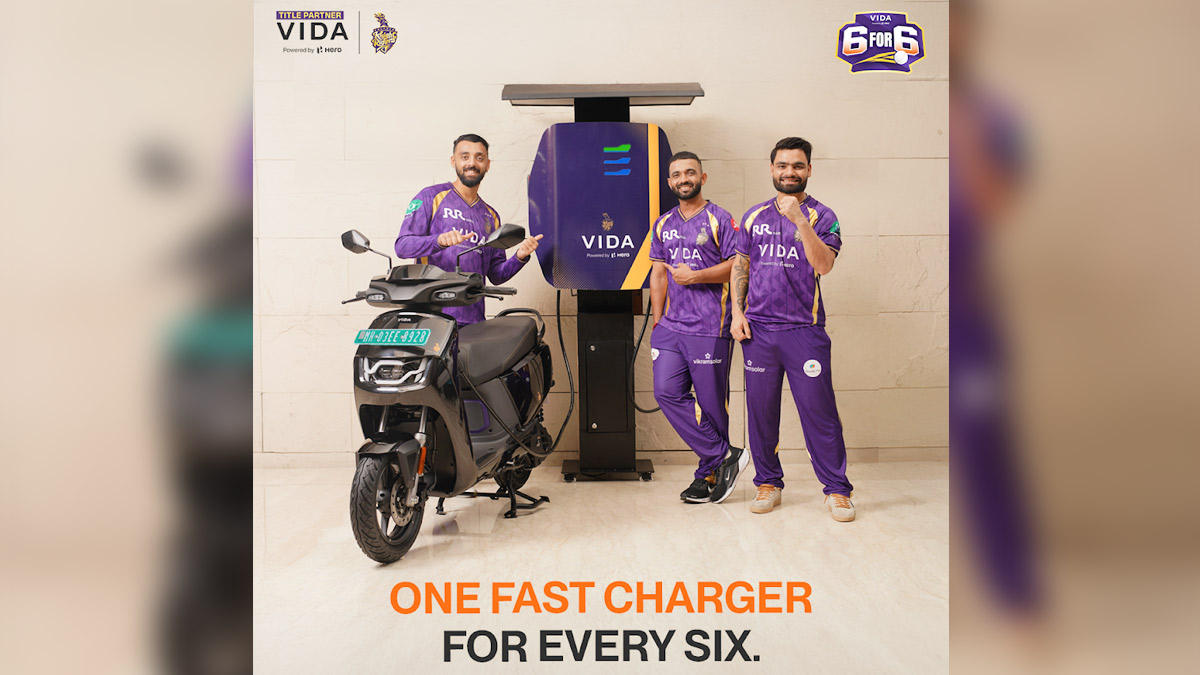
Titled ‘6 for 6’, the initiative promises to install a 6kW fast EV charger for every six hit by KKR during the ongoing Indian Premier League season. The idea is simple but powerful, as each big hit on the field contributes directly to expanding India’s fast-charging infrastructure.
The campaign builds on VIDA’s growing network, which already spans over 5,300 fast-charging points across more than 430 cities. With EV adoption gaining pace, the brand is using cricket’s mass appeal to accelerate both awareness and infrastructure growth.
Explaining the thinking behind the move, Hero MotoCorp emerging mobility business unit chief business officer Kausalya Nandakumar said, “Cricket has an incredible ability to unite and inspire millions across the country. With the ‘6 for 6’ campaign, we are turning every big hit on the field into a step towards a cleaner and a more accessible mobility future.”
She added that VIDA’s expanding fast-charging network and removable battery technology are designed to make EV ownership more convenient and practical for everyday users.
From the franchise’s side, the campaign is also about giving on-field moments a larger purpose. Kolkata Knight Riders chief executive officer Venky Mysore said, “The ‘6 for 6’ campaign exemplifies the potential of sport as a platform for meaningful, real-world impact. By linking every six to the expansion of EV charging infrastructure, this partnership transforms fan excitement into tangible progress.”
As part of the rollout, VIDA has introduced co-branded charging stations in KKR’s signature colours, with a flagship installation unveiled alongside team players. The chargers are designed for quick top-ups, powering VIDA scooters from zero to 80 percent in about an hour, while also being positioned along key highways to support longer journeys.
The initiative also taps into VIDA’s removable battery system, which allows users to charge using standard household plug points, adding flexibility to the charging ecosystem.
By blending the thrill of cricket with the urgency of clean mobility, VIDA and KKR have found a neat way to make every six count twice, once on the scoreboard and again on India’s road to an electric future.








