MAM
Ugro Capital appoints Anuj Pandey as CEO to steer its MSME engine into the next growth orbit

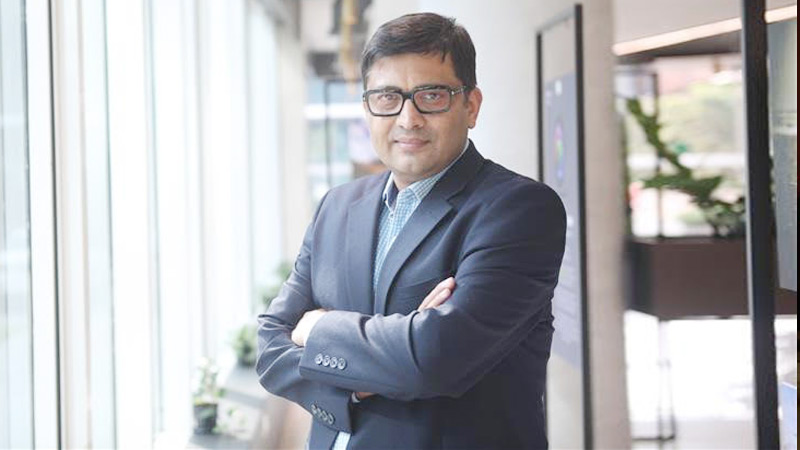
MUMBAI: In India’s rapidly evolving fintech theatre, few stages are as critical-and crowded-as MSME lending. Now, Ugro Capital, the Datatech-driven non-banking finance company, has shuffled the deck and handed the reins to a man who helped script its earliest chapters. On 24 June 2025, Ugro announced the elevation of Anuj Pandey—its founding team member and chief risk officer—as its new chief executive officer (CEO).
Pandey steps into the top role at a pivotal moment. The company recently crossed Rs 12,000 crore in assets under management, announced the strategic acquisition of Profectus Capital, and completed a large capital raise. With over 300 branches now in play, Ugro is transitioning from growth mode to scale mode—and Pandey has been handed the wheel to steer that transition.
As CEO, he will lead Ugro’s national MSME operations, digital lending platforms, and partner ecosystem. He will report to Shachindra Nath, founder, VC, & managing director, who continues to helm the company’s strategic direction, governance and investor relations.

“Anuj’s elevation as CEO is a natural progression in Ugro’s evolution as an institution. As a founding member and chief risk officer, his deep understanding of MSME lending, risk, and technology-driven operations makes him ideally suited to lead execution. I will remain fully accountable for Ugro’s strategic and governance matters, while Anuj takes full charge of the business. With recently concluded acquisition of Profectus and a large capital raise, I along with my Board felt that Ugro should be steered under one strong hand who exclusively focuses on the operating performance while I continue to focus on the strategic agenda of making Ugro as India’s largest financial institution for MSME financing”, said Nath.
Pandey, an alumnus of IIM Lucknow with a B.Tech in Mechanical Engineering, brings over 25 years of experience from GSK Consumer, ABN AMRO, Barclays and Religare. At Ugro, he has built its credit and risk architecture from the ground up, helping shape the company’s data-first approach to MSME financing.
“I have been working with Shachindra for last seven years even prior to our formation. Being part of Ugro’s founding journey has been a privilege. I look forward to leading the next phase of growth — expanding our MSME reach, scaling embedded finance, and continuing our mission of ‘solving the unsolved’ credit gap with discipline and innovation”, Pandey said.
His elevation signals Ugro’s ambition to pair entrepreneurial vision with institutional rigour. As it scales new lending frontiers, the company appears intent on anchoring growth with continuity—and trusting those who helped build the ship to now captain it.

Brands
Amagi unveils AI tool to automate artwork for global streaming
New engine turns video into ready-to-use artwork across formats fast
MUMBAI: Amagi has introduced an AI-powered artwork engine designed to take one of streaming’s most tedious tasks off human hands: resizing and reworking visuals for every platform imaginable.
Part of its Amagi Now platform, the new feature uses the company’s Amagi Intelligence layer to transform raw video into fully formatted, platform-ready promotional artwork in a single workflow. In an industry where one title may need dozens of visual variants for Fast, OTT, connected TV and social media, the promise is simple: less manual grind, more creative breathing room.
Instead of starting with templates, the system begins with the content itself. It scans video frames, picking up cues like composition, emotion and narrative context to identify the one image that best captures the story. That chosen frame becomes the foundation for everything that follows, with editorial teams stepping in only to review and fine-tune.
From there, the engine gets to work. A single approved image is automatically adapted into multiple formats, from widescreen to vertical and everything in between, while preserving framing and complying with platform-specific layout rules. The result is a neat trick: consistency without compromise, and speed without chaos.
Crucially, the entire process stays within the Amagi ecosystem. Teams can add logos, overlays and title treatments directly inside the platform, while built-in controls ensure every change is tracked and approved without endless back-and-forth.
For media companies juggling global distribution, the implications are significant. Artwork that once took days can now be turned around in minutes, cutting down on repetitive tasks, rejection cycles and operational overheads.
Amagi co-founder and chief technology officer Srividhya Srinivasan, said the move is about more than efficiency. As the number of platforms multiplies, she noted, the final step of getting the right visual in the right place has become a bottleneck. By teaching AI to understand the “soul” of a story, the company aims to free up creative teams while keeping storytelling intact.
The feature is already available to Amagi Now users, with a broader rollout planned from the second quarter of 2026.