MAM
Triple A Awards: Lowe maxes, Contract follows with Quadrant getting three golds

It’s awards season in the advertising business. The first of them: the seventh edition of The Triple A Awards (in association with leading Indian television network Star India) got going last night at Mumbai’s Oberoi Hotel.

A lounge suit affair held by the poolside, it attracted head honchos from advertising right from JWT head Mike Khanna to RK Swamy’s Sreenivasan Swamy to Saatchi & Saatchi’s R.Shantakumar, Lowe Lintas’s Prem Mehta, Bates India’s Madhukar Kamath, Mudra’s Kaushik Roy, Madison’s Sam Balsara, and Canco’s and 3Aof I president Ramesh Narayan, and London-based art and creative guru Graham Fink and his partner Dierdre Allen of the Fink Tank.
Also present was O&M’s Piyush Pandey, which led Balsara who hosted the proceedings to remark that “I hope Piyush’s presence lays to rest any controversy that the media is trying to play up about O&M and the 3A of I.”
Marketing veterans such as Hawkins’ Brahm Vasudeva, and the Tata Group’s J.C. Chopra, Eureka Forbes’s COO Bal Palekar, Levers’ director (personal products) Arun Adhikari, and director (detergents) Aart Weizburg, also marked their presence.
The evening commenced with a rendition of the Barbara Streisand hit single Memory by Sharon Prabhakar, which talked about the bad times that the advertising industry has gone through last year and how it is seeking a silver lining. An impeccable performance if there was any by India’s Evita.
Sam Balsara and Canco boss Ramesh Narayan were the sole two individuals on stage who handed out the awards. Fink – best known for his British Airways campaign which featured humans creating a face – came in as a break. He scolded the fraternity for not being buoyant about the awards and the wins. He mimicked the walk of the Lowe Lintas rep who walked up to receive the awards and told him to not look miserable. (This remark led Balki to comment later that he does not need any Finks or Pandeys or Khanna to teach Lowe how to walk or talk while receiving an award). Fink then went to talk about how he masqueraded as an old man in London to get a job in Collette, Dickens and Pierce, a creative hotshop in those days. He also extolled ad professionals to ask themselves what is their message, quoting Mahatma Gandhi who once said “My message is my Life.”
The big awards went to Levers (The Advertiser of the Year), Quadrant (Showcase of the Year – Press, Contract bagged the silver and HTA the bronze), Lowe Lintas (Showcase of the Year, joint silvers to Contract and HTA), Everest and Saatchi (joint gold for Campaign of the Year for Parle Agro’s Frooti Digen Verma campaign, and Maruti Udyog’s WagonR respectively; Levers’ Pepsodent toothpaste got the silver).
The awards were marked by the absence of any entries from O&M. The Abbys which are slated to be held on 9 March 2002, will be marked by the absence of any entries from Lowe Lintas. Apparently, a schism has been created in the industry last year, since Lowe Lintas’ Balki and O&M’s Piyush Pandey got into a media brawl about the manner in which the Abbys were being judged.



MAM
Ameya Velankar steps down as Uber’s head of marketing for India & South Asia
Veteran marketer exits after more than seven years with the ride-hailing giant.
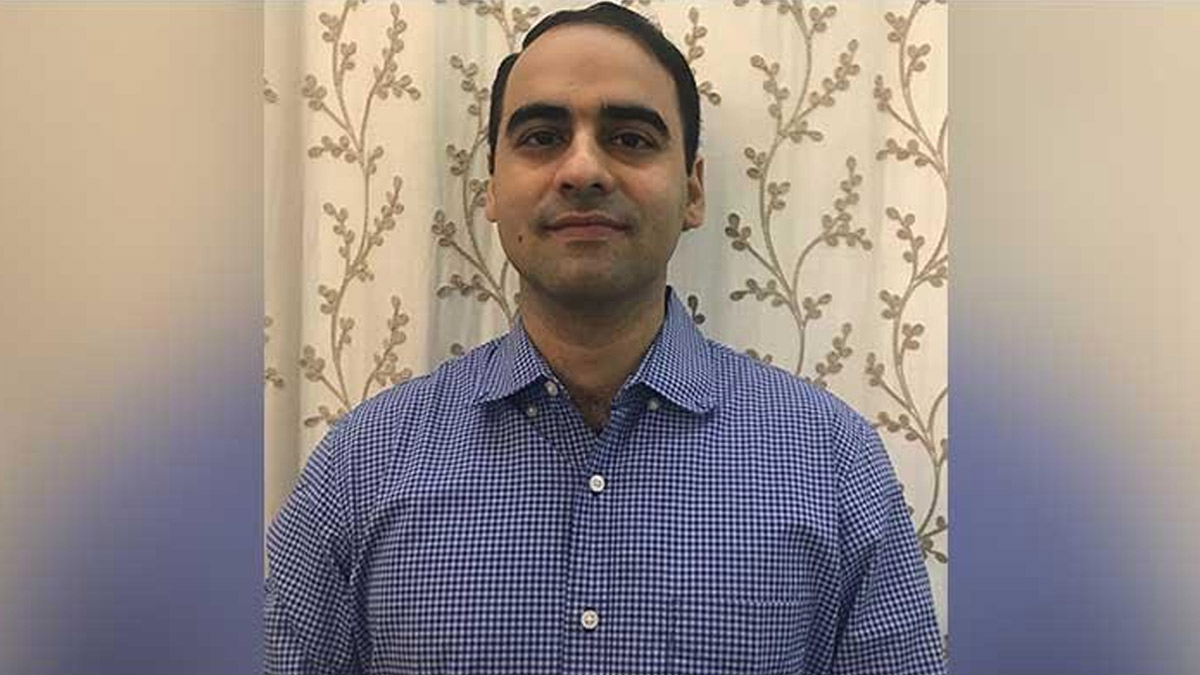
MUMBAI: After more than seven years of steering Uber through the bumpy roads of India’s mobility market, Ameya Velankar has decided to change lanes. Ameya Velankar has stepped down as Head of Marketing for India and South Asia, marking the end of a significant chapter at the ride-hailing company. He had been with Uber since 2019, taking on multiple roles in product and category marketing before rising to lead the marketing function for the region in 2021.
During his tenure, Velankar played a key role in strengthening Uber’s positioning in one of its most competitive and dynamic markets. He helped drive localised marketing strategies and scale adoption across key offerings such as Auto, Moto, Rentals and Intercity, tailoring global platforms to Indian consumer needs.
Prior to joining Uber, Velankar built his marketing expertise at leading consumer companies including SC Johnson and Marico, where he handled category and product leadership roles. His career began at RPG Enterprises.
Details of his next professional move have not been disclosed.
In a fast-evolving mobility landscape where brands constantly battle for attention, Ameya Velankar helped Uber stay relevant and resonant with millions of Indian users. As he moves on from the driver’s seat of marketing, the company will now look for fresh ideas to keep its wheels turning smoothly.






