MAM
Top Campaigns on VMate that stole the show in 2019

Mumbai: The ultimate benchmark to gauge a brand’s consumer engagement is through the success of its campaigns. And as all good things take time, so does planning and implementing a campaign which strikes a cord with the intended audience and is an instant hit.
Creating a popular campaign, which is easy to recall and connect with, becomes all the more challenging given the infinite number of visual stimulations that consumers get bombarded with everyday. However, this is exactly where certain brands steal the show, managing to weave unique campaigns that stay with the consumers forever. Trending short video platform VMate, launched in India in 2017, lies in this hallowed category.
Over the past three years, VMate’s easy-to-use video editing tools, innovative VR Stickers and related features have garnered tremendous appeal amongst Indian citizens of all ages. It has empowered them to not just express their creativity but has given them the power to own their future by becoming a steady income-generating source for them. Many of VMate’s popular video creators have become influencers earning incomes worth Rs 2 lakhs per month, purely on the basis of their talents showcased through their VMate short videos.

Here is a peek into some of these campaigns oozing with brilliance and top-notch consumer engagement scores:
VMate Nach Baliye Lakhpati campaign
Starting with its partnership with Star Plus’s dance reality show ‘Nach Baliye-Season 9; the innovative campaign required VMate users to shoot 15 seconds videos on the app supporting their favourite jodis, earn rewards and money worth Rs 1 crore and connect with similar interest creators. The campaign was a hit receiving a record number of 5,00,000 videos being uploaded by users making it one of the most successful promotions by VMate.
VMate Filmistan Campaign
Another first-of-its-kind campaign, it provided users a grand opportunity to collectively win cash prizes and rewards worth Rs 3 crore. The campaign utilized VR stickers of Bollywood movie sets in India which could flawlessly replace VMate’s video background offerings, successfully transporting the users to the desired film sets, virtually. With around 3 lakh people creating & publishing videos on the platform, the winners won exciting prizes, including a car, a Smartphone, television and more.
VMate Roshan Karo India Campaign
VMate users were in for a delightful Diwali winning amazing prizes ranging from cars to gold coins, smart TVs and Smartphones. The campaign saw celebrity jodis from VMate’s association with Nach Baliye Lakhpati campaign on the app making festive videos using VMate's vibrant Diwali stickers, while encouraging fans and app users to light up India.
VMate’s Sunny Ka New Year Call campaign
Reiterating its brand promise of being the ultimate user-centric short video trending platform, VMate sent its users into a delightful frenzy by announcing this engaging New Year campaign featuring popular star Sunny Leone. It invited users to make a creative video with Sunny Leone video call sticker and get once-in-a-lifetime chance to go on a date with Sunny. 24-year old Abdullah Pathan from Uttar Pradesh was the campaign’s winner. The popular video creator on VMate with a fan following of around 6 lakh followers had a date-to-remember with the queen of charm Sunny Leone.




Brands
GUEST COLUMN: Beyond layoffs, India emerges as creative-tech hub
Shift in hiring and AI-led workflows is reshaping global media and marketing
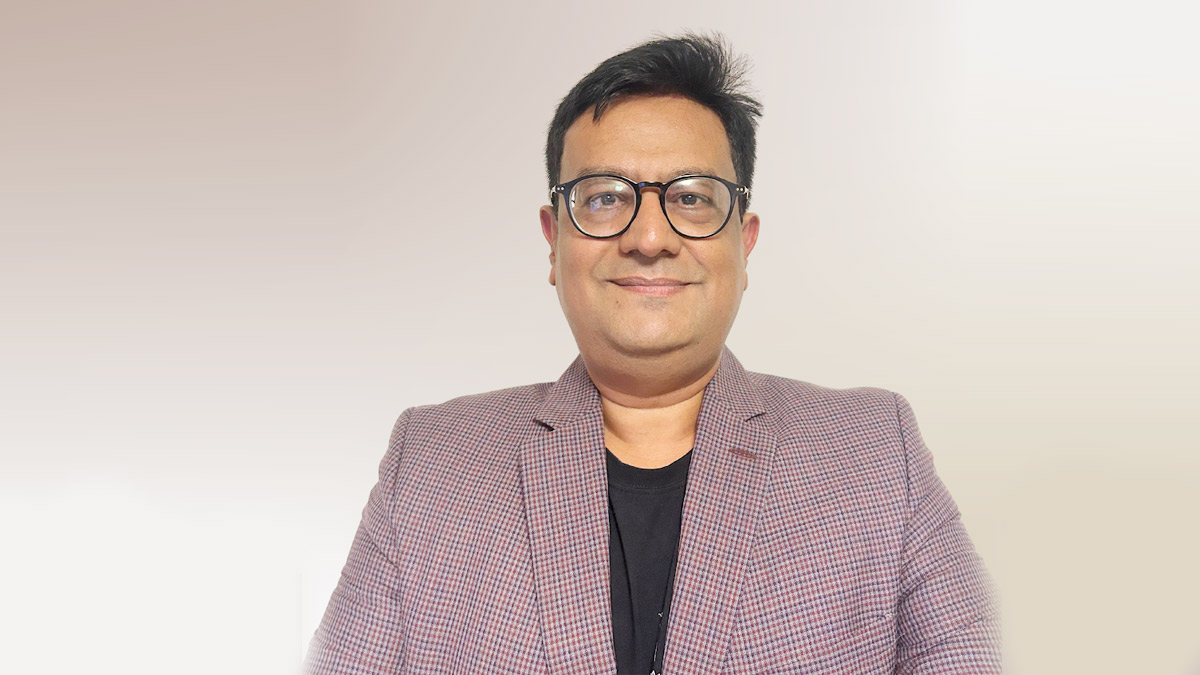
MUMBAI:The global narrative around layoffs in media and technology may suggest contraction, but a deeper transformation is reshaping how creative and tech capabilities are built and deployed. For Sanjil Zaveri, general manager – India at Brandtech+, this shift is less about decline and more about redistribution, one that is positioning India at the centre of a new global operating model. In this piece, Zaveri explores how integrated workflows, AI-powered production, and evolving talent demands are redefining the creative-tech ecosystem, why India is emerging as a strategic hub for global content and innovation, and what this means for the future of media, marketing, and talent.
The global headlines around layoffs in technology and media continue to dominate industry conversations. From platform restructuring to reduced marketing spends, the narrative suggests a slowdown across the creative and digital ecosystem.
But beneath these headlines, a different shift is underway, one that is quietly redefining how creative and technology work is delivered globally.
Hiring is not disappearing; it is being redistributed. And India is increasingly at the centre of this transition.
A structural shift in the creative-tech ecosystem
The media and marketing landscape is undergoing a fundamental reset. Brands today are moving away from fragmented agency models and siloed teams toward more integrated, agile structures.
Creative, technology, and media are no longer operating in isolation. Campaigns are now built through connected workflows, where ideation, production, and optimisation happen simultaneously.
This shift is forcing organisations to rethink where and how teams are built. Increasingly, the focus is on capability, speed, and scalability, rather than geography alone.
India’s emergence as a creative-tech hub
India’s role in this evolving ecosystem has expanded significantly.
Traditionally positioned as a backend execution market, India is now playing a far more central role in global campaign delivery. Teams based here contribute not just to production, but also to strategy, content development, and performance optimisation.
This is particularly relevant in a market where content velocity has increased dramatically. With the rise of digital platforms, OTT, and always-on marketing, brands require high volumes of creative assets without compromising on quality.
Industry insights from Ernst & Young point to India’s growing strength as a global content hub, while NASSCOM continues to highlight the scale and depth of the country’s digital talent pool. Together, these factors create a compelling case for India as a foundation for more efficient, integrated content ecosystems serving global markets.
A global company’s perspective on India
At Brandtech+, this shift is already shaping how we operate.
As a global organisation working across creative, marketing, and technology, our talent strategy is increasingly driven by capability rather than location. India has therefore become a key market for both scale and strategic talent.
In the first quarter of this year, we have significantly accelerated hiring in India across creative, technology, and operations roles, moving well ahead of plan and continuing to build strong momentum. We are actively hiring across multiple functions, with India playing a central role in delivering integrated creativetech solutions for global brands.
These signals reflect a broader change in how global companies view India, not as a delivery centre, but as a hub for connected creative, data, and technology capabilities.
“While much of the global narrative is centred on contraction, what we are seeing in India is a different kind of growth,” says Sanjil Zaveri. “As a global company, we are investing in talent that can work across creative, data, and technology, because that is where the future of marketing is headed.”
AI and the new content economy
Artificial intelligence is playing a critical role in enabling this transformation.
In today’s media environment, the demand for content has scaled exponentially. Brands are expected to create, adapt, and optimise creative assets across multiple platforms in real time. The scale of this demand would be difficult to sustain through traditional production models alone.
AI is helping make this possible.
Rather than replacing roles, AI is streamlining workflows, automating repetitive tasks, accelerating production timelines, and enabling faster experimentation. This allows creative and strategy teams to focus on higher-value outputs.
“AI removes the mundane and elevates the meaningful,” says Zaveri. “It allows teams to focus on ideas and storytelling, while technology drives efficiency.”
For media platforms and advertisers, this is redefining how campaigns are built, moving from linear production cycles to continuous, data-driven content creation.
What this means for media talent
For professionals across media, advertising, and digital, this shift is redefining skill requirements.
The traditional boundaries between creative, media planning, and technology are blurring. Content creators are expected to understand performance metrics. Media professionals are working more closely with data, platforms, and automation. Collaboration across disciplines is becoming a core skill.
This is creating demand for hybrid talent, professionals who can operate across disciplines and adapt to rapidly changing workflows.
India’s talent ecosystem is particularly well suited to this environment. With strong capabilities across content, design, engineering, and analytics, the market offers a unique combination of scale and versatility.
Importantly, global exposure is no longer tied to relocation. Professionals in India are increasingly working on international brands and campaigns, collaborating with teams across markets in real time.
Looking ahead: India at the centre of the reset
What we are witnessing today is not a temporary phase; it is a structural reset in the global creative-tech ecosystem.
Layoffs may continue to shape short-term narratives, but they do not capture where long-term growth is being built. That growth lies in new operating models, integrated workflows, and markets that can deliver both scale and innovation.
India is firmly at the centre of this transformation.
As global media and marketing organisations continue to evolve, India’s role will only become more critical, not as a support market, but as a strategic hub for content, creativity, and technology-led innovation.
The future of creative-tech will be defined by collaboration, speed, and adaptability. And increasingly, it will be shaped from India.
Note: The views expressed in this article are solely the author’s and do not necessarily reflect our own.






