Executive Dossier
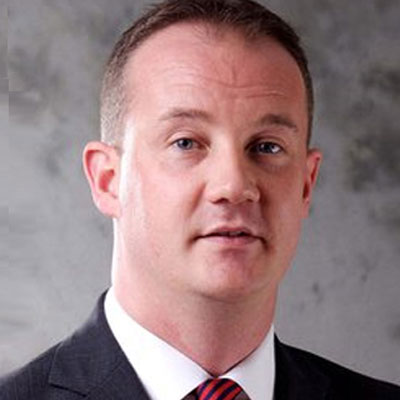
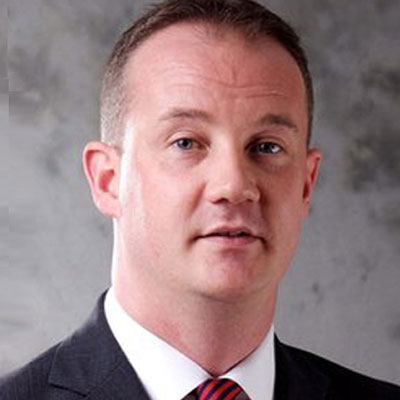
“Through loyalty programmes we aim to maintain the profitability of our customer”: Mark Spicer


Loyalty and incentive programmes from brands are not new to India, right from the points that one accumulates by swiping a credit card to the free recharge that groups such as the Future Group offer.
Multi-national loyalty and incentive programme player ICLP says that it helps customers connect and transact with brands in new ways every day and helps increase customer engagement with the brand.

ICLP India operations general manager Mark Spicer has over 20 years experience in the loyalty and incentives industry across all sectors with previous roles at Aimia, Maritz, Grass Roots and Skybridge Group. With particular experience in the telecoms and financial services sectors he has managed and delivered programmes for clients including Mobily, T-Mobile, O2 and Vodafone in addition to coalition programs and other pre-paid plastic card products. Spicer is responsible for managing the business, existing client relationships and driving continued commercial growth throughout India.
Excerpts of an interaction between Spicer and Tarachand Wanvari:
What are the various solutions that you offer? Could you elaborate with examples – in India and other countries?
With over 25 years of global experience, ICLP has a unique understanding of loyalty and a fully comprehensive range of solutions and capabilities to enable brands to meet their business and marketing objectives. We offer a full range of B2C and B2B end-to-end loyalty services – from consulting and understanding the clients business, through the customer journey right up to creating and development of a loyalty program to drive customer engagement and loyalty. The biggest part of the work we do is helping the client understand who their customers are by uncovering customer insights and analytics.
Are your loyalty solutions, card based or smartphone based or something else for the end consumer?
Our loyalty solution is customised based on the understanding of client’s business objectives and reasoning for the programme. Our solution can be anything from a simple card based system to non-card based system to digital/smartphone application but as per our experience ‘cards based system’ are still popular as it creates a sense of belonging and provide recognition to the customers. Take a look at some of the renowned frequent flyers programme like Miles and More, Asia Miles, Jet Privilege etc. there is a sense of pride among the higher tier members of owning a membership card.
What verticals are your target groups and why?
In the last few years, Indian market is going through considerable change. Companies have to adapt to the speed of the market to drive customer engagement and also to ensure customer returns. Indian companies that are focussing on acquiring and retaining their customers have become aggressive in implementing loyalty programmes.
We are targeting all the leading Indian MNCs across varied sectors but our core focus is financial services, telco and retail as they are highly competitive markets, customer churn rate is incredibly high and need the help in understanding their customer to ensure they remain loyal.
What according to you is the market size for your products/services in India? What kind of growth rates do you predict?
There are different estimations available in the market. As per our estimate, the exact size of the loyalty market in India is difficult to estimate or predict, as India is undergoing a lot of changes in terms of policies and processes. The loyalty market in India is still on a rise and at a nascent stage when compared to other developed countries.
There is tremendous scope of growth in this industry and at this stage estimation of the market size will not provide a correct picture.
You have entered quite late-there are a number of loyalty programmes already in India –Reliance or the Star cards, or discount offers from medical dispensaries like Religare or Apollo Pharmacy, or retail such as Future group, petro cards, tie up with credit and debit cards, etc.
I would argue we have arrived at the right time! Whilst there are programmes that have been around for a long time, the Indian consumer is greatly informed and therefore it’s now that an understanding of the customer is even more critical.
With more competitors in the market place – customers are shopping around and with the introduction of international brands, this too has increased competition – our arrival is at the same time as the market place changes and we are able to help with Glocalisation i.e. global expertise to act local.
Indian brands often devalue the points that have accumulated? Why? Do you think that this is appropriate and will not lower/dilute brand trust/faith? Does this happen in other countries?
As a programme grows, develops and changes, the value of point changes over time. No different to the fluctuation of currencies. Points are a currency and their value changes over time, sometimes increasing and sometimes decreasing.
As with foreign currencies, it does affect brand trust so therefore the business model attached to the programme has to take into account potential fluctuations to avoid them.
What kind of growth rates do you think your customer could achieve using your business intelligence, solutions and tools?
Our focus is to help organisations demonstrate the positive commercial impact that loyalty marketing strategies have on their organisation. Each loyalty programme will have differing results – but the goal is to at least maintain the profitability of the customer/actually keeping them as a customer. As the understanding of customers increases, then you can start to target them with offers which then potentially can increase their profitability.
One thing we do know – status tiers – once a customer has reached a high level of status tier, they try to maintain it. Therefore maintaining their level of profitability and ensuring they remain as a customer.
I understand that you intend to use inputs and data picked up from other geographies and use your experience in other countries for Indian brands. Do you think that you could slot businesses/brands catering to the Indian price sensitive consumer with other geographies?
We certainly spot similar behaviour across geographies and the example above is a great example of where customer behaviour is consistent across the globe.
Though India is particularly price sensitive market, these conditions are changing rapidly. With its young demographic pattern, India has a huge population in the younger age bracket and typical consumers in this group are ready to pay a price. They have large disposable income and earning more than yester years. Nobody could have thought of buying a cell phone for Rs 30,000+ years ago. Today, this age group across gender are buying iPhone, Samsung etc. all the latest gadgets.
India is in transition phase of being a smart market whereby the consumers are price sensitive but is also willing to pay a price for the right product suited to their needs. This has also become evident from our recent global consumer loyalty research that ICLP commissioned in association with Forrester Consulting – Crossing the Loyalty Chasm demonstrated that Indian consumers were more willing than consumers in any other market to pay a premium for products and services of brands that they are loyal to and are amongst the most likely to make recommendations and brand advocates.
What of consumer fatigue? What about the points accumulation/redemption infrastructure? A pique that one has often heard about point of sale (POS) expressing inability to swipe the points onto a card because of poor connectivity/infrastructure?
Nothing stays the same for long; therefore a loyalty programme must not stay the same. Programmes have to grow, develop, change and evolve in order to avoid consumer fatigue. Consumers are also changing at a fast rate so therefore it’s even more important that the programme changes at the same pace – which is hard and tricky to do – but doing nothing is not an option.
There are some great programmes in the Indian market, but customer expectations are continually increasing and therefore everything else has to keep up.



MUMBAI: Game faces on, pressure high India’s gaming ambitions are levelling up. Good Game, billed as the world’s first as-live global gaming reality show, has officially launched in India with a bold mission: to crown the country’s first Global Gaming Superstar.
Blending esports with mainstream entertainment, the show brings together competitive gaming, creativity and on-camera performance in a format that tests more than just joystick skills. Contestants will be judged on gameplay, screen presence and their ability to perform under pressure, reflecting how gaming has evolved from pastime to profession and pop culture currency.
Fronting the show are three high-profile ambassadors: actor and entrepreneur Samantha Ruth Prabhu, Indian cricket star Rishabh Pant, and gaming creator Ujjwal Chaurasia. The winner will take home Rs 1 crore ($100,000) among the largest prize pools for any Indian reality show along with the chance to represent India on a global stage.
Backed by a planned annual investment of up to Rs 100 crore, Good Game is also courting brand partners, promising a minimum reach of 500 million among India’s core youth audience. The creators position the show as a bridge between entertainment and interactive culture, offering long-format content, community engagement and commercial scale.
Auditions are now open to Indian citizens aged 18 and above, inviting amateur and professional gamers, creators and performers alike. Shortlisted candidates will be called for in-person auditions in Mumbai on 14 and 15 February, and in Delhi on 28 February and 1 March 2026.
With big money, big names and even bigger ambition, Good Game signals a shift in how India views gaming not just as play, but as performance, profession and prime-time spectacle.







