MAM
This Valentine’s Day, Cadbury Dairy Milk Silk urges consumers to go beyond their limits

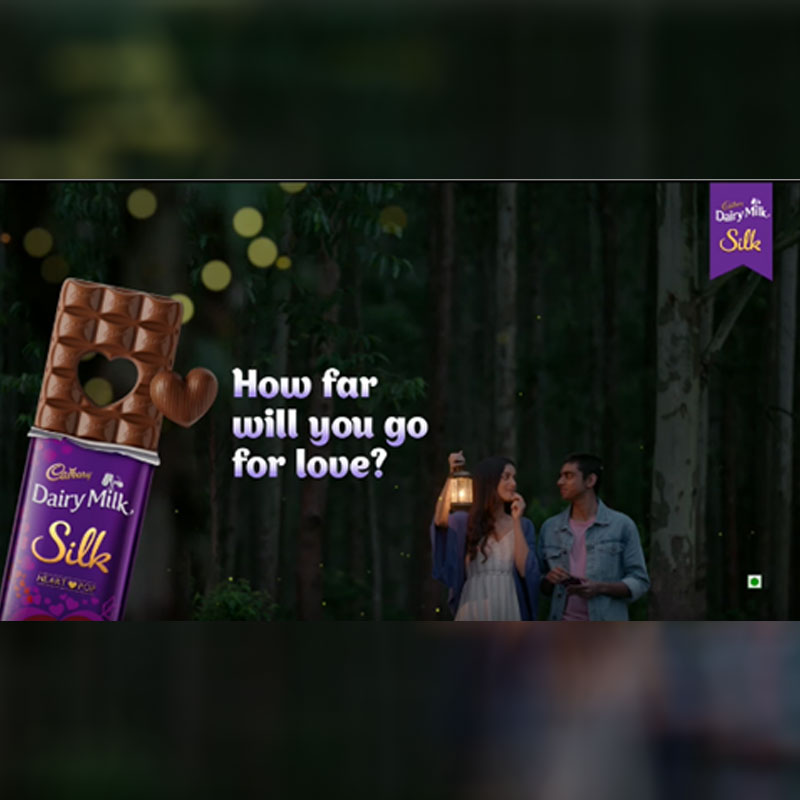
MUMBAI: Cadbury Dairy Milk Silk and Valentine's Day have a strong relationship going for almost a decade. CDM Silk has, over the years, helped many young and old to communicate their true feelings to their significant other with the very simple "Say it with Silk" approach during Valentine's Day.
Having journeyed with the consumers, making each Valentine’s Day special, it was time for the brand to move the love game a notch up. "How far will you go for love?" was conceived to nudge Gen Z to try and go beyond the usual and make it special for their partner this Valentines.
This year’s Cadbury Dairy Milk Silk Valentine's Day campaign has at its heart a video along with high impact outdoors, digital and in-store promotions, etc.

Commenting on the strategy for this Valentine’s Day, Mondelez India director marketing chocolates Anil Viswanathan: “We have received great admiration with the Pop Your Heart campaign over the couple of years and we are thrilled to take it into its third year. As leaders of the chocolate category in India, we attempt to identify new occasions and offer innovative ways for customers to convey their emotion with our products. These simple yet impactful ways help us to stay connected with our consumers. We hope our new heartwarming film and other exciting bundle on eCommerce will urge our consumers to go beyond their limits, for their loved ones, this Valentine’s Day.”
According to Ogilvy India senior executive creative director Zenobia Pithawalla and executive creative director Mihir Chanchani: “The task was to make Cadbury Dairy Milk Silk Heart Pop an integral part of every couple's Valentine Day Celebration. To do so, in our film the protagonist creates a magical moment which sets as a perfect background for the heart pop moment. Our film ends on question How far will you go for love?”
Ogilvy India head of strategic planning Ganapathy Balagopalan: "We discovered young people don't do enough to show the special someone in their life how they truly feel about them. This campaign encourages them to go the extra distance and make the special someone in their lives feel truly special on Valentine's day. It sharply positions the brand as a romantic symbol and has the potential to turn it into a cultural icon.”






MAM
GUEST COLUMN: How strategy and creativity drives ROI in digital campaigns
Why engagement, AI, and integrated strategy are redefining ROI in digital campaigns

MUMBAI: As digital marketing matures, the benchmarks of success are undergoing a fundamental shift. Reach and visibility, once the primary indicators of campaign performance, are no longer sufficient in a landscape defined by fleeting attention spans and evolving consumer behaviour. Today, brands are being challenged to move beyond surface-level metrics and focus on meaningful engagement, relevance, and long-term impact. ForAkhil Nair, founder and CEO at BigTrunk Communications, this transition from visibility to value reflects a deeper change in how campaigns are conceived, executed, and measured. In this piece, Nair explores why traditional metrics fall short, how AI and integrated thinking are reshaping campaign effectiveness, and why creativity, context, and agility are essential to driving real return on investment in modern digital campaigns.
The shift from visibility to value
For a long time, digital campaigns were judged by how many people saw them. If lots of people looked at it and the numbers were good, it meant things were going well. Impressions and clicks were what mattered. Over time, that didn’t feel like enough. Just because someone sees something doesn’t mean it makes an impact. People scroll through content quickly and often do not really notice what they have just seen. This has changed how we think about campaigns today.
There has been a shift in how brands look at this. It is not just about reaching people, but also about what happens after that, whether someone stops, engages, or remembers the brand later. That is what matters more. This moves the focus from visibility to value.
Some metrics we have relied on for years do not tell the full story. A campaign can reach a large audience and still fail to create a real connection. On paper, it may look strong, but in reality, it does not do much. That is why engagement and intent have become more important, especially whether people are interacting with the content or simply scrolling past it. Even small actions, like spending a few extra seconds or clicking through, matter more.
AI is helping brands understand how people behave and interact with them. It helps brands make better decisions so they can create campaigns that truly connect with people, not just reach a large audience. AI can also predict what will be popular and help refine campaigns, which makes marketing more effective. This allows marketing teams to focus more on generating ideas. In this way, AI supports both creativity and strategy.
Why integration and context matter
Another important factor is how well everything comes together. Campaigns often fall short when strategy, media, and creative are developed separately, because that lack of alignment is noticeable. When everything is aligned from the start, the campaign feels more natural and the message comes through clearly. It also fits better within the platform where it appears.
This matters because people behave differently across platforms. The way someone watches a video is not the same as how they search or read longer content. These differences may seem minor, but they can significantly impact performance. Paying attention to context helps campaigns feel more relevant and effective.
Creativity, agility and long-term impact
There is a common assumption that performance-driven campaigns leave little room for creativity, but that is not the case. The most effective campaigns often feel simple and real. People tend to ignore anything that feels overly polished or forced. Instead, they connect with content that feels familiar and relatable, something that reflects how they think or speak.
At the same time, campaigns do not always go as planned. Audience behavior, trends, and platform dynamics can shift quickly. What works initially may stop working later. That is why it is important to continuously track performance and make adjustments. Small changes over time can improve outcomes, and campaigns that stay flexible tend to perform better.
While short-term results matter, consistency over time plays a bigger role. When a brand shows up in a relevant and consistent way, it builds familiarity. Over time, that familiarity turns into trust.
Digital marketing has evolved, and expectations have evolved with it. Visibility still matters, but it is no longer enough on its own. What truly drives impact is whether a campaign connects, leaves a lasting impression, and leads to action. Being seen is easy, but being remembered is what really counts.







