MAM
There is a pot of gold for India at the end of it: Ashish Bhasin

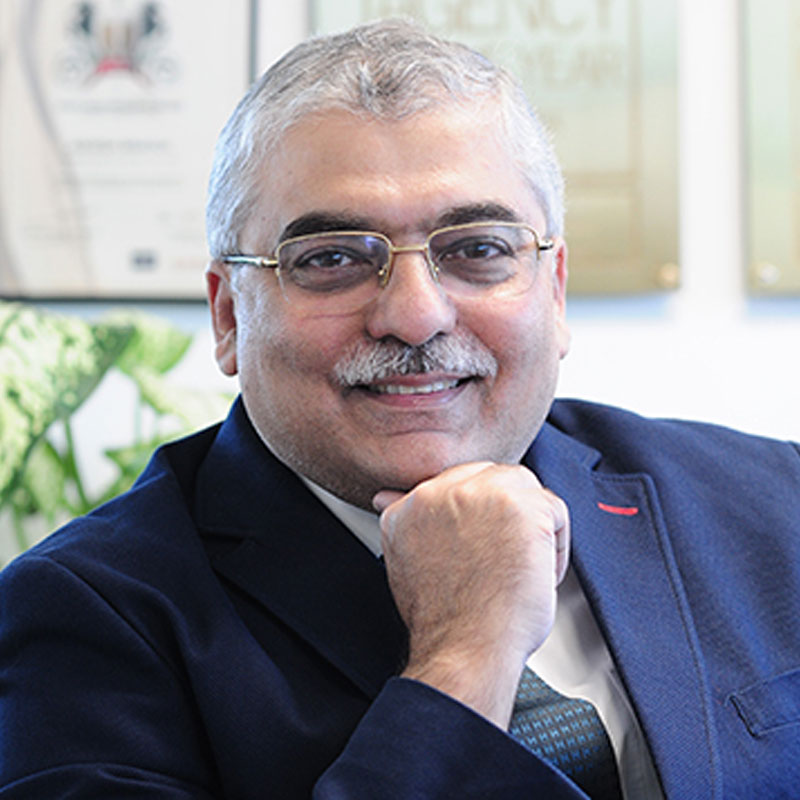
NEW DELHI: In the second part of this exclusive chat with DAN CEO APAC, chairman India Ashish Bhasin, the versatile leader talks about his experiences of handling various international markets during the lockdown, his expectations with the future of the Indian market, and how the industry can tackle this crisis.
You said that people should be planning for the short term. So, how are the immediate few months looking like to you? How can the industry prepare itself?

When this year had started we all, including my agency had forecasted a 10-12 per cent growth for the industry. Now, the reality is that we are going to end this year, most likely, at negative 15-20 per cent. There is a 30 per cent swing in what we had expected and what we will reach. Now, this 30 per cent amounts to around Rs 22000 – 23000 crores, which are going to get away from the industry. Some parts will be severely disrupted because of this.
First, accept it there's no point in hoping and wishing that suddenly a magic wand will be waived and everything will come back to normal. Now, you know at which levels the businesses are going to operate; so figure out the right structures. Invest only in the right people and resources. This is not the time to be adventurous. This is the time to conserve cash and reserve your resources.
Same goes for the clients. I am seeing people suggesting their clients keep advertising during the lockdown or they will disappear from the consumers’ minds. And in theory, it is right. But if we look at it practically, there is a liquidity crisis in the market. There are certain categories whose shops are shut completely. So, what’s the point in advertising after a certain limit?
I agree that advertising plays an important role in reviving any economy but this is the time to be sensible. Even the clients have to invest in critical resources to let their businesses survive.
I think the focus has to be on how do you make your money work harder. How do you make it more efficient? How do you get a bigger bang out of your buck? Once that happens and once the demand starts coming back you can then become a lot more adventurous.
Do you see more job losses happening in the coming few months?
Well, that’s the sad part about the pandemic, everyone will have to face some pain. At Dentsu, from the very beginning of the pandemic, we had taken this decision to take pay cuts at each level, to save jobs. Obviously, the rangers differed from market to market. It was very clear to us that there is going to be disruption and there might not be any revenue beyond a point.
Now the recovery has been much slower than expected, and certain businesses will have to take these tough decisions, be it advertising or any other. For example, in the events business, where there is movement from months now, then it’s not fair to continue with employees at much-reduced salaries.
Also, it will largely depend on if the festive season really picks up and businesses start coming back. But again, it will be at an industrial level. You will be seeing job losses and it will depend on the sector to sector and which part of the business one is in.
You have also been handling the APAC region of the network. Tell us more about the experience of handling other markets in the region, even beyond the pandemic.
It has been eleven months since I have taken the role and I think it would be fair to say that we have managed to stabilize it very quickly. There were some early calls I had to make, some quick management changes across the region were announced. I changed the CEO and the CFO of our Australia and New Zealand operation and created a new team over there. Some leadership changes were done in the Philippines market too. A few more were in the process but then the pandemic hit us.
So, the region was a little complicated and challenging for the network but I think we have taken some steps in the right direction. It is a work in progress but I am sure we will be able to take it there, increase our revenues. Right now, my focus is on building the right teams, getting the right people on board and empowering them.
And how did the various teams react to the pandemic?
So, we have a big office in Wuhan, which turned out to be the first city to get impacted. And they were quick and adept at handling the situation. We moved everyone to work from home within a few days and the learnings from there really helped us with other markets too. We set up Market Incident Teams (MIT) and Regional Incident Teams (RIT) to assess the whole process and impact. We were then able to take these lessons to countries like Vietnam and Indonesia. It came to India quite later and by that time we were prepared for it. We shifted thousands of people to work-from-home overnight. I am very thankful to all my teams for managing this so well.
Now, China was quick to recover, subsequent lockdown and unlocks have happened in Australia and now there is the second wave there. Markets like Taiwan were relatively less impacted. China is showing robust growth now, Korea has recovered pretty well. Vietnam has handled the pandemic very well.
And how’s the future of the Indian market looking like to you?
I think there is going to be month-on-month recovery from here on. Also, in the larger picture, in the next 2-3 years, 250 million more people are going to come onto the internet. Agriculture is doing now much better and we're investing in infrastructure. I think in the medium-term and long-term, India is going to be in a good position. I can guarantee you there is a pot of gold at the end of it for India.
Read more: Rural, tier 2 & 3 cities to drive the next leg of growth



Brands
Boeing appoints Barun as head of FP&A for global engineering function
Seasoned finance leader to steer budgets and strategy across global centres
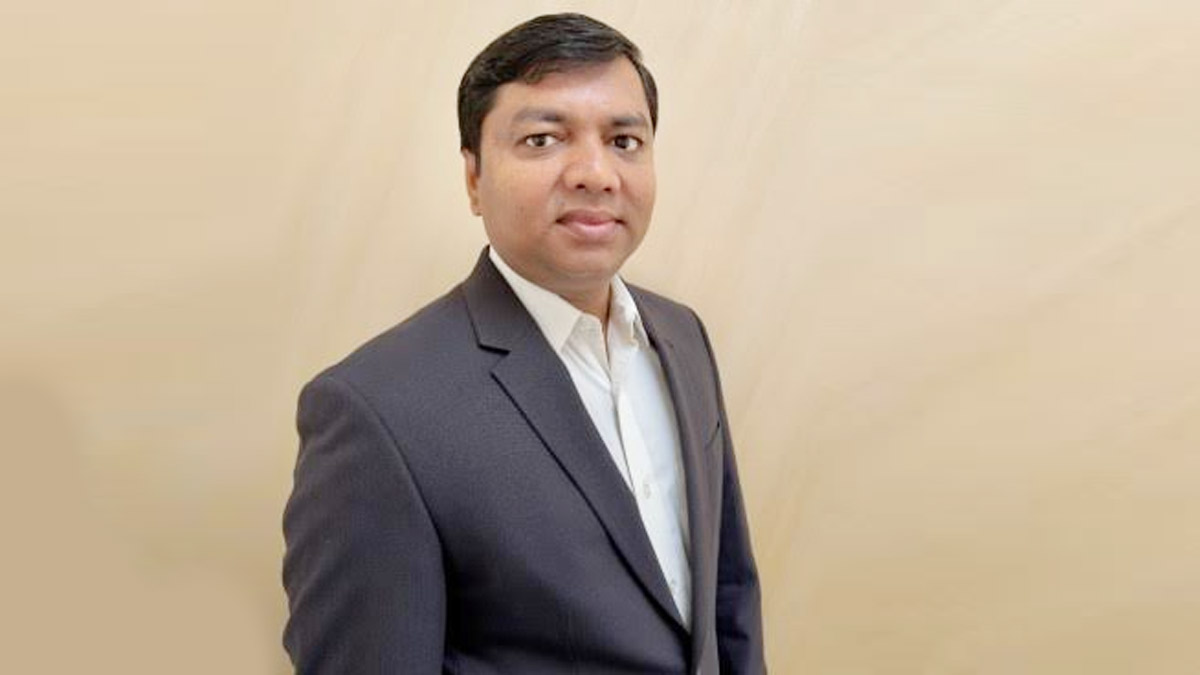
BENGALURU: Boeing’s finance cockpit has a new pilot, and he is no stranger to turbulence or transformation. Boeing has appointed Barun as head of FP&A for global engineering, placing him at the centre of financial strategy for its worldwide engineering and technology operations.
Based in Bengaluru, Barun steps into a role that is as expansive as it is critical. He will serve as the primary finance lead for Boeing’s Engineering and Technology Centers globally, working closely with executive leadership to shape financial decisions, manage complex budgets, and design scalable finance processes that support the company’s growing engineering footprint.
In a note announcing his move Barun said, “I’m excited to share that I’ve joined Boeing Global Engineering. This opportunity is incredibly meaningful to me not just from a professional standpoint, but also for what Boeing represents globally.” He added that he looks forward to contributing to an organisation that continues to shape the future of aerospace and innovation.
Barun’s mandate spans strategic financial leadership, operational oversight, and stakeholder engagement. From directing large-scale budgets and schedules to influencing long-term organisational goals, the role blends financial discipline with business foresight. He will also lead cross-functional teams and partner with finance colleagues worldwide to support engineering programmes across geographies, including India.
The appointment caps a long stint at Juniper Networks, where Barun spent over a decade, most recently as finance senior manager. There, he led FP&A for global product business units and G&A functions, driving budgeting, forecasting, and long-range planning. He also played a key role in enterprise-wide transformation, including spearheading an Oracle to SAP ERP migration and building advanced analytics capabilities using tools such as Tableau and SAP Analytics Cloud.
His earlier career includes finance leadership roles at Sony India Software Centre, Cognizant Technology Solutions, and Mphasis, where he focused on financial planning, governance frameworks, and operational efficiency across global delivery centres.
A chartered accountant from the Institute of Chartered Accountants of India, Barun brings nearly two decades of experience across financial planning, digital transformation, and analytics-led decision making.
His appointment comes at a time when global engineering operations are becoming increasingly complex and distributed, requiring sharper financial oversight and agile planning. With Barun at the helm of FP&A for engineering, Boeing appears to be tightening its financial playbook as it looks to scale innovation with discipline.






