Brands
The soft drink war: The wrath of summer

Mumbai: Summer season is officially here. And nothing speaks about the onset of summer like the soft drinks war. This year Pepsi, 7UP and now Fanta revamped their logos and Campa has made a comeback with its rebranding.
Without this actually being a game of chronology, this year, it all started with PepsiCo’s first move – the rebranding of 7Up – it happened in February. With Reliance acquiring a 50 per cent stake in Gujarat-headquartered Sosyo Hajoori Beverages (SHBPL) which owns the brand Campa, the former announced a comeback of the brand Campa Cola in the beginning of March. Come end of March, and behold, cola major Pepsi came up with a new logo. And now very recently it’s Fanta which has unveiled its new logo.
Indiantelevision.com spoke to ad industry mavens to figure out how the soft drinks brands are raising the temperature this summer with their decisions and more.

The heat, which is not so soft anymore
What’s the soft drinks war going to be like this summer, with so much happening by these brands?

Brand strategist and Brand-Building founder Ambi Parameswaran is of the opinion that the summer of 2023 should be interesting in the soft drinks industry. “For the last few years, the classic carbonated beverages have been under pressure from non-sugar non-carbonated drinks on one end and from high caffeine drinks like RedBull. With the entry of Campa there is bound to be a lot more excitement in the carbonates beverages sector.”
Brand Consultant and BBH & Publicis Worldwide India former CEO Subhash Kamath points out that the summer months are always a critical season for all soft drink brands, with fierce competition for share of the consumer’s throat. “I don’t see this year being any different, in that sense. But I do hope we’ll get to see some great advertising from them this season. It’s been a few years since I saw some really good ads in this category, especially in India.”
Garage Worldwide CEO Sanjay Deshmukh understands that Pepsico and Coke control 80 per cent market share. Because the whole GenZ has grown up with them. “Campa’s re-entry will generate some interest plus the assumption of nostalgic value. But this generation hasn’t tasted it at all. Campa tried in 2018 also. I think the communication of Campa this time will play a big role. It will have to be seen whether they can lure enough consumers to taste it. It will be a war of communication spends more than a price war. Though Reliance has their own distribution channels, but both Coke and Pepsi have tons of loyal customers. This time I guess it will be a longer war because Reliance can also match America’s spends.”
The consumer psyche
With such a strategic decision of so many soft drinks brands looking at rebranding/revamping their identities this year, how is it going to affect the perception of the consumer?
“The collective noise may stimulate consumption and get the sector to register high growth once again. Logo and identity changes are also part of the refreshment and will play a role. More importantly, the availability of new flavours, and deeper and wider distribution will all help the sector,” Parameswaran elucidates.

Kamath expresses that rebranding or revamping a brand’s identity isn’t a small decision. It needs a lot of thought and it’s a very strategic decision. Also, just changing the logo or the packaging isn’t an end in itself. It needs to be part of a larger narrative that the brand takes to its consumers. “Are you needing to refresh your identity to symbolise a new vision or purpose? Are you trying to contemporize the brand because your earlier logo was starting to look a bit fuddy-duddy? Are you trying to overcome a negative? Or are you just trying to inject some newness into your brand for a young audience, who thrives on newness?”
“In the case of the recent soft drink brands, we’ll need to see why the change has happened and what the new narrative is, if any,” he adds.
Deshmukh explains that Pepsi has always been a bold, challenger brand. And from time to time they re-invent themselves. “Fanta had different identities in Europe and America. Sprite had very fragmented communication in different countries. Since the digital world doesn’t have any boundaries, the consumers will experience seamless common communication and identity platform. So change won’t affect the brand perceptions so much. But we’ll hear some debates in the social world about which logo looks better. I mean old or new.”
Good, bad or ugly?
According to these experts, whose rebranding/revamping exercise is the most appropriate and will work for the brand?
Parameswaran sheds light saying that while Coke and Pepsi may have some market share erosion they will benefit from market expansion.
Kamath feels that that’s a difficult one to answer because from the outside, one can’t really opine on the strategic reason for the revamping/ redesigning.

“The new 7-up logo seems to be just a minor tweak from the older one. So is the case of Fanta, where the font etc remains the same. But interestingly, they’ve dropped the ‘leaf’ in the logo, which has been with them since the ’80s. It’d be interesting to know why.
In Pepsi-Cola’s case, the new design seems more revolutionary and a clear departure from the logo they’ve used for the past 12-14 years. Ironically, the new logo seems to be similar to the one they used in the ’90s. Am sure they have a strong reason for that.”
He goes on, “Which of these revamping/ redesigning initiatives will work will depend on the new narrative the brands present this summer. So we’ll have to wait & watch.”
“I think both Pepsi and Fanta are appropriate. Pepsi always pushes cultural movements and trends forward. The new logo looks more modern, bold and futuristic. Fanta in European markets looked more or less like the new one. It’s more spontaneous and portrays brands for all ages than for teens alone,” wraps up Deshmukh.

Brands
KKR sixes to power EV charger rollout under VIDA campaign
Cricket meets clean mobility as big hits spark India’s charging growth
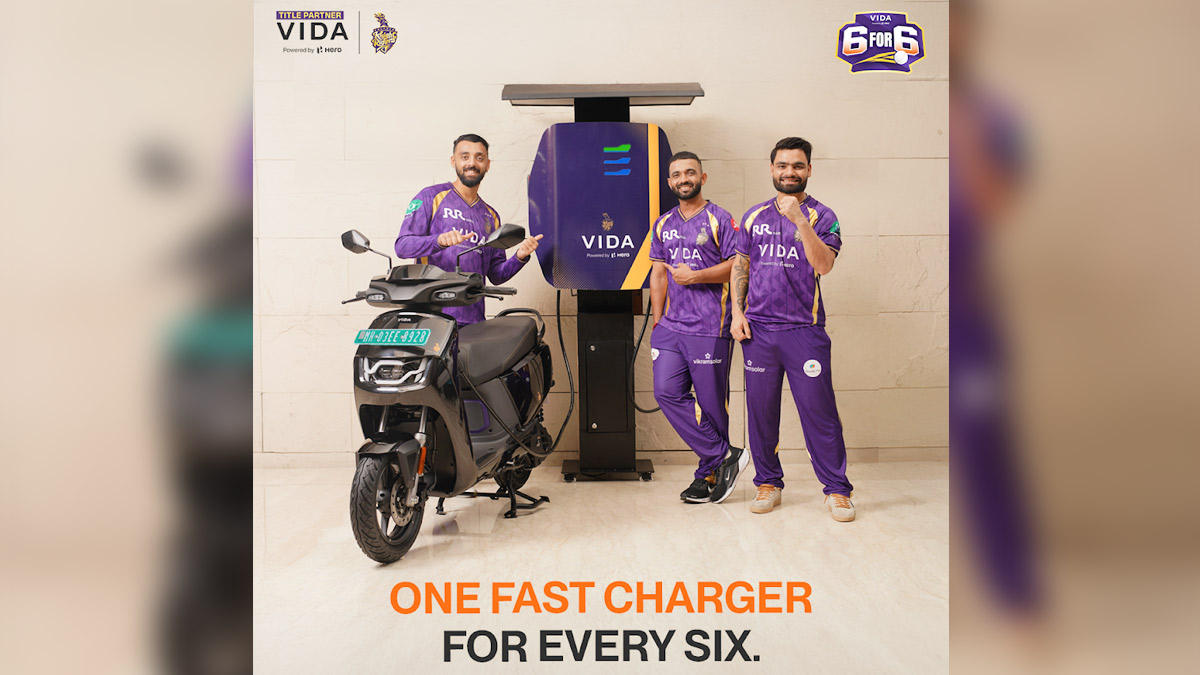
NEW DELHI: VIDA, the electric mobility arm of Hero MotoCorp, has teamed up with Kolkata Knight Riders to launch a campaign that turns cricketing flair into real-world impact.
Titled ‘6 for 6’, the initiative promises to install a 6kW fast EV charger for every six hit by KKR during the ongoing Indian Premier League season. The idea is simple but powerful, as each big hit on the field contributes directly to expanding India’s fast-charging infrastructure.
The campaign builds on VIDA’s growing network, which already spans over 5,300 fast-charging points across more than 430 cities. With EV adoption gaining pace, the brand is using cricket’s mass appeal to accelerate both awareness and infrastructure growth.
Explaining the thinking behind the move, Hero MotoCorp emerging mobility business unit chief business officer Kausalya Nandakumar said, “Cricket has an incredible ability to unite and inspire millions across the country. With the ‘6 for 6’ campaign, we are turning every big hit on the field into a step towards a cleaner and a more accessible mobility future.”
She added that VIDA’s expanding fast-charging network and removable battery technology are designed to make EV ownership more convenient and practical for everyday users.
From the franchise’s side, the campaign is also about giving on-field moments a larger purpose. Kolkata Knight Riders chief executive officer Venky Mysore said, “The ‘6 for 6’ campaign exemplifies the potential of sport as a platform for meaningful, real-world impact. By linking every six to the expansion of EV charging infrastructure, this partnership transforms fan excitement into tangible progress.”
As part of the rollout, VIDA has introduced co-branded charging stations in KKR’s signature colours, with a flagship installation unveiled alongside team players. The chargers are designed for quick top-ups, powering VIDA scooters from zero to 80 percent in about an hour, while also being positioned along key highways to support longer journeys.
The initiative also taps into VIDA’s removable battery system, which allows users to charge using standard household plug points, adding flexibility to the charging ecosystem.
By blending the thrill of cricket with the urgency of clean mobility, VIDA and KKR have found a neat way to make every six count twice, once on the scoreboard and again on India’s road to an electric future.








