Digital
The role of AI in public relations: Uncovering the pros and cons


Mumbai: The rapid advancement of technology in recent years has had a profound impact on various aspects of society, economics, and everyday life. This is particularly evident in the field of communications, where Public Relations (PR) has undergone significant changes. With the emergence of the internet and social media, PR professionals have had to adapt to new platforms and channels.
Artificial Intelligence (AI) has also made its mark in the PR industry, with a survey showing that 67.8% of PR professionals are already utilizing AI in their work. This growing link between AI and PR highlights the need to explore how AI is being used in the industry and the impact it has on the landscape.
While the introduction of AI in the PR industry will undoubtedly bring about changes, these changes do not necessarily have to be negative. With the right approach, AI can be a valuable tool for PR professionals.

One noticeable shift is that AI is taking over repetitive and mundane tasks that were previously time-consuming. This means that PR professionals need to develop new skills or refine existing ones to stay relevant in this changing landscape. The importance of critical thinking, adaptability, editing, and storytelling skills is emphasized in The State of PR Technology 2023 report.
AI offers several advantages in the field of PR. With its ability to automate repetitive tasks, it leads to substantial savings in both time and resources. It also enables quick analysis of large volumes of data, providing valuable insights for decision-making. AI helps identify target audiences accurately, leading to more personalized and effective communication. Additionally, AI plays a crucial role in crisis management by monitoring social media and news platforms in real-time, alerting PR professionals to potential crises and facilitating prompt responses. AI-powered chatbots and virtual assistants enhance customer engagement by providing personalized responses, improving the overall customer experience.
However, there are also concerns associated with AI in PR. The potential lack of empathy and emotional intelligence in AI systems can hinder the building of strong relationships. Ethical issues surrounding privacy, bias, and misinformation can also arise, affecting public trust. The automation capabilities of AI may lead to job displacement for PR professionals, particularly in tasks that can be easily automated. Moreover, an overreliance on technology can restrict creativity, intuition, and human judgment, which are crucial elements in the field of PR. There is also a risk to a company’s reputation as AI algorithms can make mistakes or misinterpret data, potentially resulting in inaccurate or damaging PR campaigns.
Conclusion:
It is important to note that while AI offers significant benefits in PR, human expertise and judgment are still essential. PR professionals need to interpret and contextualize the data and insights provided by AI tools, build relationships, and make strategic decisions based on their understanding of the brand and industry. AI should be seen as a tool that enhances and supports PR efforts, allowing professionals to work more efficiently and effectively.
The author of this article is Scenic Communication co-founder Anindita Gupta.




Digital
OpenAI’s Stargate lead Peter Hoeschele exits with two senior leaders
Trio behind compute push set to join new startup amid leadership reshuffle
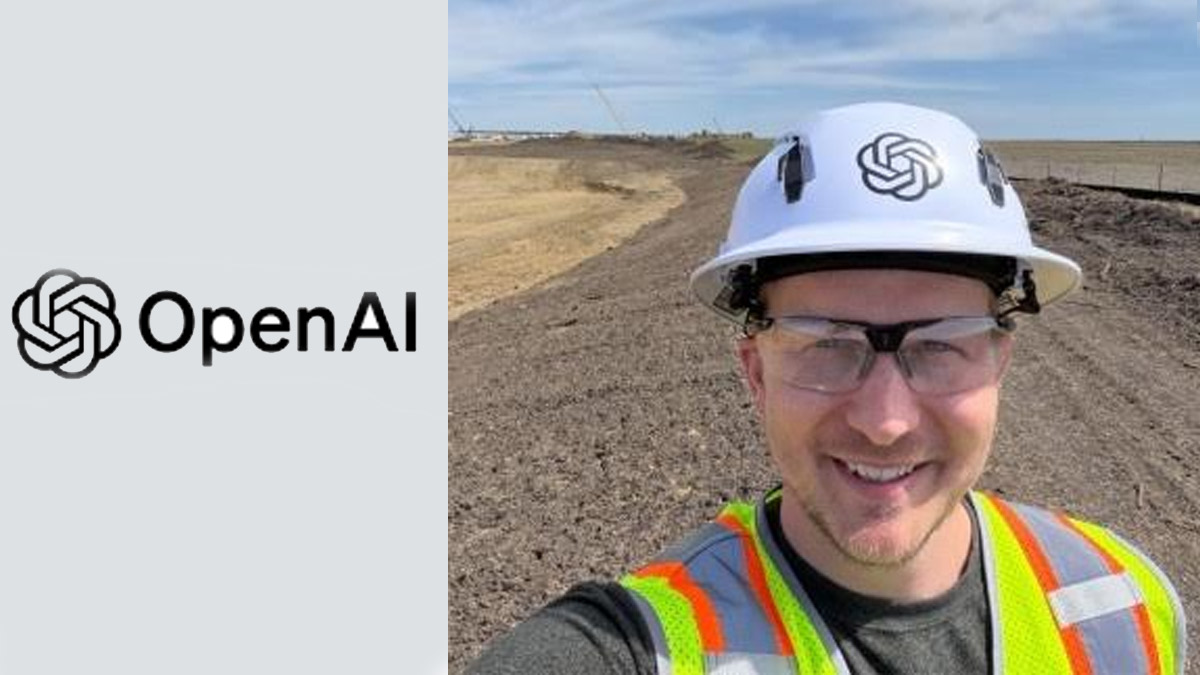
SAN FRANCISCO: Peter Hoeschele, a key figure behind OpenAI’s early Stargate data centre initiative, has exited the company, according to a report by The Information.
The departure is part of a broader leadership shift, with two other senior executives, Shamez Hemani and Anuj Saharan, also set to leave in the coming days. All three are expected to join the same new startup, although details about the venture remain under wraps.
The trio played a central role in OpenAI’s Stargate effort, an initiative aimed at building large-scale data centre capacity in-house to reduce reliance on external infrastructure providers. Their exits mark a notable moment for the company’s compute strategy as it continues to scale rapidly.
OpenAI spokesperson said in a statement to The Information, “We’re grateful for the contributions Peter, Shamez, and Anuj have made to OpenAI and wish them the very best in what comes next.” The company also pointed to the recent appointment of Sachin Katti to lead its industrial compute organisation, signalling continuity in its infrastructure roadmap.
OpenAI has indicated that it does not plan to directly replace Hoeschele’s role, suggesting a possible restructuring of responsibilities within the team.
As competition intensifies in the race to build next-generation AI systems, leadership changes in core infrastructure teams are likely to draw close attention. For now, the spotlight shifts to what this departing trio builds next, and how OpenAI adapts as it scales its ambitions.







