MAM
The Moms Co partners with Neha Dhupia for its haircare category; launches a new digital video campaign

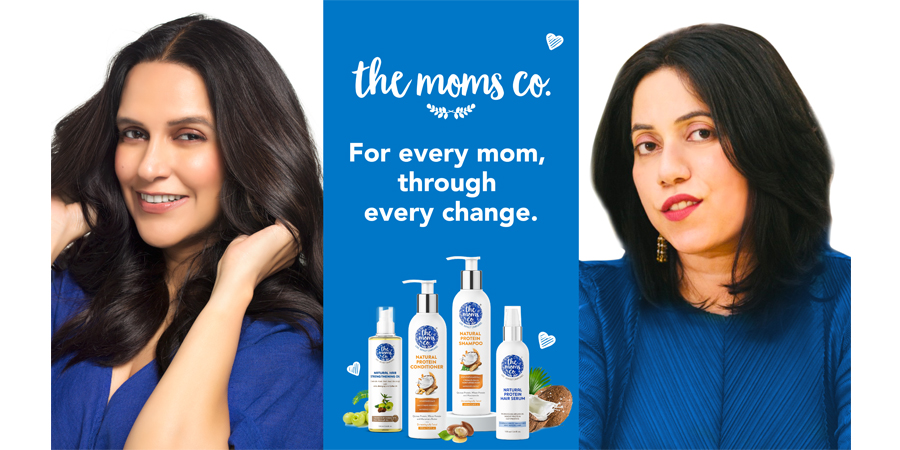
Mumbai: The Moms Co., India’s leading toxin-free and natural personal care D2C brand, launches a new digital video campaign featuring Neha Dhupia for their Natural Protein Hair Care Range recognising the remarkable journey of motherhood and the changing needs that they go throughout the journey by supporting them with toxin-free hair care products made especially for moms.
The campaign highlights how every mother faces moments where their hair becomes a joyful playground for their little ones, recognizing the devotion and sacrifices that define motherhood. At The Moms Co., we understand these experiences and provide unwavering support throughout their journey with our Sulfate Free Natural Protein Hair Care Range, where we commit to care for each mother just as they care for their babies. The hair care range is infused with the enriching power of quinoa and wheat protein and promises to strengthen and nourish your hair by preventing hair fall as one embraces the transformative journey of motherhood offering our dose of care and indulgence.

Speaking on the launch The Good Glamm Group CEO – Good Brands Co. Sukhleen Aneja commented, “At The Moms Co., we are committed to supporting the evolving needs for every mom through every change. With this new campaign launch, we aim to extend our support to every mother experiencing motherhood woes by crafting products that are formulated using the finest natural ingredients catering to their needs. We aim to provide mothers with the results they are in search of and the nurturing care they truly deserve and stand as companions on her remarkable journey.“
Speaking about her association, actor and face of the campaign, Neha Dhupia commented, “As a mother myself, I understand the transformative journey that comes with motherhood. This campaign is a heartfelt reminder that we as moms deserve the very best in the hair care range that understand and celebrate the different phases of motherhood. Joining hands with The Moms Co. for the hair care range is an empowering experience as the brands hair care philosophy stands for embracing the incredible transformation that motherhood brings where all mothers are beautifully cared for.”
Speaking about the brand insight & idea, BBDO India CEO Suraja Kishore commented, “Becoming a mother is hard. It’s not all Instagram filters of perfection that people put out there. Culturally everyone gets over invested in the baby while the mom goes through an overwhelming experience full of complex emotions of joy, exhaustion, love, and worry, all mixed together. Therefore, when The Moms Co. briefed us, instead of looking for insights we chose to listen to confessions new moms had to share with us. It opened a flood gate of emotional data, like this one- “…becoming a mother changes your fundamental identity – be it your skin or hair, the way your body looks and the way you look at the world too changes overnight…for a newborn…mom’s body is a playground…” Basis this we arrived at the positioning for the Moms Co to be an empathetic friend and a midwife that offers toxin-free products like this one is for hair-fall…by bringing alive real confessions the brand strikes an emotional cord by with every mom through every change!”
With the latest campaign, The Moms Co. reiterates its vision to be there for mothers, every step of the way providing a nurturing foundation and enabling all supermoms to redefine the meaning of motherhood, weaving in self-care and empowerment with love. The campaign will debut on The Moms Co. social channels – YouTube & Instagram and will be further amplified across digital and mainline media. With the vision of fostering a smoother journey for mothers, The Moms Co. has also launched The Mompreneur Show India’s first-in-market reality show, empowering mompreneurs, and giving them a platform to spread awareness and make their business dreams a reality.







AD Agencies
Tribes and Omnicom Media win Gold for HSBC Living Hexagon at ET Awards
Kinetic OOH installation turns HSBC’s iconic logo into a living landmark

MUMBAI: Tribes Communication and Omnicom Media have secured a Gold win at the ET Design & Creativity Awards for their innovative out-of-home installation, The Living Hexagon, created for HSBC.
Awarded in the Most Creative Traditional OOH category, the project reimagines one of the world’s most recognisable banking symbols into a dynamic, ever-evolving structure. Designed for HSBC’s International Financial Services Centre presence, the installation was conceived to do more than simply grab attention. It aimed to seamlessly blend into the fast-growing ecosystem of GIFT City.
At the heart of the idea is HSBC’s iconic hexagon, typically associated with precision and consistency. Tribes transformed this static identity into a kinetic structure that responds to natural elements such as wind and light, creating a sense of continuous motion. The result is a visual experience that shifts throughout the day, echoing themes of adaptability and momentum.
Constructed using modular triangular units arranged along a precise geometric axis, the installation moves in synchrony, giving the illusion of a fluid, living form. While the structure evolves with its surroundings, it retains the unmistakable identity of the HSBC brand, striking a balance between innovation and familiarity.
Strategically placed at a key entry point into GIFT City, the installation functions as both a landmark and a statement. It reflects the pace and dynamism of global finance while embedding the brand into the city’s architectural narrative.
With this win, Tribes Communication and Omnicom Media underline the growing role of experiential and design-led thinking in traditional media, proving that even the most established brand assets can find new life when reimagined with creativity and context.






