MAM
The Indian Media Business gets a new edition

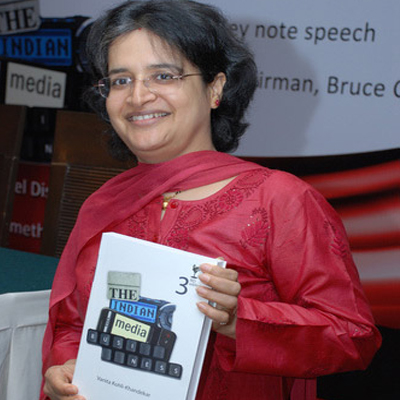
MUMBAI: Her tome has become a reference book for students of Indian media courses. Media watcher Vanita Kohli-Khandekar released the fourth edition to her book on the Indian media business earlier this month. It has been titled matter of factly The Indian Media Business (TIMB) like in the past.
She, however, reveals that things are different this time around in the book. Says she: “This edition has three major changes. One, there is a completely new chapter on digital media and I have dropped the chapters on telecom and internet. Two, I have focused a lot on regulation since it is very critical at this stage of the industry’s growth. And three, I have tackled a whole lot of the textural issues whether it is falling standards in news or the rising quality of Indian cinema in more detail.”
TIMB gives a perspective and information to readers on eight segments: print, TV, film, radio, music, digital, outdoor, and events. It presents business history, current dynamics, regulation, economics, technology, valuations, case studies, trends (Indian and global) and a clear sense of how the business operates.

The outstanding feature of the fourth edition is the chapter on digital media – arguably, the first ever serious and in-depth look at digital media from a comprehensive business perspective.
“This is the first time that anyone has focused on the progress of digital media in such detail, as there is no conceptual framework for the same. This chapter took a lot of effort and research,” adds Vanita.
TIMB’s fourth edition tackles regulation in more detail than any of the previous ones. There is one large case study on the quality of regulation in India and several case-lets such as the ones on copyright law, defamation law and how it works for social media. Additionally, there are case-lets on the changes in readership methodology, on the trouble with news broadcasting and on the rising power of Hindi newspapers and the impact of digital on both print and TV among others.
 “At this stage of the growth in the industry the focus on good regulation is critical, and that can be seen in television where digitisation has finally been mandated and will have a huge impact on the top-line of the industry. So this time, this edition has a lot of focus on regulation as against earlier editions,” Vanita expounds.
Sage Publications has been publishing TIMB for the past 11 years now. The book is also available on Flipkart.com, Amazon.com and Infibeam.com at a tab of Rs 650. “I believe that this book will do better online as it is not in the realm of fiction. It is non-fiction and for a very specific audience,” says Vanita.
In all 10,000 copies of the previous three editions have been sold thus far.
Journalist, columnist and writer for Business Standard and Mid-Day, Vanita has been tracking the Indian media and entertainment business for over a decade now. Her earlier stints include one at Businessworld and Ernst & Young. A Cambridge University fellow (2000), Vanita teaches at some of the top communication schools in India as well.
“For me professionally, it brings a lot of rigor to my work. Since I do the book every two years it forces me to sit back and read a lot of material which I would not have been able to read on the job, and this enables me to build phenomenal perspective. I ended up getting many story and column ideas while doing the research and analysis so it feels good,” Vanita exults.
Vanita highlights that writing the book disciplines her as far as research and analysis go, and for her the whole idea of the book was that it helps those in the periphery of the media world – whether foreigner or student – get an understanding of it. A noble intent, and which many would agree has helped this generation of media professionals.







Apple rarely announces minor updates with much fanfare, and iOS 26.4 is no exception. No dramatic redesigns, no flashy keynote moments. What it delivers instead is a focused set of improvements that sharpen the experience you already have. If that sounds underwhelming, spend a week with it. You will change your mind.
Apple Music Learns to Listen Better
The biggest shift in this update lives inside Apple Music. Apple has brought AI-powered playlist generation to the app, and it works on mood rather than genre. Type something like “rainy evening at home” or “running late on a Monday,” and it builds a playlist that actually fits. This is not algorithmic guesswork dressed up in new clothing. It genuinely reads the intent behind vague descriptions and responds well.
Alongside this, a new concerts feature scans your listening history and surfaces live events happening near you. It is a smart bridge between your digital music habits and real-world experiences. Apple is quietly making the case that a music app should do more than just play songs.
Shazam also gets a meaningful upgrade. It can now identify songs without an internet connection. This might sound like a minor convenience, but anyone who has tried to Shazam something at a crowded venue with patchy signal will tell you it is anything but minor. The feature works locally on-device, which also means it is faster.
CarPlay Gets Smarter Controls
CarPlay has been updated with deeper integration for intelligent voice assistants. The goal is to reduce how often drivers need to look at a screen or tap anything at all. You speak, things happen. It is a clear step toward making the driving experience safer without stripping away functionality. The integration feels natural rather than bolted on, which is a harder thing to achieve than it sounds.
The Fixes You Feel Every Day
This is where iOS 26.4 earns its keep. Keyboard responsiveness has been improved, and the difference is noticeable immediately. Typing feels more accurate and less combative. Accessibility features have been refined across the board, with better contrast options and adjusted spacing that makes the interface easier to read without forcing you into larger text sizes.
The Health app has also been updated. It now surfaces more actionable insights from your daily data rather than just displaying numbers. If your sleep patterns have shifted or your activity levels have changed, the app now contextualises that clearly instead of leaving you to interpret raw figures on your own.
These are the kinds of changes that do not photograph well for a press release. They also happen to be the ones that make your phone feel genuinely better to use.
A Few Other Additions
New emojis have been added in this update. They will find their way into your conversations faster than you expect. Family Sharing has also been updated, with more granular control over shared payments and subscriptions. If you share an Apple account with family members, this puts clearer limits on who can spend what, which has been a long-requested fix.
What This Update Actually Represents
iOS 26.4 is Apple doing what it does best when it is not trying to make headlines. Every addition here serves a clear purpose. The AI music features are genuinely useful. The CarPlay improvements address a real safety concern. The small UI fixes accumulate into a noticeably smoother daily experience.
There is no bloat. Nothing feels experimental or half-finished. That discipline is harder to maintain than it looks, especially as operating systems grow more complex with each passing year.
If you have been holding off on updating, this is the one worth installing.






