MAM
The art of effective time management for entrepreneurs

Mumbai: As an entrepreneur, time is one of your most precious commodities. With a million tasks to juggle and never enough hours in the day, mastering time management skills is crucial for your productivity and success. Effective time management allows you to accomplish more in less time, reduce stress, and maintain a healthy work-life balance. Here are some essential strategies for entrepreneurs to get a grip on their time:
1. Prioritise ruthlessly
Not all tasks are created equal. Learning to

prioritize ruthlessly is vital. Use a technique like the Eisenhower Matrix to classify tasks into urgent/important, not urgent/important, urgent/unimportant, and not urgent/unimportant buckets. Focus your energy on the important, urgent items first.
2. Practice single-tasking
Multitasking is a myth. When you try to do multiple things at once, you’re actually context switching, which massacres productivity. Train yourself to single-task by blocking time on your calendar for key projects and closing all other apps and distractions.
3. Time box
Open-ended tasks have a funny way of expanding to fill the time allotted. That’s why time boxing – allocating a set period to
work on a task – is so useful. Once the time box expires, evaluate your progress and either move on or renew the time box.
4. Batch process
Internal boundaries – like switching between different types of work – are massive time killers. Group similar tasks together through batch processing. Handle all administrative stuff first, then move to creative work, prospect calls, etc.
5. Say no
Opportunities and commitments will come at you constantly as an entrepreneur. You must be comfortable saying “no” to anything that doesn’t align with your current goals and priorities. Guarding your time zealously is critical.
6. Leverage tools
Use technology to your advantage. Productivity apps like calendars, to-do lists, website blockers, and more can help you map out your day, minimize distractions, and operate more efficiently.
7. Build a team
Understand that you can’t do it all alone. Smart delegation by building a talented team will allow you to concentrate on your unique strengths while others execute more routine tasks.
Mastering time management takes discipline, but the payoff of less overwhelm, greater productivity and more life balance makes it worth the effort for any entrepreneur. Consistently applying these strategies will ensure you’re using your most precious resource – your time – more effectively.
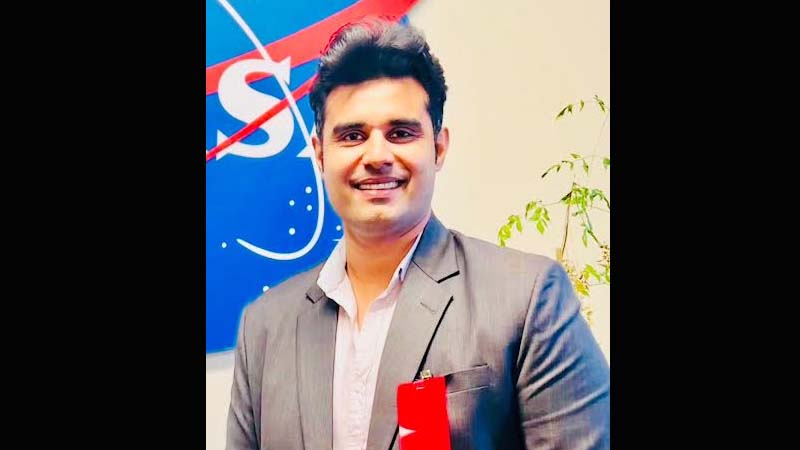
The author of this article is healthcare entrepreneur and RiSAA IVF CEO Dr. Saarthak Bakshi.

MAM
Continental Tires appoints Nevin Aslan-Özkan as Managing Director for India
Finance leader to drive growth in passenger vehicle segment from 6 April 2026.

MUMBAI: Continental Tires has put a fresh pair of tyres on its Indian leadership and this time, they’re rolling with strong financial horsepower. The premium tyre manufacturer has announced the appointment of Nevin Aslan-Özkan as managing director of Continental Tires India, effective 6 April 2026. She succeeds Samir Gupta, who stepped down on 5 April 2026 for personal reasons.
Nevin joined Continental in 2017 and has held key leadership roles in Mergers & Acquisitions and Strategy & Business Development across EMEA and APAC. Since May 2025, she has served as Chief Financial Officer for Continental Tires India, shaping the company’s financial strategy and performance.
In her new role, she will lead the company’s growth agenda in India, with a sharp focus on accelerating its presence in the passenger vehicle segment. This appointment comes at a pivotal time, following the recent launch of the CrossContact A/T² tyre, the first market globally to receive this product and a €10.5 million (approximately Rs 100 crore) investment to strengthen Continental’s position, particularly in the ultra-high-performance (UUHP) segment.
Nevin Aslan-Özkan said, “India continues to be a strong focus market for Continental Tires. Guided by our ‘In the Market, For the Market’ approach, we will continue to deliver products and technologies designed for Indian roads.”
Samir Gupta, who joined Continental in 2012 and served as managing director since January 2022, was recognised for his significant contribution to expanding the brand’s footprint in India.
Continental is a leading global tyre manufacturer founded in 1871. The company generated sales of €19.7 billion in 2025 and employs around 78,000 people across 54 countries. Its Tires group sector, which includes premium car, truck, bus, two-wheel and specialty tyres, recorded sales of €13.8 billion in fiscal 2025 and employs more than 56,000 people worldwide.
With Nevin Aslan-Özkan at the wheel, Continental Tires India is clearly gearing up for a smoother and more aggressive drive in one of the world’s fastest-growing automotive markets. The road ahead looks promising.






