Brands
Telemedicine gets much-needed boost due to Covid2019


MUMBAI: Covid2019 has forced the entire medical workforce to focus on just the pandemic creating a shortage of clinics and hospitals for other medical needs. This has trained the lens on telemedicine as an alternative option. Telemedicine is a tool that allows a patient to consult a respective Medical Council verified doctor 24*7, from anywhere in the country.
Communicating with a doctor is a huge problem in India, given the skewed doctor-patient ratio in the country that stands at 1:1700. The situation is tense especially in the non-metro areas. Experts believe that telemedicine can function as a great force multiplier in such a scenario.
The system has been around in developed countries for decades and has flourished well. However, in India, it failed to get going due to a lack of technological adoption and an overall reliance on conventional healthcare. The benefits of telemedicine and remote-monitoring have come to fore during the ongoing pandemic crisis.

According to experts, technology supporting telemedicine has been available in India for many years now. However, the reluctance among the public was primarily due to the perception that it is a complicated process suitable to tech-savvy people only. But now, when stepping out is advisable only in times of emergency, teleconsult plays an important role.
Experts also suggest that in the coming years, AI/ML will be used heavily in the healthcare sector. AI/ML can help optimise the limited medical resources countries have by differentiating between emergency and non-emergency cases. So wherever influx is higher and resources are limited, AI/ML can be pivotal. This has encouraged countries to implement long-term telehealth tools and enhance interoperability of electronic medical records.
Practo chief healthcare strategy officer Alexander Kuruvilla told indiantelevision.com that in the last few days Practo received requests from many hospitals and clinics to make online consultation services live for them. The company is also reaching out to a lot of establishments so it can continue consulting their patients online.
He also mentions that the government’s push towards the telemedicine sector will play a key role in giving a fillip to the industry.
According to McKinsey, India could save up to $10 billion in 2025, if telemedicine replaced 30 to 40 per cent of in-person outpatient consultations and there is digitisation in the overall healthcare industry.
Portea Medical COO Vaibhav Tewari says that all doctors and nurses working with the firm have passed rigorous hiring standards, with their backgrounds and medical knowledge verified by senior authorities.
Tewari notes that India has a severe shortage of qualified doctors and the doctor to patient ratio gets worse from non-metro city areas. Telemedicine addresses this problem by providing access to qualified doctors from all parts of the country. It is highly affordable too.
Lybrate is a free platform for users and doctors to use. Users can consult their choice of a doctor privately by paying a consultation fee online. On top of the doctor’s consultation fee, the user has to pay an internet handling fee to Lybrate which makes up for the company’s revenue.
At Portea Medical, patients register on the portal by filling in their details. Subsequently, the patient can consult the doctor, get prescriptions reviewed, diagnostic tests analysed and also seek the doctor’s advice on the treatment process to be adopted. According to Tewari this is usually faster and more affordable than taking a telephonic appointment with a doctor.
Kuruvilla explains, “We wanted to ensure patients and doctors can connect at any time, communicate asynchronously or synchronously depending on their needs. We support three modes of communication on our platform. The first is real-time text-based chat which allows patients and doctors to talk asynchronously where patients can share documents and photos with the doctor real time. For cases that require more attention especially where visual and verbal cues are important, we also support audio and video chat.”
He further adds that built-in features like image sharing, voice calling and video call (only on the app) ensure that doctors get all the required information for a diagnosis and refer for a physical visit to a clinic if required. The response time to get in touch with doctors is also as low as one to 60 seconds in some specialties.
According to Practo Insights, 1 March 2020 onwards, online consultations on the platform grew by 500 per cent, 35 per cent of the consultations are from women while 65 per cent are from men. 60 per cent of the overall queries were from metro cities while 40 per cent of all teleconsults were from Tier-2/3 cities.
Metro cities from where most of the queries are coming include Bengaluru, Delhi NCR, Hyderabad, Mumbai, Pune, and Chennai. Non-metro cities from where most of the queries are coming from are Ahmedabad, Jaipur, Lucknow, Bhubaneshwar and Indore.
Lybrate witnessed a jump of over 120 per cent since the outbreak and the subsequent lockdown. The highest jump has been witnessed from Mumbai, Delhi, Pune, Ahmedabad and Chennai.
Portea Medical saw a 60 per cent spike in teleconsultation since the pandemic broke out and the company is planning to integrate telemedicine as an integral aspect of its future initiatives.
Tewari mentions that digital stethoscopes, ventilators, home dialysis machines, heart monitoring devices and various other remote diagnostic/monitoring tools are used in telemedicine. He also points out that the equipment used by telemedicine service providers is more advanced than the equipment used by doctors at their clinics or in-local hospitals.
Portea Medical currently manages about 120,000+ patient visits each month and works with more than 50 leading hospital partners, 15 pharma majors, and leading insurance companies in India.
According to the Practo, there has been a surge in specialties like gynaecology, (250 per cent), pediatric (350 per cent) and psychiatry (200 per cent).
Queries on mental health grew by 80 per cent in the metro cities in the last two weeks while consultations in tier 2+ cities grew by 35 per cent. Top queries discussed were loneliness, anxiety and stress management and panic attacks.
Discussing the growth plans Kuruvilla quips, “Over the last few days, we’ve received requests from many hospitals and clinics to make the online consultation services live for them. We’re also reaching out to a lot of establishments, so they can continue consulting their patients online.”
Lybrate does not offer bundled service wherein only a handful of doctors are available on the platform. “Going forward, we are aiming for 50 per cent of the doctors in the country to offer teleconsultation through Lybrate,” says Lybrate founder and CEO Saurabh Arora.
Other than that, the company is also focusing on tapping next generation users, especially the youth, not just in metro cities but also in Tier 2 and Tier 3 cities. The focus is to understand their emotional, mental and development needs.
Portea Medical has been seeing a 30 per cent to 50 per cent growth year-on-year. Within home care, elder care is a major focus area for the company. It also has plans to tie up with NGOs and event agencies to create workshops for their new service line, that is, Portea Health Prime to grow elder communities in key cities.
"It will be optimistic to say people will depend upon telemedicine services for healthcare-related issues like they are doing now once the situation normalises. While the trend would see a decline when the situation would begin normalising, it is likely to settle at a point which will be notably higher than the pre-crisis level,” concludes Arora.




Brands
Samsung certifies 1,000 Maharashtra students in AI and coding
The South Korean electronics giant marks its first large-scale skilling push in the state, with women making up nearly half the national programme’s enrolment
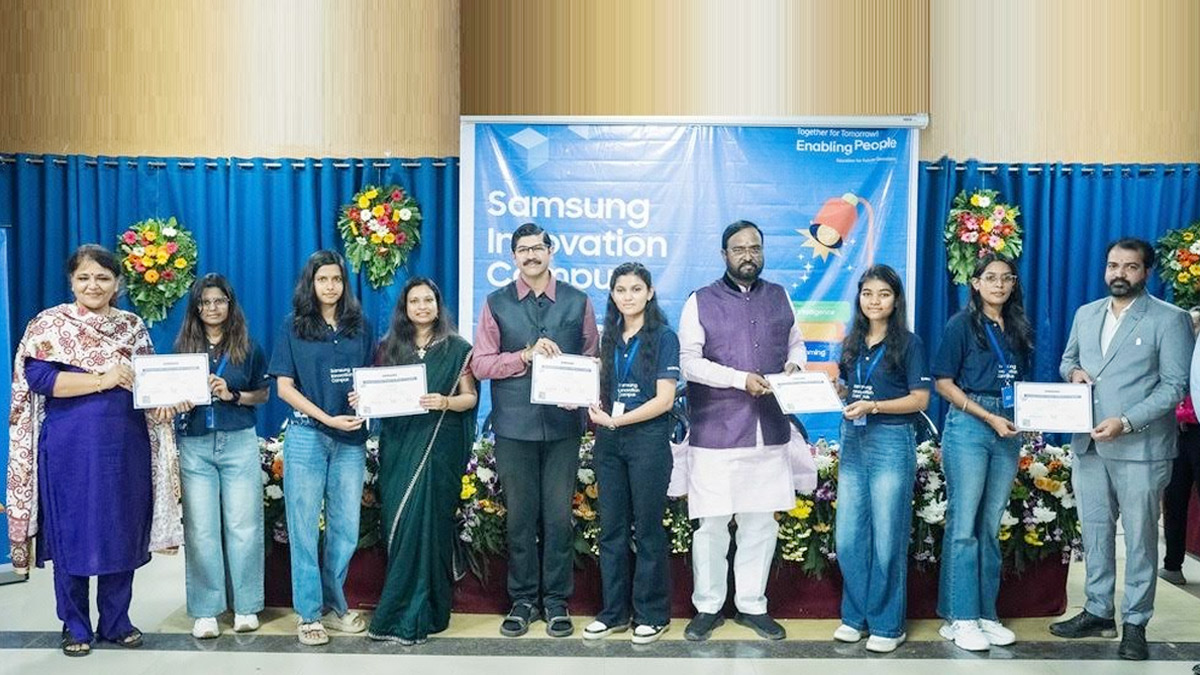
PUNE: Samsung has put 1,000 students in Maharashtra through a certified training programme in artificial intelligence and coding, the largest such drive the South Korean electronics company has run in the state and a signal that corporate India’s skilling ambitions are moving well beyond the boardroom brochure.
The certifications were awarded under Samsung Innovation Campus (SIC), the company’s flagship corporate social responsibility programme, which launched in India in 2022 with the stated aim of democratising access to future-technology education. The 1,000 graduates were drawn from four institutions: 127 from Savitribai Phule Pune University, 373 from Pimpri Chinchwad University, 250 from D.Y. Patil University’s Ramrao Adik Institute of Technology and 250 from Anjuman-I-Islam’s Kalsekar Technical Campus. All completed training in either AI or coding and programming, the two disciplines Samsung has identified as the critical pillars of the digital economy.
The programme does not stop at technical training. Soft-skills development and career-readiness modules are baked into the curriculum, a deliberate attempt to close the gap between what universities teach and what employers actually want.
“India’s digital growth story will ultimately be shaped by the quality of its talent pipeline,” said Shubham Mukherjee, head of CSR and corporate communications at Samsung Southwest Asia. “As technologies like AI move from the periphery to the core of industries, skilling must evolve from basic training to building real-world capability. This milestone in Maharashtra reflects how industry and academia can come together to create a future-ready workforce that is both globally competitive and locally relevant.”
The Maharashtra drive sits within a rapidly scaling national effort. Samsung Innovation Campus trained 20,000 young people across India in 2025, hitting its stated target for the year. Women account for 48 per cent of national enrolments, a figure the company cites as evidence of its push for an inclusive technology ecosystem. The programme is implemented in partnership with the Electronics Sector Skills Council of India and the Telecom Sector Skill Council.
Samsung, which is marking 30 years in India this year, runs SIC alongside two other initiatives, Samsung Solve for Tomorrow and Samsung DOST, as part of a broader effort to build what it calls a generation of innovators with both the technical depth and the problem-solving mindset to thrive in a fast-moving digital world.
A thousand certified students is a tidy headline. Whether they find jobs that match their new skills is the harder question, and the one that will ultimately determine whether corporate skilling programmes like this one are genuine pipelines or well-photographed gestures.






