MAM
TDSAT-TRAI ad cap: NBA finishes rejoinder


MUMBAI: It was day two of the News Broadcasters Association (NBA) submission of its rejoinders in the hearings on the proposed Telecom Regulatory Authority of India (TRAI) ad cap regulation. NBA counsel Anup Bhambhani clarified that it was untrue that channels had tried to suppress documents, as everything related to teleport licence is in the public domain and hence easily accessible to the regulator. Channels had individual teleport licences while others were uplinking through Bharti Airtel or Essel Shyam which made them the licensees and not the channels.
The counsel also pointed out that the TRAI had not informed the TDSAT that ads are of three types- commercial, social and programme promos. Not every ad is a paid ad and DAVP ad rates are also low.And the number of minutes of advertising does not take into consideration any of these facts; and hence is not reflected in these categories. He stated that the TRAI had gone overboard in describing the type, length and look of the adverts, in a consultation paper issued in 2012. And even though it was later dropped, it never had any mention of section 7 (11 )of the Cable TV Networks Regulation (CTN) act. Also, the proposed 10+2 regulation finally did not mention that TRAI was using section 11 of the TRAI act in order to enforce section 7 (11) of the CTN act.

According to the NBA counsel, the 7 (11) argument was very ingenious in order to defend the TRAI regulation which was previously never mentioned. Assuming TRAI can regulate, the intention while framing was not keeping in mind this regulation. He pointed out that the ministry of information and broadcasting (MIB) is the authority for the news channels and not the TRAI.
The NBA lawyer also clarified that the Bengal Cricket Association vs MIB and Doordarshan judgement does not apply to private broadcasters as is stated in para 79 of the case. Although the case was read against the channels, it claims that the argument that ‘airways are public property’ only applies when you are seeking a teleport licence for setting up a TV station. While thinking of granting a licence, Article 19 (1) of the Constitution that speaks about freedom of speech and expression, can be thought of but not after it has been granted.
Mentioning the Sakaal papers case, the NBA counsel said that that case was contended because page numbers were restricted and similarly in the case of TV channels also ad duration is being controlled. It also stated that there is no need to prove a loss because even if there is a prospect that there may be a shutdown due to the restriction then it is a violation of Article 19.
Another point argued was that when TRAI says it is laying down standards of quality under section 11 of the TRAI act, as per precedents it had itself set, it can only include technical aspects such as tariff regulation and never content. According to the NBA, duration is content.
Addressing the point that the amicus curiae had made, the NBA counsel presented data supporting the fact that channels’ ad rates would need nearly 50 to 100 per cent increases, if losses due to lower air time are to be covered. To support the contention that TRAI only has recommendatory authority, the NBA lawyers pulled up SO 44 and 45 from the TRAI notifications which said “Broadcasting and cable services to be telecommunication services and showed that it is mentioned in it by the central government that TRAI only has a recommendatory function regarding duration of commercials.”
SO 45E 1 b states “Without prejudice to the provisions contained in clause (a) of sub-section (1) of section 11 of the Act, to make recommendation regarding (b) the parameters for regulating maximum time for advertisements in pay channels as well as other channels”.
Even though broadcasting has no correct definition, the NBA read from the TRAI explanatory memorandum 2012 where it mentioned broadcasting services to be ‘dissemination of signals.’
Another argument was that TRAI couldn’t change a statutory law by changing ‘per hour’ to ‘clock hour’ and reporting authority as TRAI. Before coming up with the regulation TRAI didn’t even bother to serve a notice to broadcasters.
TRAI’s argument that it was for the benefit of consumers that the regulation is being framed was countered by the NBA saying that viewers need choice. If they wanted channels free of ads they should be ready to pay more for the service or else they have an option to switch channels. The channels said they are happy to consider it post DAS is implemented which according to a KMPG report will make subscription and advertisements a 50:50 affair.
A major point raised was the discrimination towards pay channels and bias towards the pubcaster Doordarshan which according to the NBA was also violating the regulation.
Tomorrow the music channels are expected to give their rejoinders.





Brands
Saugata Mukherjee exits SonyLIV after steering standout content run
Streaming chief signs off after a prolific phase of originals and awards
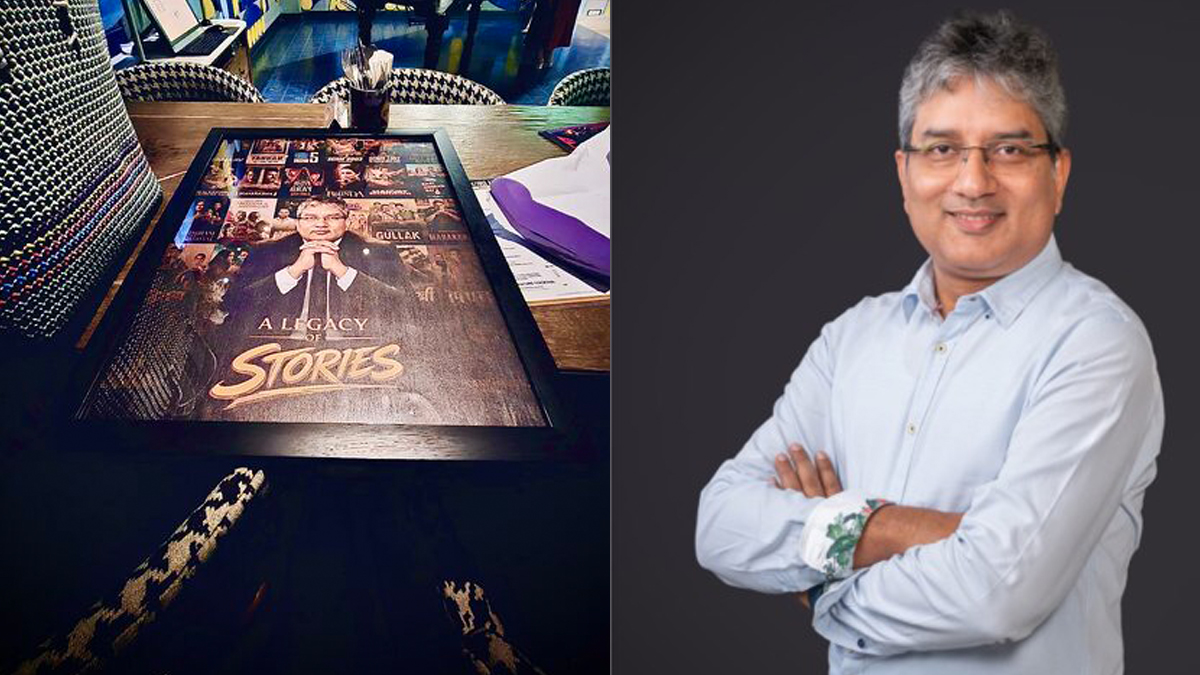
MUMBAI: SonyLIV is set for a leadership transition, with its executive vice president and head of content Saugata Mukherjee announcing his departure after a three-and-a-half-year stint that helped shape the platform’s creative identity.
In a reflective note shared publicly, SonyLIV executive vice president and head of content saugata mukherjee described his tenure as more than just building a slate of shows, calling it “a shared belief in stories, in risks, in pushing ourselves a little further every single day”. He pointed to a wide-ranging line-up including The Hunt, Mayasabha, Kankhajura, Black White and Gray, Four and Half Gang, Kuttram Purindhavan, Real Kashmir Football Club, Maharani S4 and Freedom at Midnight S2 as a fitting close to his journey with the platform.
Mukherjee credited the team’s resilience through “crazy deadlines, uncertain moments and audacious choices”, adding that what stood out most were the quieter wins and collective spirit behind the scenes. “Some goodbyes are harder than others. This is one of them,” he noted, signalling an emotional sign-off.
During his tenure, Mukherjee oversaw content strategy, commissioning and original programming across languages and genres, helping SonyLIV cement its position in India’s increasingly competitive streaming landscape. The platform’s catalogue under his watch included critically acclaimed titles such as Scam 1992, Maharani, Rocket Boys, Tabbar, Gullak and Freedom at Midnight, collectively earning over 100 industry awards and several international nominations.
Before rejoining SonyLIV in 2022 as EVP, Mukherjee had a brief stint at HBO Max under Warner Bros. Discovery, where he led India content strategy and worked on the platform’s global rollout. Earlier, he held senior creative roles at Disney+ Hotstar and Star TV Network, shaping original programming during the early days of India’s OTT boom.
His career began in publishing, with leadership roles at Pan Macmillan and HarperCollins Publishers, where he worked closely with some of India’s most prominent literary voices.
Mukherjee’s exit marks the end of a defining chapter for SonyLIV’s content journey. As the platform looks ahead, it does so on the back of a creative foundation that has consistently punched above its weight in a crowded streaming arena.