Brands
Tamil Nadu viewers glued to TV; digital catching up fast

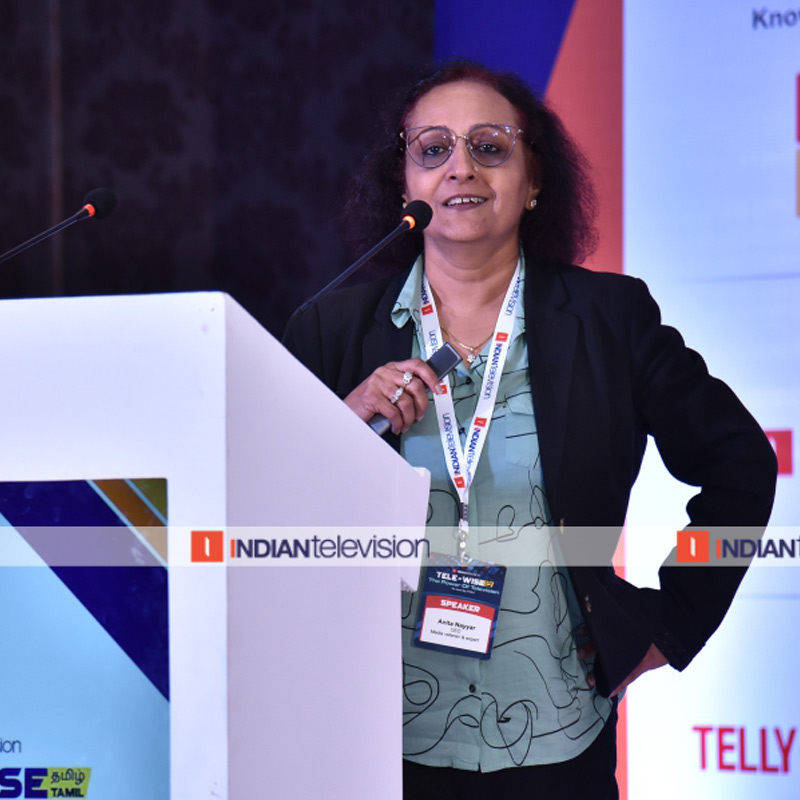
MUMBAI: The advertising and marketing industry at the first edition of Tele-Wise Tamil urged the industry to look at TV and digital as two wheels rotating around one axis. They emphasised that the growth of television in any market can’t be calculated without considering that though being invented as isolated units, TV and digital have merged into one big medium now, because of technological advancements.
Lowe Lintas regional creative officer Kapil Mishra said, “Whenever you ask someone to imagine a television, they either think of a box or a flat-screen on a TV unit. But TV is not just the hardware; it is also its software. Technology has separated these two and has liberated the software. Now, television is everywhere; on your phones, laptops, and your tablets.”
He continued by saying that this segregation of TV software and hardware has greatly impacted the TV-viewing culture in every market. He insisted that now marketers and advertisers have more opportunities to harness this medium to reach their audience.

Havas Media Group CEO India & Southeast Asia Anita Nayyar shared similar thoughts as she mentioned that one can’t neglect the role of digital in driving the growth of television medium. “When we think of TV, we should think audio-visual. The content is becoming screen-agnostic now.”
Elaborating more on the potential that the Tamil Nadu market has for digital and TV media, Nayyar noted, “Tamil happens to be the third-largest content language being consumed online. 42 per cent of the population in Tamil Nadu has internet and mobiles. 42 Tamil channels have crossed more than 1 million followers on YouTube. Sun NXT today is talking about 1 crore installs of its app. In fact, Tamil originals are working great on other OTT platforms like Netflix, Amazon Prime, and Hotstar as well. Mobile definitely is the next most important device in one’s hand for content consumption.”
Nayyar, however, also insisted that growth of alternate screens won’t perish the TV in its original form in Tamil Nadu or India.
She highlighted that while the TV viewership in the country grew by 13 per cent in the last year, in Tamil Nadu this number was 14 per cent. She added that in South India, Tamil Nadu noted the second-highest time spent on television at 215 minutes a day vis-a-vis 245 minutes of Andhra Pradesh.
Shedding some more light on the TV-viewing patterns in the state, Nayyar said, “Tamil Nadu is completely hooked to television. They prefer entertainment over any other genre. At prime time, 73 per cent of viewership is for GECs, which actually falls to an all-day average of 65 per cent. Tamil GEC is at 55.5 per cent in terms of genre preference, and the top shows are recording up to 23.4 TVRs, which are unheard in today’s time. People also prefer to watch movie channels during prime time. News and music viewership is quite low in the night time but they are most preferred in the morning.
Tele-Wise Tamil was the inaugural edition of Indiantelevision.com’s Tele-Wise series that aims to look into the opportunities that regional markets have for broadcasters, advertisers, marketers, and other related shareholders. The event was concluded in Tamil Nadu recently with a number of industry veterans and experts in presence.







Brands
HP launches Smart Champs learning game show with JioStar for students
Sanya Malhotra hosts quiz series blending fun, learning and prizes
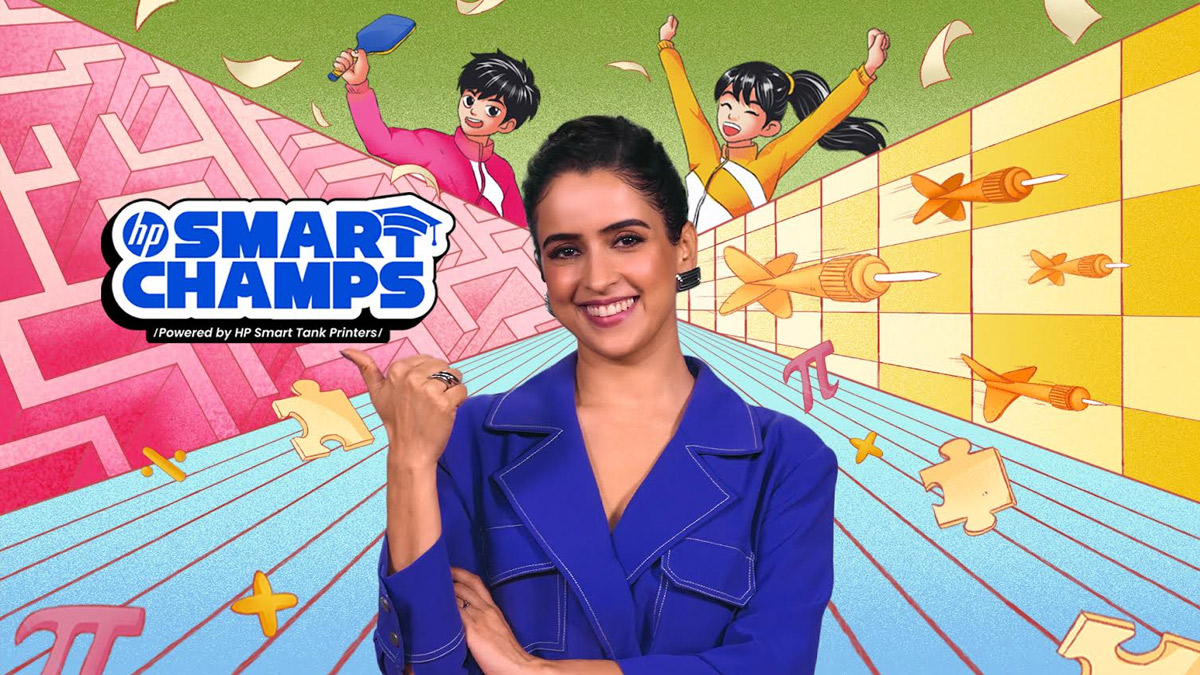
NEW DELHI: HP India has teamed up with JioStar to launch HP Smart Champs, a new learning-based game show designed to make education engaging for school students across the country.
Hosted by Sanya Malhotra, the 10-episode series brings together students from Grades 5 to 9, who compete in teams through quiz and puzzle-based challenges that test knowledge, logic and teamwork. The show will begin streaming on JioHotstar from April 11 and will premiere on Nick on April 18, with weekend episodes airing at 7 PM.
Powered by HP Smart Tank printers, the format integrates print-based learning into the gameplay, using worksheets, clues and visual problem-solving tools to encourage hands-on participation. The idea is to move students beyond rote memorisation and towards more applied, curiosity-led learning.
The competition promises high stakes, with winners set to receive a cash prize of Rs 10 lakh, while runners-up will take home Rs 5 lakh. Additional rewards include HP AI laptops, Smart Tank printers and accessories, while the winning school will be awarded an HP Smart Tech Lab.
Speaking about the initiative, HP India managing director Ipsita Dasgupta said, “At HP, we believe nurturing India’s youth is key to the country’s progress, and technology plays a foundational role in enabling this. With HP Smart Champs, we wanted to create something beyond traditional learning, a fun-filled platform where curiosity, creativity and critical thinking take centre stage.”
On the show’s reach, JioStar head entertainment sales Mahesh Shetty said, “HP Smart Champs reflects how children today learn through exploration and experience. With Nick and JioHotstar, we are creating a multi-screen approach that is both engaging and meaningful.”
Highlighting the role of print, HP India senior director print Satish Kumar said, “The show brings print-based learning to life in an engaging format, helping students develop deeper understanding through hands-on experiences.”
The journey to the finale began with participation from over 1,000 schools across 26 cities, narrowing down to 34 finalists who will compete in a studio showdown in Mumbai.
With its blend of entertainment, education and technology, HP Smart Champs is positioning itself as more than just a quiz show. It is a nationwide push to make learning interactive, accessible and, above all, a lot more fun.







