MAM
Surrogate liquor advertising: Time for change?


MUMBAI: Remember the famous ‘‘Oh la la la la…Le O’’ jingle by Kingfisher for its calendar, the “No.1 Yaari” catchphrase by McDowell’s for its club soda or the “Men will be men,” a 19-year old prominent tagline for Seagram’s Imperial Blue CDs?
What do all of these brands have in common? A lot, and nothing!
While all these brands are prominently into selling liquor and spirits, they position and market themselves for the products/services that contribute insignificantly to their sales.

And, why is that you ask?
Well, since there is a ban on advertising alcohol, tobacco and cigarettes in India, liquor companies leverage the power of surrogate advertising to convey their brand identity/message.
First things first! Let’s understand surrogate advertising to begin with and its prominence in the Indian advertising industry. Surrogate advertising is a form of advertising which is used to promote banned products, such as cigarettes and alcohol, in the guise of another product.
India has held a strong stance on the ban of advertising tobacco and liquor products on all media platforms since 1995. The ban was enforced after extensive research from the Indian ministry of health found that cigarettes and liquor have adverse effect on a person’s health.
However, the increase in population saw the sales of tobacco and liquor increase at an exponential rate. Therefore, companies were forced to seek alternative means of advertising, which lead to the eventual creation of surrogate advertising in India, and that is why we see major liquor brands promoting and advertising themselves for their club sodas, mineral water, CDs or playing cards to hammer the brand name into the heads of consumers.
 Bagpiper was one of the earliest brands that took to surrogate advertising. The brand introduced the slogan of “Khoob jamega rang jab mil bhaitenge teen yaar. Aap, main aur Bagpiper” in 1993 and got the-then famous Bollywood celebrities such as Dharmendra, Jackie Shroff and others to feature in its ‘soda’ campaigns.
Today, India is the third largest liquor market in the world, with an overall retail market size of US$ 35 billion per annum. The annual consumption rate has been increasing steadily over the past six years, and stands at 8.9 per cent as of 2017.
But how has the marketing and advertising evolved for such brands with time?
Earlier, marketing for these brands involved largely print and television where they communicated a lifestyle and an attitude but consumers today have multiple personalities, and are more evolved, resulting in brands using digital and social media platforms in a big way to communicate and be in tune with the audience.
“Today, it’s the age of everyday heroes rather than mega celebrities and alcoholic brands and tobacco brands are increasingly leveraging this trend,” says WATConsult AVP – strategy and account planning Sabiha Khan. “Additionally, sponsorship of events was used earlier to reach the mass audience, but now brands are directing energies towards acquiring audiences via targeted messages online.”
United Breweries Limited (UBL), which manufactures India’s most loved Kingfisher beer, controls 60 per cent of the total manufacturing capacity for beer in India and is the market leader with the national market share in excess of 50 per cent; which explains the company’s major investments and association with various events, sports and other entities.
Marketing head Samar Singh Sheikhawat affirms that the marketing spends in the industry for spirits and beer have gone up because all players are leveraging major platforms to connect with the consumer but television still works best since it creates a better chance of brand visibility and salience. UBL gets its biggest revenue from sponsorships and associations with various events and gigs and spends typically about six to seven per cent of its net revenues on marketing in a year.
While surrogate advertising may work for leading brands that have been in the Indian market for years and have big bucks to spend on advertising, sponsoring events, fashion tours and sports, it is the new entrants and smaller players who run the risk of missing out on brand communication and visibility.
“It is a challenge for the new entrants and the agencies because, as a new brand, they first have to create brand awareness, inform about the product details, flavour, taste and brand ethos and spirit which they want to convey to the consumers. A new player will not be able to communicate well with surrogate and takes years to build the brand image — first through word of mouth promotion,” adds iProspect India branch head – south Krishna Kumar Revanur.
Surrogacy has come around in a big way to support promotion of liquor brands but it has its own diluted drawback. You would not want to market something as prominent as Blender’s Pride just for its fashion tour or Royal Challenge as merely bottled water. The core challenge for agencies while creating a campaign for such brands lies in not damaging the brand image and managing to promote it to the right audience.
Dentsu Webchutney creative strategist — general management Pranav Sabhaney notes, “No creative person ever wants to be told that this is the boundary that you have to work around but it is an interesting challenge for the creatives as they know they have to work with restrictions yet find the best communication possible. The constraint might irritate creatives at some point as spirits is an interesting sector to work on but they don’t have an opportunity to do anything.”
Giving a brand’s point of view, Sheikhawat adds, “It is complex and challenging since we are not allowed to display the product, mention the word liquor or beer or show consumption in the campaign, and that is the reason why agencies that work on such products have been agencies that work with those brands for the last 20-25 years. It’s a very complex, hard task and takes a lot of money to build brand imagery in India as opposed to the other parts of the world.”
Is there a need for the rules to be more accommodating and liberal so that brands can promote and advertise the products in a better way?
With an opinion that adults should be given the freedom to be adults and to make their own choices, Publicis Worldwide managing director and chief creative officer Bobby Pawar says: “The fake rules and regulations by the government for the liquor industry are not great, and while I do understand that when you advertise these products freely, underage people will get to see it but the government needs to find a way around it. It is sheer hypocrisy of the government which states that you can sell liquor and build your brand but you can’t advertise it.”
Adding on to Pawar’s point, Krishna Kumar mentions: “If the government allows the product to be sold in the country but not advertise it, that means the government is following dual standards.
United Breweries spends 20 per cent of its marketing budget on television and a mere 10 per cent on digital but that is changing, and the company now has a separate team assigned for digital along with a separate digital agency on board. The company leverages all social media and digital platforms while also creating user-generated content. “The audience today is not interested in brand advertising or brand stories but are only interested in stories that suit their line of thinking, and are looking for content and narratives that involve them,” concludes Sheikhawat.
Whether the ban on displaying alcoholic products will ever be lifted or not is a story for another day but brands and agencies do know how to work around the restrictions and create some of the most memorable ads that click with the audience right away.
McDowell’s No.1 soda TVC:






Brands
Tessolve lands a semiconductor veteran to drive its next big push
Ravi Kumar Chirugudu, who started his career at ISRO and has spent 35 years building chips and companies, joins the Bengaluru-based firm as president and chief operating officer
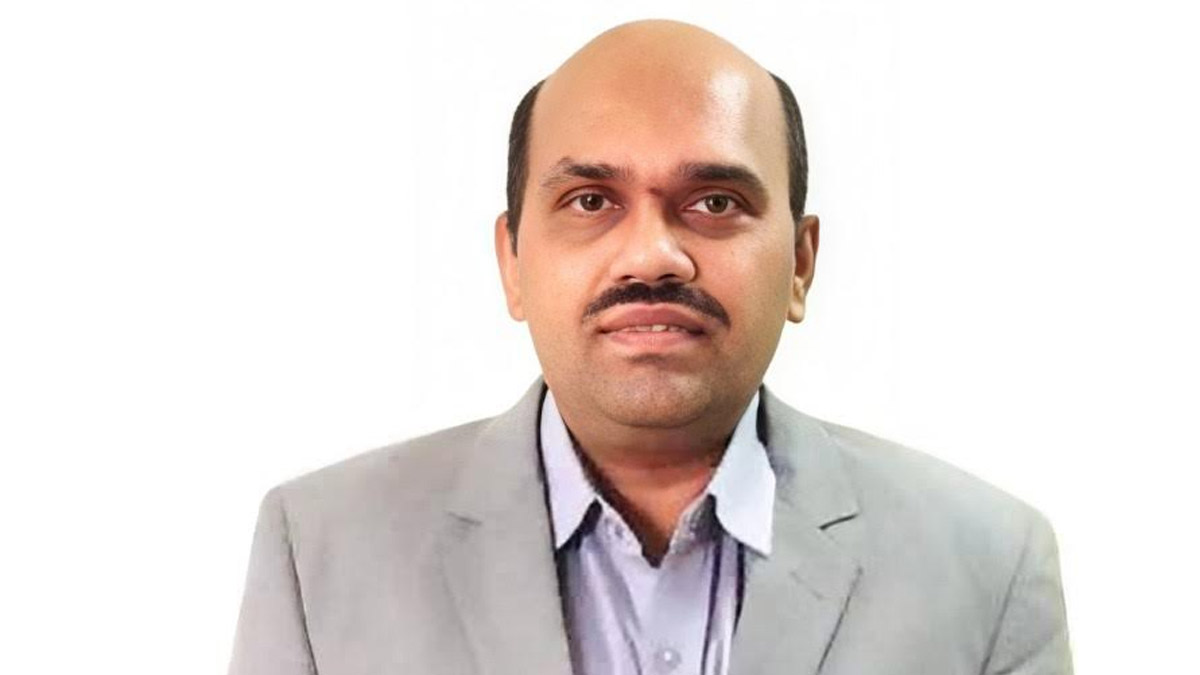
BENGALURU: Tessolve has never been shy about its ambitions. The Bengaluru-based engineering services firm already counts 18 of the world’s top 20 semiconductor companies among its clients, employs more than 3,500 engineers across 12 countries, and last year pocketed a $150m investment from TPG. Now it has hired the executive it believes can turn those assets into something bigger. Ravi Kumar Chirugudu, a 35-year semiconductor veteran who once built satellite payloads for ISRO and has since scaled engineering organisations across three continents, joins as president and chief operating officer, effective immediately.
THE MAN AND THE MANDATE
The appointment is, by any measure, a serious hire. Ravi Kumar Chirugudu comes to Tessolve after senior leadership stints at HCL Technologies, Altran and Wipro, where he managed large profit-and-loss portfolios and oversaw cross-regional teams. Over the course of his career, he has been instrumental in bringing more than 1,000 new products to market across the high-tech, energy and manufacturing verticals. Before the private sector claimed him, he began his working life as a scientist at the Indian Space Research Organisation, contributing to research and development in charge-coupled device technology and satellite payloads, a foundation that shaped everything that followed.
In his new role, he will lead Tessolve’s global growth strategy: expanding its engineering capabilities, deepening customer relationships and accelerating innovation across semiconductor and high-performance computing domains. The brief is broad, but the context is specific. Tessolve operates in the $550 billion global semiconductor market, and its recent moves, the acquisition of Germany’s Dream Chip Technologies and the TPG funding round, have sharpened both its reach and its expectations.
Srini Chinamilli, co-founder and chief executive of Tessolve, is characteristically direct about why Ravi Kumar Chirugudu was the choice:
“As we scale our global semiconductor and system engineering capabilities, Ravi’s appointment marks an important step forward. As global semiconductor demand continues to accelerate across industries, it is creating significant opportunities across the semiconductor lifecycle, from design, packaging, validation and systems integration. Ravi’s deep knowledge and leadership in this ecosystem brings the right mix of industry expertise, customer connect and execution capability, which will play a key role in strengthening our position as a trusted global engineering partner and reinforcing our market leadership.”
THE NEW ARRIVAL SPEAKS
Ravi Kumar Chirugudu, for his part, frames the move in terms of timing and culture, two factors that veteran executives tend to weigh as heavily as title or compensation:
“I am happy to join Tessolve at a time when the industry is rapidly evolving towards more complex, AI-driven systems. What stands out to me is its strong people-first culture and its commitment to bringing value to its customers. The strength of its global team, combined with its deep expertise in semiconductor innovation and next-generation product engineering, creates a solid foundation to build differentiated, scalable solutions. I look forward to working closely with the team to drive strategic growth and strengthen its role in shaping the global semiconductor ecosystem.”
The reference to AI-driven systems is not incidental. The semiconductor industry is in the midst of a structural reshaping, driven by the insatiable compute demands of artificial intelligence. For engineering services firms like Tessolve, which offers end-to-end capabilities from silicon design to packaged parts and invests in high-performance computing, high-speed interfaces, photonics and 5G, the moment is both an opportunity and a test. The company says it is well positioned to capture the next wave of industry growth. Ravi Kumar Chirugudu is now the person who has to prove it.
He came in from outer space, literally, and spent three decades learning how the semiconductor industry works from the inside out. Now Tessolve is betting that accumulated knowledge can help it cross the next frontier. In the $550 billion global chip market, the gap between ambition and execution is measured in engineering hours and leadership quality. Tessolve has just gone shopping for both.






