MAM
Successful brands under spend but capture minds – Prof Jones

MUMBAI: Effective advertising ensures that well managed brands last forever and become the heart of economic growth. Mega brands or successful brands always under-spend and their share of voice is below their share of the consumer’s mind. Indian advertising must become discriminatory rather than motivating. These were some of the nuggets of information thrown at a discerning audience by an advertising guru.
Through its marketing and advertising- magazine Storyboard, CNBC business channel presented an interactive session with the acclaimed advertising veteran and specialist in “Effective Advertising” – Prof John Philip Jones of Syracuse University in Mumbai on 26 March at the Taj Mahal Hotel.
As part of this initiative, Storyboard will also present a series of events by Prof Jones, a prolific author and distinguished educator who will share insights on the best international practices in the area of effective advertising with the advertising and marketing fraternity. Prof Jones will also conduct a comprehensive day- long workshop for registered members focusing on methodologies that makes advertising more accountable and effective on 28 March, at the Taj Mahal Hotel in New Delhi.

Commenting on the occasion, CNBC India CEO Haresh Chawla said: “Storyboard in its two years on the channel has become the definitive show for the advertising and marketing community. Storyboard has fulfilled its proposition of being a thought provoking, vibrant show and in a short span of time earned credibility in the advertising industry”. He further added: “Through initiatives such as the Prof John Philip Jones workshop, we continue to provide value added properties for our discerning viewers.”
Prof John Philip Jones has developed methodologies that allows one to measure the short-term effects of advertising, and measure the effect advertising is having on sales. He brings with him 25 years of experience with agencies like JWT and has been actively involved in handling some of the most recognized brands in the world including Lux, Pepsi, Gillette, Quaker Oats and Nestle. In 1991, he was named the distinguished advertising educator of the year by the American Advertising Federation and also became a member of the Council of Judges of the Advertising Hall of Fame. In 2001, he received the Syracuse University Chancellor’s citation for work of exceptional academic excellence.
Here, we present excerpts of the insights provided by Prof Jones to advertisers, marketers, media planners and creative personnel –
The necessity of building brands which command a premium
The number of ads you recall seeing the previous day out of a possible 500 ads or TVCs in India (1600 in the US) is a measure of effective advertising. Advertising seeks to combat people’s inclination to turn off attention. In doing so, this profession is more challenging than performing arts as consumers are more attuned to receiving communication in those cases.
In an M&A (mergers and acquisitions) scenario, dealmakers are willing to pay/charge premiums for brands, trademarks and goodwill instead of the infrastructure which a company possesses. A strong brand is a guarantee of homogeneity and ubiquity; commands a premium price for that particular extra-perceived value. Manufacturers seek profitability from this value.
A brand is a wasting asset and must be revived and rejuvenated at regular intervals if it is to thrive; it should be constantly updated with innovations and the communication should be relevant.
Brands that have a long lifespan command a price premium as well as a strong market share. In the US, P&G’s 60-year old brand Tide commands a price premium of 142 per cent; Listerine commands a 47 per cent premium.
Launching a new brand is a highly challenging task and requires professional endeavour and commitment of the highest order. In new brands, functionality aspects rate high whereas in mature brands the added (or perceived value) rates high.
Types of customers
There are five major types of customers – newcomers to the category; newcomers to the segment; users of category – using directly competitive brands; own users where there is a need to increase consumption; constantly woo existing customers by defending penetration and usage. In mature economies, advertising targets the last two categories whereas in the developing economies, advertising targets the first three categories of consumers.
Advertising works by seduction – but the greater the similarity in products, the lesser the part played by reason and rationale in brand selection. The extra preference comes from psychological preferences linked to advertising and functionality.
Disloyal consumers also have a propensity to experiment with primary, secondary and tertiary brands at various points of time. Amongst consumers (in declining order from the point of view of the brand), 20 per cent are monogamists; 20 per cent are deal selectives (prefer offers and promos); 25 per cent are mono-polygamists; 25 per cent are rotators or poly monogamists; 35 per cent are price driven polygamists.
In India, advertising is motivating and underdeveloped whereas in the US it is discriminating and developed. Most of the advertising in developing countries such as India tries to capture more people or increase penetration whereas in developed economies, the attempt is to differentiate brands from one another in order to sustain shares.
Differences between advertising and promotions
The difference between advertising and promotions is that advertising targets the above mentioned categories in same order as mentioned above and encourages loyalty. Promotions encourage disloyalty and try to tap the last two categories. In the long term, promotions don’t have much of an impact on market shares but they eat into profitability.
Whenever, marketers are forced into conducting promotions (by consumer demand or competition driven compulsions), they must try to get the maximum possible out the exercise. Promotional campaigns must coincide with advertising bursts in order to obtain due mileage.
Clients are hurting themselves by indulging in promotions and siphoning off the accumulated added value. Advertising, price, distribution and display – all these marketing functions – result in pushing brand sales but advertising is the only aspect which can work in attaining short term goals as well as build value added perceptions or brand equity.
Distribution is important and can undo the good work done by advertising
Distribution plays an important role especially the last mile or retail outlet or consumer point of contact with the brand. There is a need for simplifying the distribution chain and reducing spoilage. At the retailers end, there is a need for weeding out the non-performing brands rather than tying in precious capital investment in an attempt to sustain an unviable proposition.
Relevance of short term sales and long term sales in effective advertising
Short term advertising sales (STAS) is important as it results in an elevation from the baseline level to the stimulated level clearly indicated by the difference in the purchases by households that watch ad campaigns and those that aren’t exposed to advertising.
The immediate (seven days) impact of STAS can be influenced by a good creative; the medium term (one year) can be created by a combination of the creative, ad spend budget and the media choice through effective planning. However a long term impact can felt by the functionality and added values. Even in the case of STAS, nearly 30 per cent of the ads are rendered ineffective because competitive ads are better.
There is a need to improve pre-testing methods and practise continuity planning. Nearly 70 per cent of the impact comes from exposing audiences to just one ad. The second and third ads cost the same amount of money but deliver substantially lower impact and exposure. The key is ensure less frequencies per week but increase the number of weeks. Media planners must attempt to cover a substantial population of the target audience at least once with minimal duplication. The index of sales effectiveness increases with more continuity, which is spread out over a longer period of time.
There is a need to measure advertising payback – the amount that is obtained by deconstructing the entire turnover of a brand in a year. This turnover is sub-divided into segments or revenues obtained from advertising, promotions, trade promotions etc and the manufacturing cost is deducted from the advertising component resulting in obtaining the value of the advertising payback.
The long term effects of advertising can be measured by studying penetration, purchase frequency, advertising intensiveness (or frequency), advertising elasticity (check whether a reduction in advertising can influence market shares), consumer price and price elasticity (whether an increase in price can reduce market shares). In the case of mega-brands, the share of voice is always below the share of mind. Such brands have higher brand loyalty and their price index is above the average price index and above the average profitability.
A reduction in the share of voice (ad spends) below four per cent is dangerous even for successful brands whereas a drop of around two per cent doesn’t have much effect on the market share.
Effective advertising has a positive impact on short term sales and profitability; enhances brand equity and market shares in the long term; whereas promotions are detrimental unless used in conjunction with advertising.
After all, advertising should seduce through an emotional connect which has a strong underlying rational nugget.


MAM
PwC India announces leadership change in Deals practice
Shashank Jain steps down as co-leader after nearly three decades with the firm.
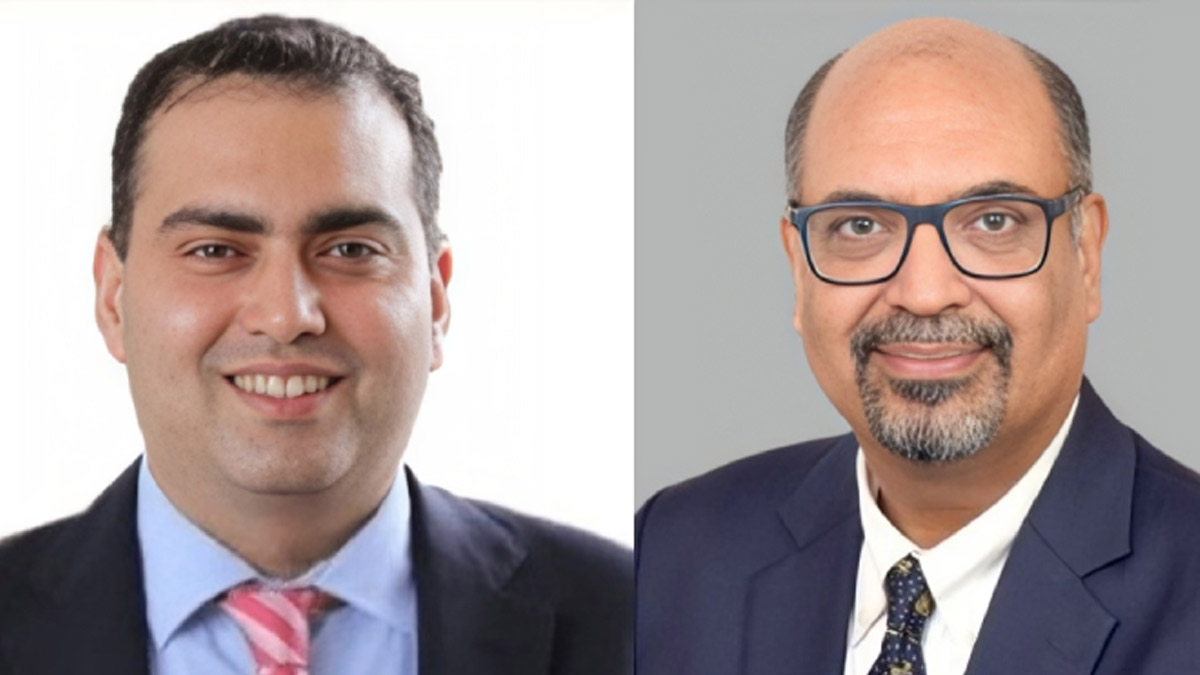
MUMBAI: When one dealmaker steps off the pitch, another is ready to take the baton because in the fast-moving world of transactions, the game never really stops. PwC India has announced a leadership transition in its Deals practice, with Shashank Jain stepping down from his role as co-leader to pursue an opportunity in the industry. The practice will continue to be led by Mohit Chopra, ensuring continuity and sustained growth momentum.
PwC India partner and leader for advisory dinesh Arora paid tribute to Jain’s contributions. “We deeply appreciate the significant contributions made by Shashank over close to three decades he has spent with PwC, particularly his defining role in shaping and strengthening our Transaction Services practice in India,” he said. Arora highlighted Jain’s support for clients through some of the most complex and significant transactions in the Indian market, noting his deep technical expertise, sound judgment and nuanced understanding of the evolving M&A landscape.
The Deals practice remains a key growth driver for PwC India, and the firm expects continued expansion under Mohit Chopra’s leadership. He will continue to guide clients through complex transactions and transformational business moments, building on the strong foundation established over the years.
Reflecting on his journey, Shashank Jain said, “I have had an exceptional journey at PwC. I owe my growth and learning to the nurturing environment and leadership development that PwC provided.” He added that he had been working closely with Mohit and the larger team to ensure a smooth transition and expressed confidence that Chopra would take the Deals practice to newer heights.
From intern to respected deals leader, Shashank Jain has clearly closed many successful transactions and now, it seems, he’s ready to strike a new deal of his own.