Brands
Social Samosa ‘Gold’ for Zee Yuva

MUMBAI: Zee Yuva creates huge buzz in the industry by winning ‘Gold’ award in Media and Entertainment category by one of India’s top media publishing Site-Social Samosa. Zee Yuva not only surpassed regional channels but also defeated the industry honchos to win the coveted gold. This was only possible due to clear defined strategy of giving importance to digital medium as much as traditional mediums during channel launch. The pre-launch buzz was created by ‘#YuvaMhanje campaign’ which became talk of the state by engaging 8 Lakh+ audiences and boasting 7000+ entries. Release of shows title tracks on social media created interest amongst the audiences to watch the show. Bun Maska, Love Lagna Locha and Freshers title tracks got 2.5L,2L, and 3L views respectively in a matter of just two days.
On the day of launch, i.e. 22nd Aug’16 various digital platforms were targeted which were identified as having the highest number of Marathi Youth audiences. #ZeeYuvaOnAir became No. 1 trending hashtag not only in Maharashtra but in India. The campaign received excellent response on social media platforms like Twitter, Instagram and Facebook; with Twitter itself registering a total of 22 million impressions.
The Awards hosted by ‘Social Samosa’ featured 100+ Nominations in 25+ Categories and were evaluated based on Engagement of the brand on Social media, Jury evaluation and online voting. Carlton D’Silva-CEO & CCO, Hungama Digital Service, Roshan Abbas – Managing Director at Geometry Global Encompass Network and Ashish Bhasin – Jury Chair & Chairman and CEO, South Asia, Dentsu Aegis Network were some of the renowned names who were part of the jury.

Zee Yuva has been excelling in the social media space since its inception. Compared to its peers in the media and entertainment space, the numbers for the channel have been beyond impressive when it comes to the rate of fan base growth. In a short span of 8 months, it has created its mark and reached 3 Lac fans on Facebook, 1 Lac fans on Instagram and 5,000 fans on Twitter. Despite the high growth rate in fan base Zee Yuva has constantly maintained highest engagement rate on Facebook, Instagram and Twitter. This has been only possible because, audience engagement has been one of the pillars that the Zee Yuva focuses on. To achieve this level, the content strategy is adapted by mapping digital audience behavior and creating content customized as per the needs specific target group. Digital Marketing in Zee Yuva is treated as a critical medium to reach to revelent audience and not only as a support system for on-air content.
The channel is set to come up with new initiatives and content with a purpose to serve Maharashtra’s digital audiences and maintain its dominance in Digital space.







Brands
Rakesh Menon joins Paytm as avp – lending
Fintech product leader takes on new role after building digital lending, payments and credit products across fintech ecosystem
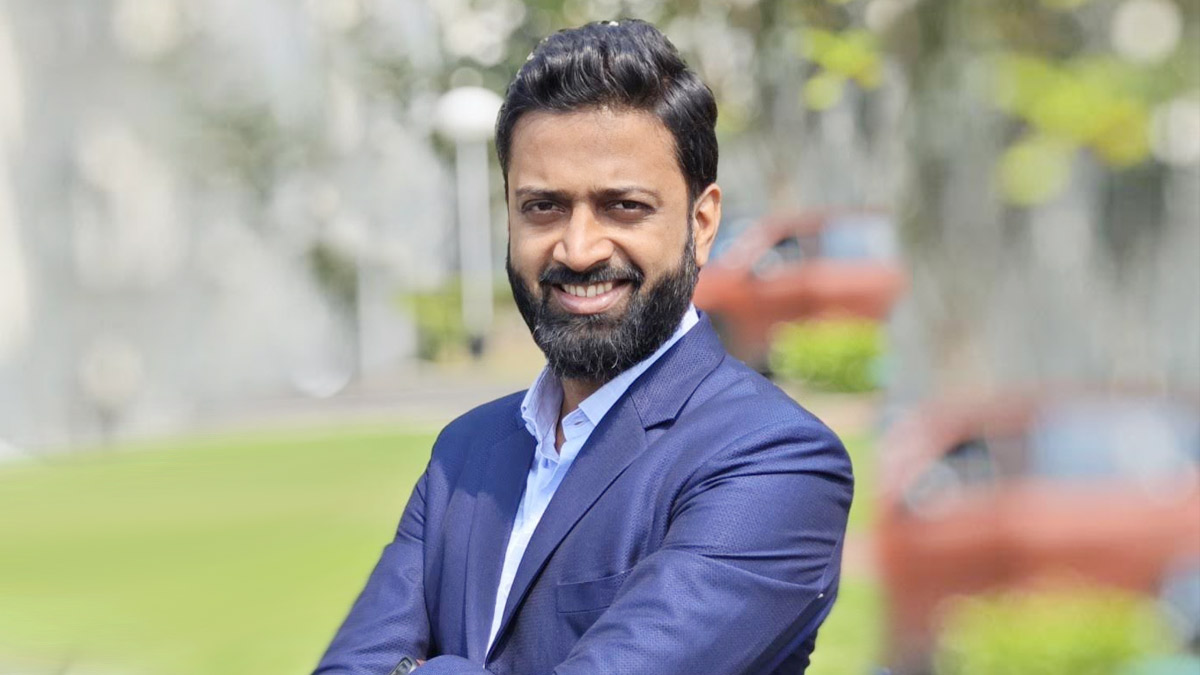
MUMBAI: Rakesh Menon has joined Paytm as assistant vice president – lending, taking on a new role focused on strengthening the company’s lending and credit products.
Prior to this, Menon worked at Profectus Capital Pvt Ltd as chief manager – payments based financing and digital lending.
At Profectus, he designed and launched digital credit products for merchants with variable cash flows, including overdraft-linked and revenue-share lending models. He led end-to-end LOS–LMS API integrations with payment partners and aggregators, enabling real-time underwriting, disbursal and repayment workflows.
He also worked on funnel optimisation initiatives using journey analytics, improving onboarding, KYC and disbursal conversion by 35 per cent. He developed ecosystem partnerships for transaction-data-based credit assessment and automated settlement systems, and collaborated with credit and data science teams to strengthen risk models and early delinquency detection.
Menon standardised partner onboarding and API frameworks, reducing go-live timelines by 40 per cent and improving digital scalability.
Before Profectus Capital, he worked at PayU as senior manager – presales lead – enterprise business from August 2022 to August 2023. He set up a national presales function for fintech and digital commerce clients, aligning solutions such as EMI, BNPL, BBPS and offer engines to merchant requirements.
He also helped improve conversion rates by around 15 per cent through merchant persona mapping, demo frameworks and structured sales playbooks, working closely with product and go-to-market teams.
From April 2019 to July 2022, Menon served as business unit head – SMB – direct acquisitions at Worldline, where he built the SMB online payments vertical from scratch. The business scaled to Rs 2,500 crore in annual transaction volume, growing at 45 per cent year-on-year.
During this period, he introduced paperless onboarding processes including eKYC and eSign, developed partner dashboards and CRM automation systems, and integrated platforms such as Shopify, WooCommerce and Tally to expand merchant adoption.
Across roles, Menon has worked across digital lending, payments and merchant financing, with experience in product development, ecosystem partnerships, API integrations and fintech-led growth strategies.
At Paytm, he will focus on scaling lending products and strengthening digital credit infrastructure within the company’s financial services ecosystem.
His appointment comes as fintech firms continue to expand their lending and embedded finance offerings in a competitive market.







