MAM
Smart class, smart move Mankind Pharma powers up classrooms

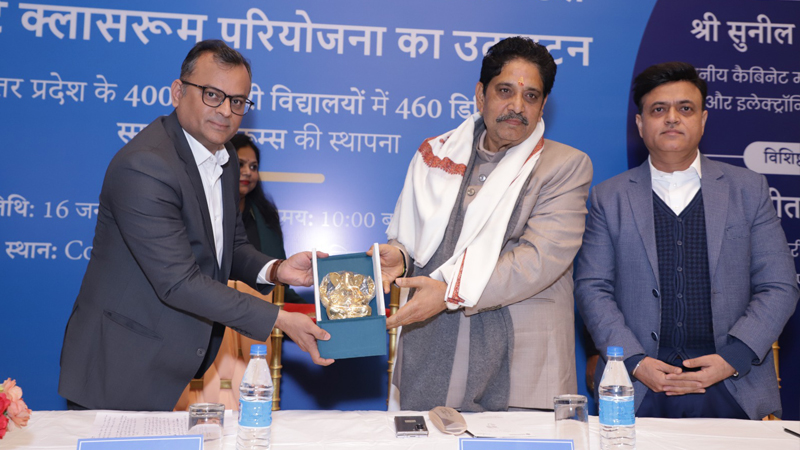
MUMBAI: When chalk meets chips, classrooms get a quiet upgrade. In Ghaziabad, learning just went digital as Mankind Pharma Limited switched on a new set of digital smart classrooms under its flagship CSR platform, Kindcare, giving government school students a front-row seat to technology-led education.
The initiative was inaugurated in partnership with SEEDS Impact by Sunil Kumar Sharma, cabinet minister for information technology and electronics, government of Uttar Pradesh, in the presence of Mankind Pharma chief executive officer Sheetal Arora. The launch marks another milestone in the company’s effort to move learning beyond blackboards and into interactive, tech-enabled spaces.
The Digital Smart Classroom Initiative targets 400 government schools across Uttar Pradesh, with 460 classrooms already operational, reaching thousands of students. Equipped with tools such as the K-Yan digital learning device, the classrooms deliver curriculum-aligned audio-visual lessons, helping simplify complex concepts and improve engagement, particularly in schools where physical infrastructure is limited.

Crucially, the programme goes beyond hardware. More than 2,400 teachers have already undergone structured training to confidently integrate digital tools into daily teaching. The support system includes hands-on workshops, classroom simulations, helplines and digital peer communities, designed to ensure the technology does not gather dust once the launch banners come down.
Speaking at the inauguration, Sharma said the initiative addresses critical gaps in access and quality at a time when digital literacy is no longer optional. Arora added that the focus is not technology for its own sake, but dignity, opportunity and ensuring children in underserved regions are not left behind in an increasingly digital world.
SEEDS Impact CEO R Purushotham noted that the collaboration has the potential to scale further, creating pathways for technology to reach even more students across the state.
The Digital Smart Classroom Initiative is a core pillar of Kindcare, Mankind Pharma’s CSR framework spanning health and hygiene, education, environment and livelihood development. With district-level execution and measurable outcomes at its core, the programme reflects a simple idea with long-term impact: when classrooms get smarter, futures follow suit.

Digital
AI set to transform media and entertainment industry
From creation to monetisation, AI is rewriting how stories are made and found
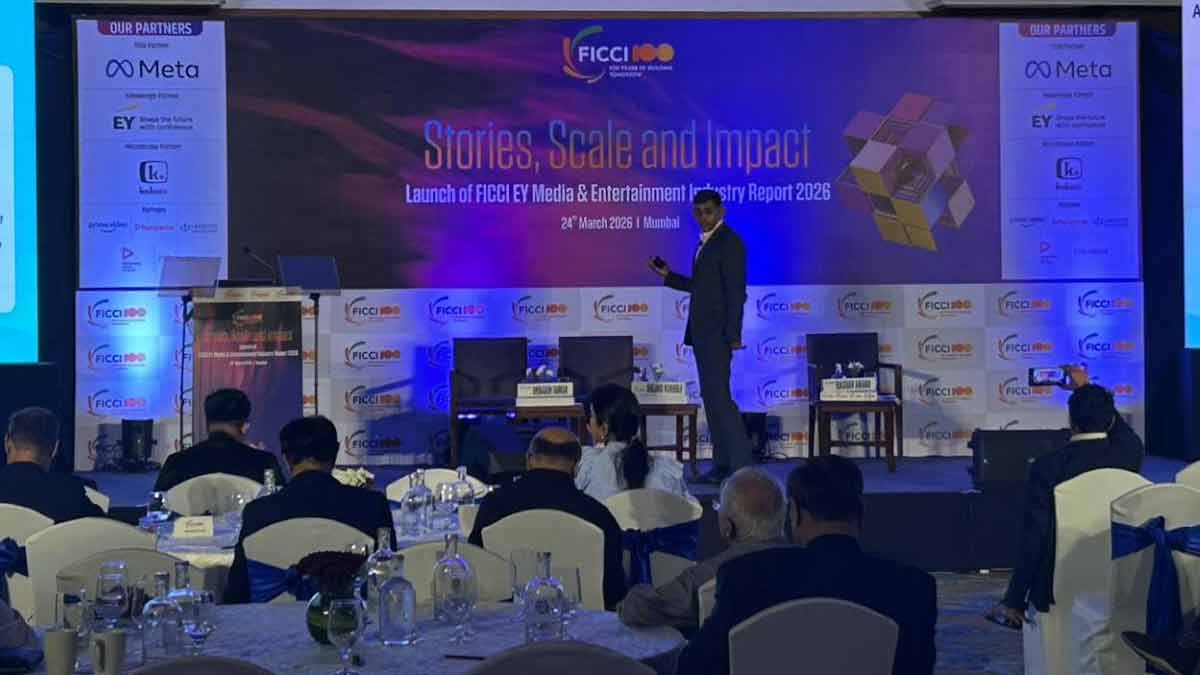
MUMBAI: Artificial intelligence is no longer a backstage tool in media and entertainment. It is fast becoming the main act. Delivering the keynote at the FICCI-EY M&E Industry Report launch, Meta managing director and country head Arun Srinivas, laid out how AI is transforming the entire value chain, from content creation to discovery and monetisation.
At the heart of this shift is access. AI is breaking long-standing barriers of language and reach, allowing content to travel further than ever before. Films, short-form videos and creator-led stories are now being dubbed, subtitled and even lip-synced across multiple languages with ease. The result is a more fluid, borderless entertainment ecosystem where stories find audiences far beyond their original markets.
Discovery, Srinivas noted, is undergoing an equally dramatic shift. On platforms such as Instagram and Facebook, a significant share of content consumption now comes from recommendations rather than followers. AI-driven systems are increasingly acting as matchmakers, connecting viewers with content tailored to their interests. In simple terms, content no longer waits to be found, it finds you.
For advertisers and platforms, this intelligence is translating into sharper targeting and improved efficiency. AI tools can identify the right audiences, optimise campaigns and even assist in crafting narratives for advertisements. What was once manual and intuitive is now data-driven and predictive.
India, Srinivas argued, sits at the centre of this transformation. With millions of creators producing content in dozens of languages, the country is both a testing ground and a growth engine for AI-led innovation. A large and rapidly digitising population, widespread smartphone adoption and expanding 5G access are further accelerating this shift towards a digital-first media economy.
Creators are already tapping into AI tools for editing, translation, dubbing and audience insights, enabling them to refine content in real time. Studios, meanwhile, are using predictive models to gauge consumer sentiment and optimise release strategies. Advertisers are deploying AI across campaigns, while developers continue to build new layers of tools and services on top of these platforms.
Srinivas also pointed to emerging interfaces that could redefine how content is consumed. From AI-powered assistants embedded in everyday apps to wearable devices offering immersive, on-the-go entertainment and real-time translation, the next wave of innovation is set to be more interactive and deeply personalised.
The broader message was clear. AI is not just enhancing the media business, it is restructuring it. As creators evolve into full-fledged studios and content becomes inherently multilingual, the lines between production, distribution and consumption are blurring.
With its scale, diversity and digital momentum, India is uniquely positioned to lead this shift. If storytelling has always been the country’s strength, Srinivas suggested, AI could well be the force that amplifies it to a global stage.








