MAM
Sir Mark Tully (1935–2026): The voice that told India’s story to the world falls silent

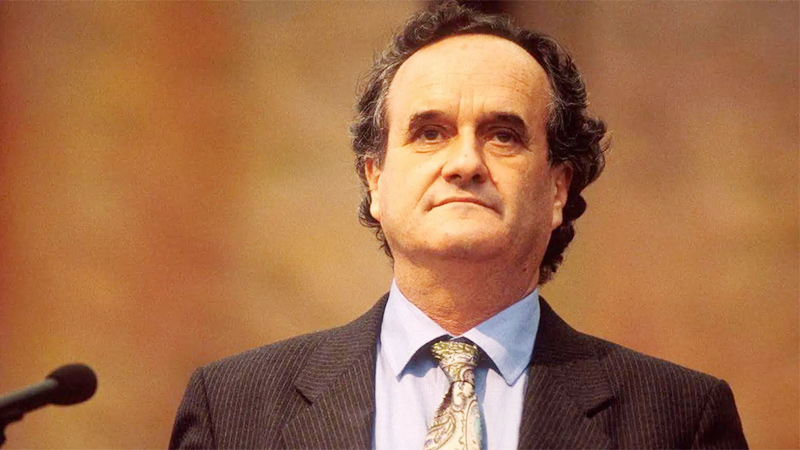
New Delhi: For over half a century, to hear the calm and measured cadence of Sir Mark Tully was to hear the heartbeat of India. Today, that voice, once the most trusted source of news for millions across the subcontinent, has fallen silent. Sir Mark Tully, the legendary BBC Bureau Chief and peerless chronicler of South Asia, passed away at a hospital in New Delhi at the age of 90.
His death marks the end of an era in international journalism. He leaves behind a legacy that bridged the gap between the British Raj into which he was born and the modern, vibrant India he chose as his home.
A witness to the making of a nation

Born in Tollygunge, Calcutta, in 1935, Tully was a child of the Raj who evolved into one of its most insightful critics and most devoted admirers. His father was a prominent British businessman, and his mother was born in Bengal with roots stretching back generations.
Immediately after World War Two, at the age of nine, Tully was sent to Britain for his education. He studied history and theology at Cambridge and then headed to theological college with the aim of being ordained as a clergyman. However, both he and the church eventually had second thoughts. He was brought up with an English nanny who once chided him for learning to count by copying the family driver, telling him it was the “servants’ language.” Ironically, he eventually became fluent in Hindi, a rare achievement in Delhi’s foreign press corps that endeared him to many as “Tully sahib.”
Returning to India with the BBC in 1965, initially as an administrative assistant, Tully did not just report on the country; he lived it. Over three decades, he became the primary witness to the region’s most turbulent and defining moments. During the 1971 Bangladesh Liberation War, his reporting was so vital that he became a household name in Dhaka. He covered war, famine, riots, and the execution of Zulfikar Ali Bhutto, bringing the vibrancy and diversity of the country to audiences in the UK and around the world.

When Indira Gandhi declared the Emergency in 1975, Tully was expelled from India at 24 hours’ notice. Yet, he returned 18 months later with a deeper resolve and remained based in Delhi for the rest of his life. In 1984, during Operation Blue Star and the subsequent assassination of Indira Gandhi, his voice on the shortwave radio was the only steady source of information for a nation in trauma. It was the BBC that scooped the news of the assassination hours before official government sources.
Peril in Ayodhya and the fight for secularism
In 1992, in the small north Indian city of Ayodhya, Tully faced a moment of real peril. He witnessed a massive crowd of Hindu hardliners tear down the ancient Babri Masjid mosque. Some of the mob, suspicious of the BBC, threatened him and chanted “Death to Mark Tully.” He was locked in a room for several hours before a local official and a Hindu priest came to his aid.
The demolition provoked the worst religious violence in India for decades. Years later, Tully described it as the gravest setback to secularism since India’s independence in 1947. He remained a staunch advocate for the secular culture of India, stating in 2016 that it was really important to treasure the secular culture of the country and that we must not endanger this by insisting on Hindu majoritarianism.
The philosophy of “No Full Stops”
Tully’s journalism was defined by a rejection of the Western lens. He famously resigned from the BBC in 1994 after a much publicized speech accusing the then director general, John Birt, of running the corporation by “fear.” He felt the organization was shifting toward corporate priorities that stifled the soul of reporting.
As an author, his books became essential reading. In “No Full Stops in India” and “India in Slow Motion,” he argued against the imposition of Western standards on a culture that moved to its own ancient rhythms. He was never an armchair correspondent; he travelled relentlessly across India and neighboring countries, by train when he could, and was as comfortable wearing an Indian kurta as in a shirt and tie.
Extraordinary contributions and recognition
His life was a rare example of a person being honored by both the land of his birth and the land of his heritage.
Knighthood (KBE) in 2002: Awarded for his services to broadcasting and journalism. He described the award as “an honour to India.”
Padma Shri (1992) and Padma Bhushan (2005): India’s high civilian honors, reflecting the deep respect he commanded across the political spectrum.
Overseas citizen of India: Late in life, he became an OCI, proudly stating he was a citizen of the two countries he felt he belonged to, India and Britain.
Cultural bridge: He hosted the BBC Radio 4 program “Something Understood” for years, exploring spiritual and ethical themes that had engaged him since his student days.
Literary impact: Books like “Amritsar: Mrs. Gandhi’s Last Battle” and “Upcountry Tales” reflected his deep engagement with rural north India and the moral complexities of the country.
Tributes and the final departure
Following the news of his passing, Prime Minister Narendra Modi expressed deep grief on social media, highlighting the journalist’s profound connection to the nation:
Saddened by the passing of Sir Mark Tully, a towering voice of journalism. His connection with India and the people of our nation was reflected in his works. His reporting and insights have left an enduring mark on public discourse. Condolences to his family, friends and many admirers.”
Saddened by the passing of Sir Mark Tully, a towering voice of journalism. His connect with India and the people of our nation was reflected in his works. His reporting and insights have left an enduring mark on public discourse. Condolences to his family, friends and many…
— Narendra Modi (@narendramodi) January 25, 2026
Jonathan Munro, Interim CEO of BBC News, noted that as a pioneer of foreign correspondents, Sir Mark opened India to the world. In his final years, Tully lived unostentatiously in Nizamuddin, South Delhi, with his partner and collaborator, Gillian Wright. He remained a familiar figure at the India International Centre, forever a student of the land he had spent three quarters of his life documenting.
A legacy beyond the airwaves
The true measure of Sir Mark Tully was not found in the awards he received or the world leaders he interviewed, but in the trust he earned from the ordinary Indian citizen. To millions who huddled around shortwave radios in remote villages, Tully Sahib was more than a journalist; he was a window to the truth when the curtains were drawn shut.

He understood that India is not a problem to be solved, but a mystery to be lived. He leaves us with the reminder that there are indeed no full stops in India, only the continuous, sprawling story of a people he loved with all his heart. As the sun sets over the monuments of Delhi tonight, the silence left behind by his departure is heavy, but the echoes of his integrity, his warmth, and his unwavering pursuit of the truth will resonate for generations to come. India has lost a son, and the world has lost its most eloquent bridge.




MAM
Beacon Group appoints Dr Rajesh Patel as Group CEO
36-year healthcare veteran to lead Beacon Diagnostics, Vector Biotek, Biogeny.
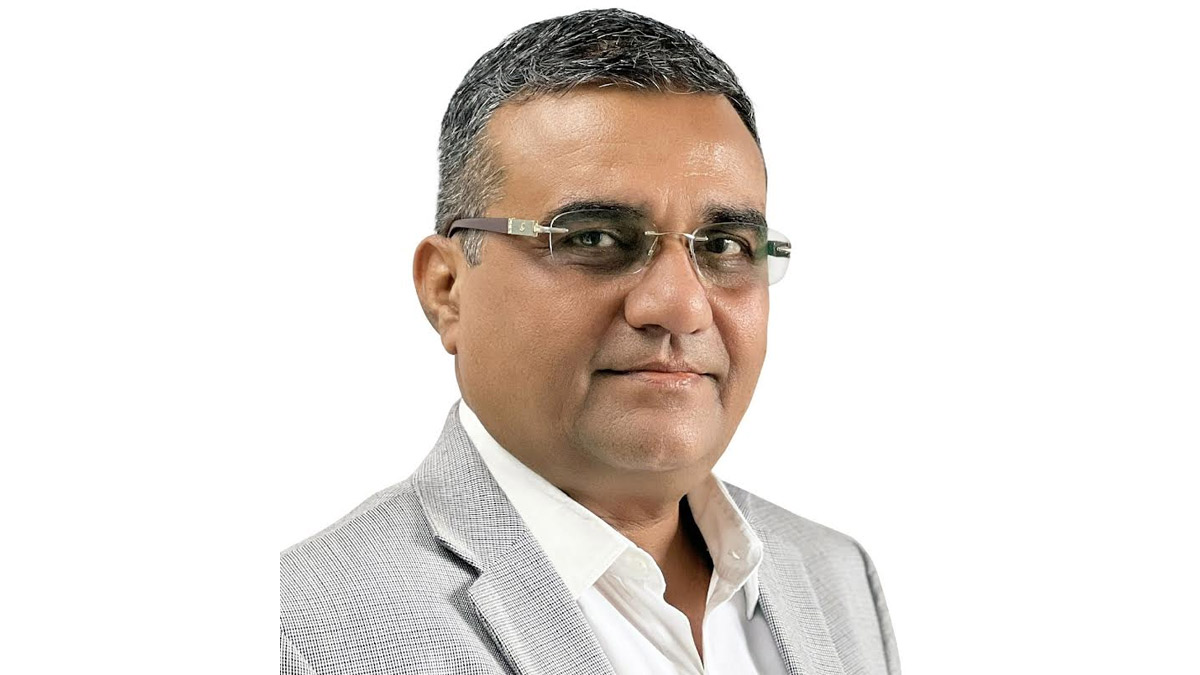
MUMBAI: A new chief, a fresh diagnosis and a sharper prescription for growth. Beacon Group has appointed Dr Rajesh Patel as its Group Chief Executive Officer, effective April 1, 2026, signalling a decisive push to scale its presence in the diagnostics and IVD space. Patel steps into the role with 36 years of experience across the healthcare and diagnostics industry, bringing a career shaped by leadership roles spanning sales, marketing, business development and operational strategy. His mandate is both expansive and precise: to steer the group’s overall strategic direction while tightening coordination across its three core entities Beacon Diagnostics, Vector Biotek and Biogeny Diagnostics.
In practical terms, that means driving cross-company synergies, accelerating market expansion and strengthening organisational capability areas increasingly critical as diagnostic players compete for scale in a fragmented yet rapidly evolving healthcare ecosystem. The group is positioning itself to capture unmet demand across chain laboratories, key accounts and standalone labs, segments that remain underserved despite growing diagnostic needs.
The appointment comes at a time when the In Vitro Diagnostics (IVD) sector in India is entering a more competitive and innovation-led phase, with companies focusing not just on product pipelines but also on service delivery, integration and customer-centric models. Beacon’s leadership appears to be betting that Patel’s execution-focused approach can help translate ambition into operational momentum.
Welcoming the appointment, Chairman Dr D K Joshi described Patel’s induction as a strategic move aligned with the group’s long-term vision, emphasising the role of leadership depth in navigating the next phase of growth.
For Beacon Group, the message is clear, in a sector where precision matters, leadership is the new differentiator—and this appointment is intended to set the tone for what comes next.






