MAM
Sidharth Rao to take direct charge of dentsu Webchutney from Jan 2022


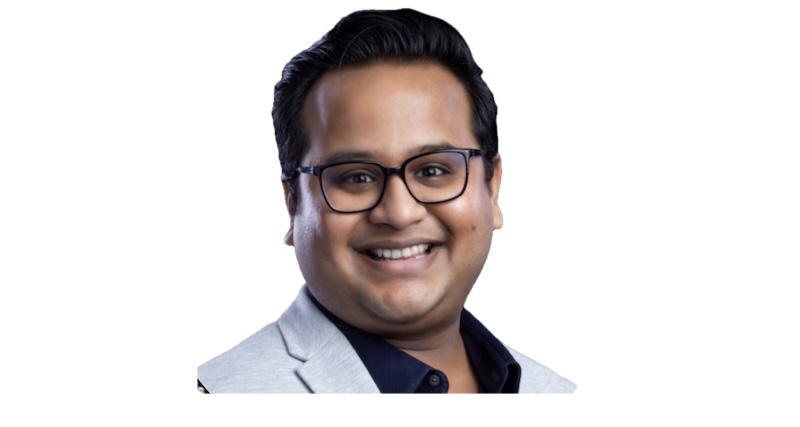
Mumbai: Dentsu Webchutney on Wednesday announced that CEO Gautam Reghunath and COO PG Aditiya will be leaving their positions early next year to set up their own venture. With this change, the agency will now be back under the direct charge of dentsuMB Group CEO Sidharth Rao. Rao, founder of dentsu Webchutney, will front the agency’s leadership team, even as Reghunath and PG Aditiya will continue to work with him through this period to ensure a smooth transition for the creative agency.
“Gautam & PG have been the two most defining hires in our history. As a founder, you want your people to find their calling at the company you build, and the legacy the two of them leave behind is the best possible example of this,” said Sidharth Rao. “From joining at entry-level positions in 2010 and 2012 respectively, and rising to the very top through hard work, passion and just simply being the best in the business at their jobs. It’s a story that makes me believe that we’ve created an organisation where anyone can shine. And now, they have a chance to do it for themselves as creative entrepreneurs.”
“There is a lot that we at dentsu Webchutney owe them but none more so than the culture they’ve created for us all to thrive in. They’ve also assembled an outstanding leadership group, an army of superstars across all levels, all of whom give me and the rest of dentsu’s management immense confidence in how we will march forward as a company,” Rao further said.

In a joint statement, Reghunath and PG Aditiya said, “There is no other agency or network in the country where we would have had the chance to build our careers as we have at dentsu and at Webchutney. We’ve spent nearly 90 per cent of our careers here, so moving on is not a decision we’re taking lightly. Our personal views of what success, failure, and everything else in-between look like have been shaped at Webchutney and the people that we’ve had the privilege of working with & leading here. We’re so proud and thankful for how it’s all panned out.”
“As for the future, we’re more excited than ever about this wonderful business and have a few ideas germinating in our heads—ones that we get to build out. But for now, we’ve got a few more months left in this dream job, and we’re just going to try and maximize every minute of it. There are so many exciting new pieces of work launching over the next few months, some of them possibly the best work we’ve ever had the chance to be a part of. The best years of Webchutney are ahead of it and we’ll be cheering from the very front,” they added.





Risk and return maintain inverse proportionality within mutual funds – higher potential rewards accompany elevated volatility, while stability demands lower expectations. SEBI’s Riskometer (1-5 scale) standardizes visualization, but quantitative metrics reveal nuanced relationships across categories and market cycles.
Fundamental Risk-Return Relationship
Equity funds (Riskometer 4-5) deliver historical 12-16% CAGR alongside 18-25% standard deviation—large-cap 15% volatility, small-cap 30%+. Debt funds (1-2) yield 6-8% with 2-6% volatility. Hybrids (3) average 9-12% returns, 10-14% volatility.
Sharpe ratio measures return per risk unit – equity 0.7-0.9, debt 0.5-0.7 over complete cycles. Higher risk categories compensate through return premium capturing economic growth.
Volatility Metrics Explained
Standard Deviation: Annual NAV return dispersion—equity 18-22%, debt 4-6%.
Maximum Drawdown: Peak-to-trough losses – equity 50%+ (2008), debt 8-12%.
Beta: Market sensitivity – equity 0.9-1.1, debt 0.1-0.3.
Sortino Ratio focuses downside volatility—equity 1.0-1.3 favoring recoveries.
Value at Risk (VaR) estimates 95% confidence, worst 1-month loss: equity 10-15%, debt 1-2%.
Category Risk-Return Profiles
Large-cap equity: 12-14% CAGR, 15% volatility, Sharpe 0.8.
Mid/small-cap: 15-18%, 22-30% volatility, Sharpe 0.7.
Corporate bond debt: 7-8%, 4% volatility, Sharpe 0.6.
Liquid funds: 6.5%, <1% volatility—capital preservation.
Credit risk debt: 8.5%, 6% volatility—yield pickup.
Hybrids: 10-12%, 12% volatility—balanced exposure.
Review types of mutual funds specifications confirming mandated asset allocations driving profiles.
Historical Risk-Return Tradeoffs (2000-2025)
Complete cycles: Equity 14% CAGR/18% volatility; 60/40 equity/debt 11%/11% volatility; debt 7.5%/5% volatility. Bull phases (2013-2021): equity 18%, debt 8%. Bear markets (2008, 2020): equity -50%/+80% swings, debt -10%/+10%.
Inflation-adjusted: Equity 8% real CAGR; debt 1.5% real—growth funding requires equity allocation.
Risk Capacity Assessment Framework
Short-term goals (1-3 years): Riskometer 1-2 (liquid/debt), 2-4% real returns. Medium-term (5-7 years): Level 3 (hybrid), 4-6% real. Long-term (10+ years): Level 4-5 (equity), 6-9% real.
Personal factors: Age (younger = higher risk), income stability, emergency fund coverage, other assets. Drawdown tolerance—20% comfortable vs 40% discomfort signals capacity limits.
Portfolio Construction Principles
Diversification: 60/40 equity/debt reduces volatility 40% versus equity-only while capturing 80% returns.
Correlation: Equity/debt 0.3 average enables smoothing.
Rebalancing: Annual drift correction sells outperformers (equity +25%), buys underperformers (debt -5%).
Style balance: Large-cap stability offsets mid-cap growth volatility.
Quantitative Risk Management Tools
Sharpe Ratio: >1.0 indicates efficient risk-taking.
Information Ratio: Alpha per tracking error.
Downside Deviation: Focuses losses only.
Stress Testing: 2008 scenario simulations reveal portfolio behavior extremes.
Conclusion
Higher mutual fund risk levels correlate with elevated return potential – equity 12-16% amid 18-25% volatility versus debt 6-8%/4-6%. Risk capacity matching, category diversification, rebalancing discipline, and quantitative metric interpretation align portfolios with personal tolerance across economic cycles.
Disclaimer: Investments in the securities market are subject to market risk, read all related documents carefully before investing.






