MAM
Samsung sparks PC gaming revolution in India with World Cyber Games

MUMBAI: Samsung India Electronics Ltd. has kicked off the PC gaming revolution in India by announcing the launch of the Cyber Olympics event – the World Cyber Games 2005. The event was kicked off in Delhi yesterday.
The World Cyber Games is the world’s first “Cyber Game Festival,” designed to build a healthy cyber culture. The best gamers around the world gather in various cities to share the excitement and fun of the game tournaments. The World Cyber Games (WCG) have been promoted on the lines of the International Olympic movement. Samsung Electronics Co. Ltd, South Korea – is the main sponsor for the WCG in over 75 countries this year. The winners from each of the 75 countries will compete at the WCG finals being held at Suntec City Singapore, between 16 – 20 November, 2005.
WCG India preliminary will be held across eight cities in India between 13 – 31 October. The cities are as follows: New Delhi, Ahmedabad, Pune, Mumbai, Chennai, Bangalore, Hyderabad and Kolkatta. The preliminaries will be followed by the semi finals and the finals in Mumbai on 30 – 31 October.
The gaming contest includes team as well as individual games. “PC gaming is today a very evolved sport – fostering virtues of ‘team work’, ‘healthy competitiveness’ between teams and individuals and there is a strong emphasis planning and analytical skills,” said IT Products general manager Harry Ahn.
“Games like Counter Strike (five member team game), Warcraft , FIFA football, Warhammer and Need for Speed test these attributes in the gamers. While most of us interface with the PC as a productivity enhancement tool, today PC gaming is emerging as a very strong entertainment platform across the world,” Ahn added.
Recognising the needs of the rapidly growing gaming industry in India, Samsung now offers a range of products designed keeping the discerning customers in mind. For serious gamers, Samsung’s MagicGreen Monitors, SATA HDD and Combo Drives are ideal. The MagicBright? Ô technology in Samsung’s recently introduced Magic Green monitors allows for change in screen brightness to suit multiple applications. The technology offers specialised settings for four highly used applications – Movie Mode; Game mode; Internet mode and Text mode.

Indiagames is working along-with Samsung India to successfully execute the WCG event this year. Alongside, Sify i-Way chain of cyber-cafes will also be supporting WCG-2005 in India this year.


Brands
Prossima AI appoints Metamorph CEO Satyandre Yadav as media advisor
Move signals push for global storytelling as startup sharpens AI positioning
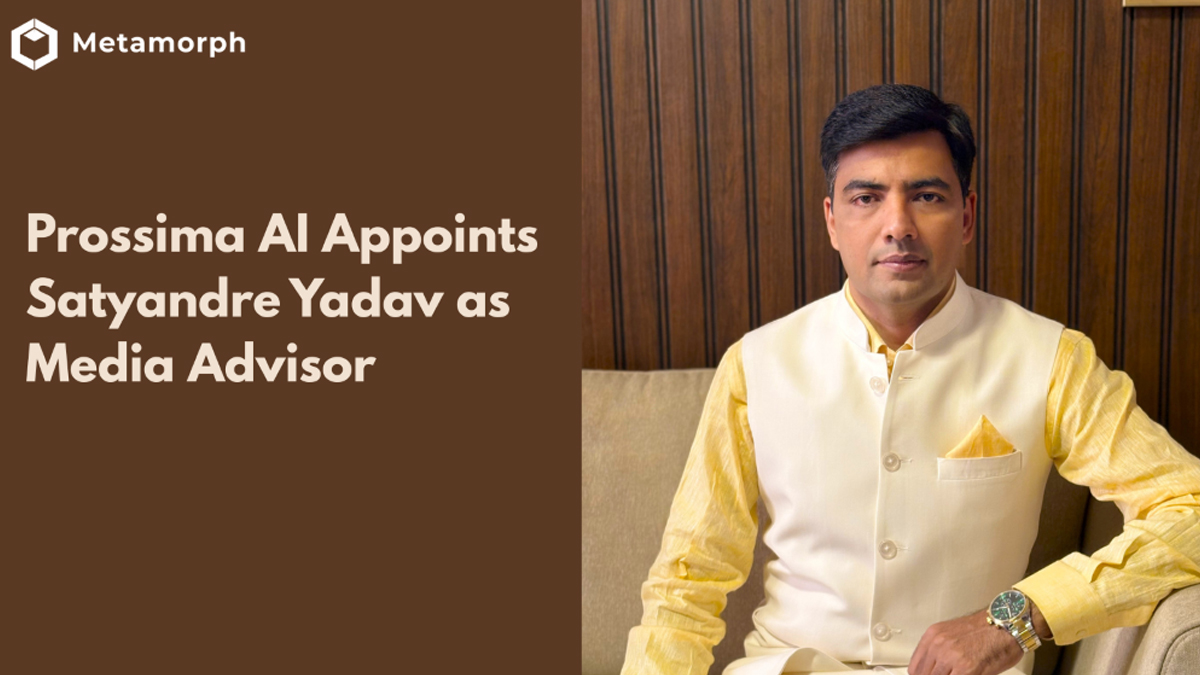
NEW DELHI: Prossima AI has appointed Satyandre Yadav, chief executive of Metamorph, as its media advisor, in a move aimed at strengthening its global communications and brand positioning.
The appointment comes as the government-recognised AI startup looks to sharpen its narrative in an increasingly competitive and fast-evolving sector. Yadav will lead media strategy, narrative development and global outreach, helping Prossima AI better articulate its technological capabilities and long-term vision across key markets.
The development also marks a strategic expansion for Metamorph, which is formally entering the AI communications space after building expertise across Web3, fintech and emerging technologies.
The partnership follows a strong momentum phase for Prossima AI. The company was recently named among the top five AI startups in India and received a seed grant at the India AI Impact Summit 2026. The recognition was part of a multi-stakeholder collaboration involving the Government of India, Meta, 1M1B, AICTE and YuvAI.
“Effective communication is critical in the AI space, where clarity and trust are paramount,” said Prossima AI cofounder Atulya Bhatt. “Satyandre’s experience in building strong narratives for disruptive technologies makes him an ideal partner as we scale our presence.”
“Prossima AI is building at the intersection of innovation and real-world application,” said Metamorph ceo Satyandre Yadav. “We see immense potential in shaping its narrative as AI continues to redefine industries globally. This partnership also represents a significant milestone for Metamorph as we expand our footprint into AI-led communications.”
As artificial intelligence adoption accelerates across sectors, the need for clear and credible storytelling is becoming just as important as the technology itself. Prossima AI’s latest move reflects this shift, signalling how startups are increasingly investing in narrative alongside innovation to stand out in a crowded market.







