MAM
Rural marketing agencies form RMAAI

MUMBAI: With the growing importance of rural markets in corporate marketing strategies, there is an increased recognition of rural specialties in helping companies plan and implement their rural marketing activities. This has resulted in a number of players, both big and small entering the field in the last couple of years.
As was reported by Indiantelevision.com earlier this month, a few leading players who have been providing tremendous value added rural marketing services all across the country have come together to form the Rural Marketing Agencies Association of India (RMAAI).
Anugrah Madison, Sampark Marketing and Advertising Solutions, MART, Rural Relations along with other players like O&M Outreach, Linterland, Impact Communications, Rural Eight, RC&M, India Agrilbusiness Systems and Kripa Outdoor have come together to form RMAAI.

Anugrah Madison chairman and managing director RV Rajan will be the president of the association, whereas MART’s Pradeep Kashyap will hold the position of vice president. The association’s secretary will be Impact Communications’ Sanjay Kaul and the treasurer will be Kripa Outdoors’ R Parthasarathy.
The committee members of RMAAI are Sampark’s R Patankar, Rural Relations’ Pradeep Lokhande, Ogilvy Activation’s J C Giri, Linterland’s Dinesh Malhotra, RC&M’s Priya Monga, Indian Agribusiness Systems’ Sunil Khairnar and Rural Eight’s Amla.
These agencies have come together on a common platform and will work towards recognition, credibility and meeting the needs of the rural marketing industry.
One of the important objectives of RMAAI would be to set industry benchmarks in areas of performance evaluation and financial practices. To improve the overall understanding of rural markets by the corporate world, RMAAI will conduct seminars, workshops and conferences, besides offering guidance to Management Institutes in running courses in rural marketing. It will also undertake syndicated research in rural marketing on select topics, which will help increase the knowledge base of rural marketers, which in turn could help marketers develop better and more effective rural marketing strategies.
Rajan said, “Marketers look at rural India as a mass market, which it is not. That is the reason why we’ve not got adequate success. A lot of corporates have been talking about going rural for the last two decades, but if all of them walked the talk, we wouldn’t be forming this association today.”
Kashyap, on the other hand, said, “We hope to expand the scope of the Rural Network by including other big players O&M, Linterland etc., so that the association is completely representative of the rural marketing agencies.”
The founding members have paid a nominal fees of Rs 6000 to be a part of the association.
RMAAI also has plans of starting an award function in the near future to recognise individuals and organisations who have actively contributed to the growth of the rural marketing industry. Also on 10 and 11 November, RMAAI will be hosting a two day seminar on rural marketing in an effort to bring together all the rural players in the field under one roof, share developments in the industry as well as the advantage of being a part of the association network. “This seminar will be an important launching pad for the association,” Rajan said.




MAM
Beacon Group appoints Dr Rajesh Patel as Group CEO
36-year healthcare veteran to lead Beacon Diagnostics, Vector Biotek, Biogeny.
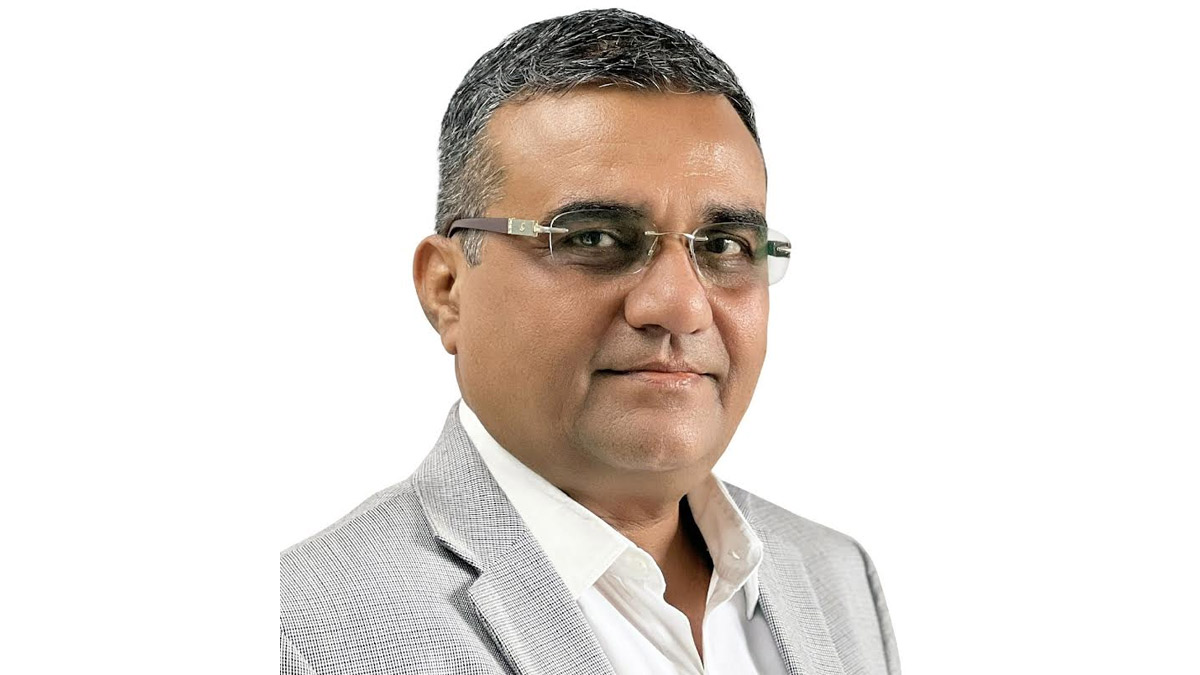
MUMBAI: A new chief, a fresh diagnosis and a sharper prescription for growth. Beacon Group has appointed Dr Rajesh Patel as its Group Chief Executive Officer, effective April 1, 2026, signalling a decisive push to scale its presence in the diagnostics and IVD space. Patel steps into the role with 36 years of experience across the healthcare and diagnostics industry, bringing a career shaped by leadership roles spanning sales, marketing, business development and operational strategy. His mandate is both expansive and precise: to steer the group’s overall strategic direction while tightening coordination across its three core entities Beacon Diagnostics, Vector Biotek and Biogeny Diagnostics.
In practical terms, that means driving cross-company synergies, accelerating market expansion and strengthening organisational capability areas increasingly critical as diagnostic players compete for scale in a fragmented yet rapidly evolving healthcare ecosystem. The group is positioning itself to capture unmet demand across chain laboratories, key accounts and standalone labs, segments that remain underserved despite growing diagnostic needs.
The appointment comes at a time when the In Vitro Diagnostics (IVD) sector in India is entering a more competitive and innovation-led phase, with companies focusing not just on product pipelines but also on service delivery, integration and customer-centric models. Beacon’s leadership appears to be betting that Patel’s execution-focused approach can help translate ambition into operational momentum.
Welcoming the appointment, Chairman Dr D K Joshi described Patel’s induction as a strategic move aligned with the group’s long-term vision, emphasising the role of leadership depth in navigating the next phase of growth.
For Beacon Group, the message is clear, in a sector where precision matters, leadership is the new differentiator—and this appointment is intended to set the tone for what comes next.






