Ad Campaigns
RIO breaks the blue blood rule

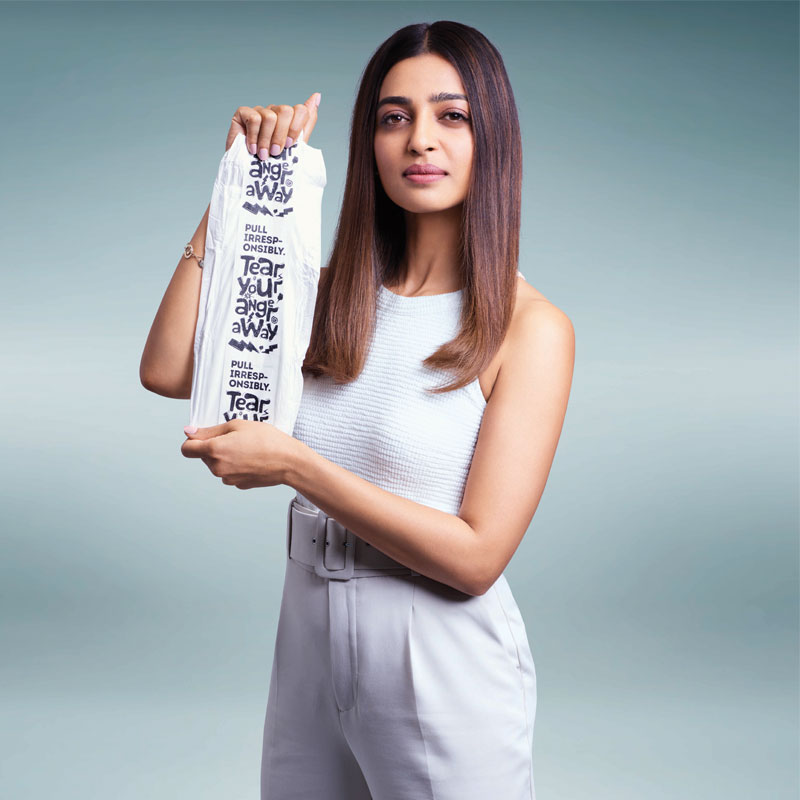
MUMBAI: RIO heavy flow pads by Nobel Hygiene is all set to change the face of Indian advertising by launching its TVC with a PAN India campaign, this time after definitively resolving the decades-old and misleading practice of showing blue liquid instead of blood.
RIO Pads becomes the first product in the country to show red blood in TV communications, to bring forth an important and often neglected topic of “Heavy Flow” during periods; a problem which affects almost 25 per cent women in India and requires them to change their pads every 2 hours. In some cases, women change up to 8-10 pads a day because of heavy flow. The first phase of the launch in Feb was paused after several complaints were filed with ASCI on the usage of blood shown in the commercial. Nobel Hygiene submitted extensive research documents to sustain all the insights related to periods and the problems that women face because of heavy flow. After deliberations with ASCI and an independent review, the complaints filed with ASCI have not succeeded and RIO Pads have been allowed to air the advertisement with minor modifications in the second phase of the launch.
Nobel Hygiene vice-president Kartik Johari said, “We are extremely proud to take this first step on behalf of all the women in India. There can be no talk of education, awareness or equality when the biological truth of half the population is censored. Our resolve to continue this conversation has been renewed, starting with the depiction of blood. To show the unaddressed problem of Heavy Flow, without showing blood itself, is so absurd a concept that it didn’t even occur to us. All our communications are deeply inspired from our research, showing the first true and honest representation of periods for consumers. Awareness is needed, and conversations can only begin after acknowledging reality.”

He further added, “We took special care to ensure our communication remained as authentic as possible. The entire creative was scripted by a woman, based on real narratives from women, directed and shot by a woman, and is being marketed by women. Additionally, 1000s of women have already applauded our product and messaging; we are proud to have brought this innovation for Indian ladies who receive no respite from Heavy Flow. We are sure that other players in the market are excited by this new paradigm, and we call upon everyone to take advantage of this exciting shift to educate and reconnect with their consumers!”
Radhika Apte, theatre and film actress also added, "I have said this earlier and I will say it again. I do not see the issue in showing actual blood. Blood in a fight sequence in a film is fine but not for periods? Why can't we just show what heavy flow is really like? Why can't we show blood? I am glad that RIO has taken up this challenge and they are standing by it with conviction. Getting a go-ahead on this advertisement is very reassuring. If this ad can start even a single conversation, then that is a win for all the unheard voices. If we can remove even an iota of stigma around periods via this adv and encourage people to accept it as a normal and natural phenomenon then it will be a big win for us all. Period.”
Heavy Flow (& PCoD) is often considered a personal complication and not a separate medical problem. Combine it with a general reluctance in visiting a doctor and most cases of Heavy Flow remain undiagnosed. Thus, women refrain from opening up about it and continue to suffer in silence. RIO’s own qualitative and quantitative research re-affirmed this view and threw light on the pain and the ostracisation that women face because of it across different strata of society. The category codes were to show blue colored water, which is not an indication about either the color or the thickness and hence absorption.
The second phase of the launch will see the brand being visible via its campaign across key GEC channels (Star Plus, Colors and Sony) and regional channels (Zee Marathi and Kannada , TV9 and Suvarna) along with select news channels (News18 and News Nation). The brand campaign will also be seen on OTT platforms (Zee5 & Hotstar) and via partnerships with select print publications to create larger mass awareness. The brand will also be exploring strategic tie-ups with impact properties in the near future.
Globally, the advertising watchdogs of only two countries have allowed showing the red. Many MNCs have still refrained from changing the status quo. This campaign clearly marks the beginning of an era and a step in the right direction. This powerful and positive win will create more conversations, to help bring about a revolution in Female Hygiene in India, where only 50 per cent women have access to female hygiene products and almost 100 per cent approach menarche unprepared.




NATIONAL: Amazon Ads has laid out a sharply tech-led vision for the advertising industry in 2026, arguing that artificial intelligence, streaming TV and creator partnerships will combine to turn brand building into a more precise, performance-driven business.
At the heart of the shift, the company says, is the fusion of AI with Amazon’s vast trove of shopping, browsing and streaming signals, allowing advertisers to move beyond blunt reach metrics to campaigns designed around real customer behaviour.
“The future of advertising is not about reaching more people, but the right people with messages that resonate,” said Amazon Ads India head and vice president Girish Prabhu. “By combining AI with deep customer insights, we help brands move from broadcasting campaigns to having meaningful conversations wherever audiences spend their time.”
One of the biggest changes, according to Amazon Ads, will be the collapse of the wall between media planning and creative development. Retail media, powered by first-party data, is increasingly shaping everything from brand discovery to final purchase, pushing marketers to design campaigns around audience insight rather than internal instinct.
AI is also moving from a support tool to a creative engine. Agentic AI, which automates and accelerates production, is expected to make high-quality creative accessible even to small businesses, compressing weeks of work into hours and giving challengers the ability to compete with larger brands on speed and scale.
Behind the scenes, AI-driven analytics will take on a bigger role in campaign optimisation, identifying patterns, spotting opportunities and recommending actions that would previously have required teams of analysts.
Streaming TV is another big battleground. With India’s video streaming audience now above 600 million and connected TV users at 129.2 million in 2025, advertisers are set to treat streaming not just as a branding channel but as a performance engine, measured increasingly by sales, sign-ups and bookings rather than just reach.
Finally, Amazon Ads sees creators and contextual advertising reshaping how brands tell stories. Creators will act less like influencers and more like long-term partners, while scene-aware ads on streaming platforms will allow brands to insert hyper-relevant offers into the flow of what viewers are watching.
Taken together, Amazon Ads argues, these shifts mark a move towards advertising that is both more human and more measurable, where AI handles the complexity, and creativity does the persuading.







