Brands
Renault refreshes brand identity, unveils new logo


NEW DELHI: French carmaker Renault is taking the brand in a new direction. The company has adopted a Nouvelle Vague strategy targeting to maximise its number of electrified vehicles by 2030 in a bid to move towards sustainable development. The brand identity refresh comes with a new logo that is more modern and vibrant, and it serves a key purpose: to portray the Renault brand as more relatable and built on people-centric values.
The new logo was co-designed with Landor&Fitch consultants and will be phased in as of next year on all Renault brand vehicles and throughout the Renault network. By 2024, the Renault range will bear the new logo.
Renault brand design director Gilles Vidal unveiled an image of the logo as it will appear on the back of the new Megane E-TECH Electric, set to be marketed in 2022.

“In tune with the times and resolutely modern, the restyled diamond perfectly embodies the ‘New Wave’ era that Renault has entered. This new logo will be gradually applied to Renault vehicles. It will proudly appear on those to be launched next year. By 2024, the entire Renault range will carry the new emblem” said Vidal.
The Renault diamond has been redesigned no less than eight times. Nine, with the latest version.
By 2030, Renault is targeting to become world’s best automotive manufacturer when it comes to the percentage of recycled materials in new vehicles. The company will also introduce seven electrified models in C and D segments. The company has also announced that the E-TECH Hybrid technology will continue to power upcoming C and D segment vehicles. Renault has been leading in the EV segment in Europe with almost four lakh vehicles sold to date. Europe, France, Spain, Italy, Germany, and the United Kingdom will continue to be its key markets. The automaker will also try and increase local dominance in Brazil, Russia, Turkey, and India.





Brands
Emami names Dhruv Aggarwal as chief growth officer
Former Bain partner steps in as FMCG firm sharpens growth playbook
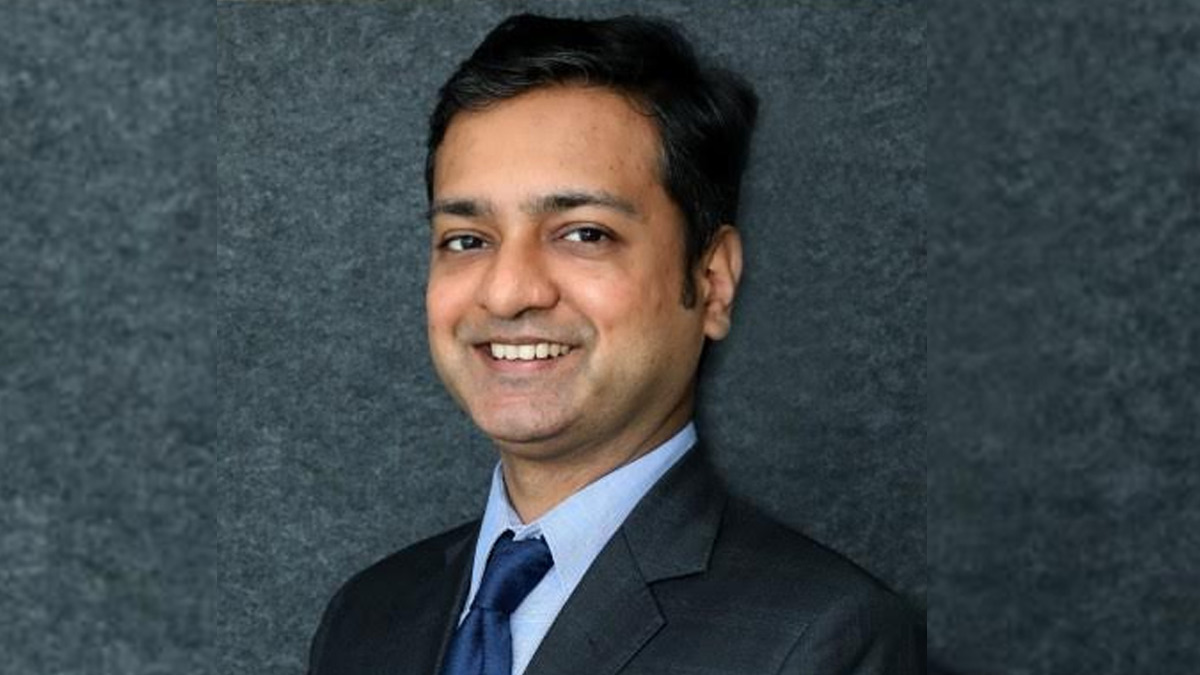
MUMBAI: Emami Limited has appointed Dhruv Aggarwal as its chief growth officer, effective 25 March 2026, following the resignation of Giriraj Bagri.
Aggarwal joins the FMCG major from Bain & Company, where he most recently served as partner. With over two decades of experience across consulting and strategy, he brings a global perspective shaped by work across India, the US, the UK and Germany.
During his tenure at Bain, Aggarwal advised consumer, retail and media companies on large-scale transformations, business turnarounds and growth strategies. He was also closely involved with India’s startup ecosystem, guiding early-stage ventures on scaling and digital expansion, while supporting private equity and venture capital firms on investment decisions.
His earlier stints include a brief role at Barclays Capital and operational experience at Jindal Power, giving him a mix of financial and industry exposure.
Academically, Aggarwal holds an MBA from Indian Institute of Management Bangalore and has also been associated with University of Illinois Urbana-Champaign as a PhD candidate and teaching assistant.
The appointment comes at a time when Emami Limited is looking to sharpen its growth strategy in a competitive consumer market. With a seasoned strategist now at the helm of growth, the company appears set to double down on transformation and expansion in the months ahead.








