Brands
Reliance keeps wheels turning as Q3 numbers hold steady


MUMBAI: Reliance Industries has wrapped up the December quarter with a performance that underlines the power of scale, even as markets remain jumpy and consumers cautious.
The numbers tell a familiar Reliance story: vast revenues, steady profits and a business empire that stretches from oil refineries to digital services and high-street retail. For readers who do not live and breathe balance sheets, the takeaway is simpler. Reliance continues to make money from many directions at once, and that diversity keeps it resilient.
For the December quarter, the group reported consolidated revenue of Rs 2.65 lakh crore, up from Rs 2.55 lakh crore in the September quarter and Rs 2.40 lakh crore a year ago. Consolidated net profit came in at Rs 18,645 crore, marginally higher than Rs 18,165 crore in Q2 and ahead of Rs 18,540 crore in the same quarter last year.

Operating performance remained steady. Consolidated Ebitda stood at Rs 46,018 crore, compared with Rs 45,885 crore in the previous quarter and Rs 43,789 crore a year ago. The EBITDA margin eased to 17.4 per cent, reflecting cost pressures and a softer margin environment, compared with 18 per cent in Q2 and 18.3 per cent in Q3 last year.
Behind the headline numbers sits a sprawling structure. Reliance now counts hundreds of subsidiaries, associates and joint ventures across sectors such as oil to chemicals, exploration and production, retail, digital services and new energy. The company’s auditors, Deloitte Haskins & Sells and Chaturvedi & Shah, said their limited review found nothing to suggest the results were materially misstated or non-compliant with regulatory norms.
The oil-to-chemicals (O2C) business remained Reliance’s heavyweight. The segment reported quarterly revenue of Rs 1.62 lakh crore, slightly higher than Rs 1.61 lakh crore in the previous quarter and up 8.7 per cent year-on-year. Segment Ebitda rose sharply to Rs 16,507 crore, from Rs 15,008 crore in Q2 and Rs 14,402 crore a year ago, while Ebitda margin improved to 10.2 per cent, signalling better operational efficiency despite volatile energy markets.
Retail and digital services continued to provide ballast to the group’s earnings profile, helping offset margin pressures in core energy operations. Jio’s connectivity-led business and Reliance Retail’s expanding footprint across formats and geographies reinforced the group’s consumer-facing growth engine, while new energy initiatives remained in investment mode.
Reliance also flagged a few housekeeping updates. During the April–December period, it redeemed non-convertible debentures worth Rs 2,650 crore and said its secured debentures remain comfortably covered by assets. The company noted that new labour codes implemented by the government from November 2025 are not expected to have a material financial impact at this stage.
For investors, the message is one of continuity rather than fireworks. Reliance is not promising sudden leaps, but it is delivering consistency across a remarkably wide canvas. For everyone else, it is a reminder of how deeply the company is woven into daily Indian life, from the fuel in a car to the data on a phone and the groceries in a shopping bag.







Brands
Emami names Dhruv Aggarwal as chief growth officer
Former Bain partner steps in as FMCG firm sharpens growth playbook
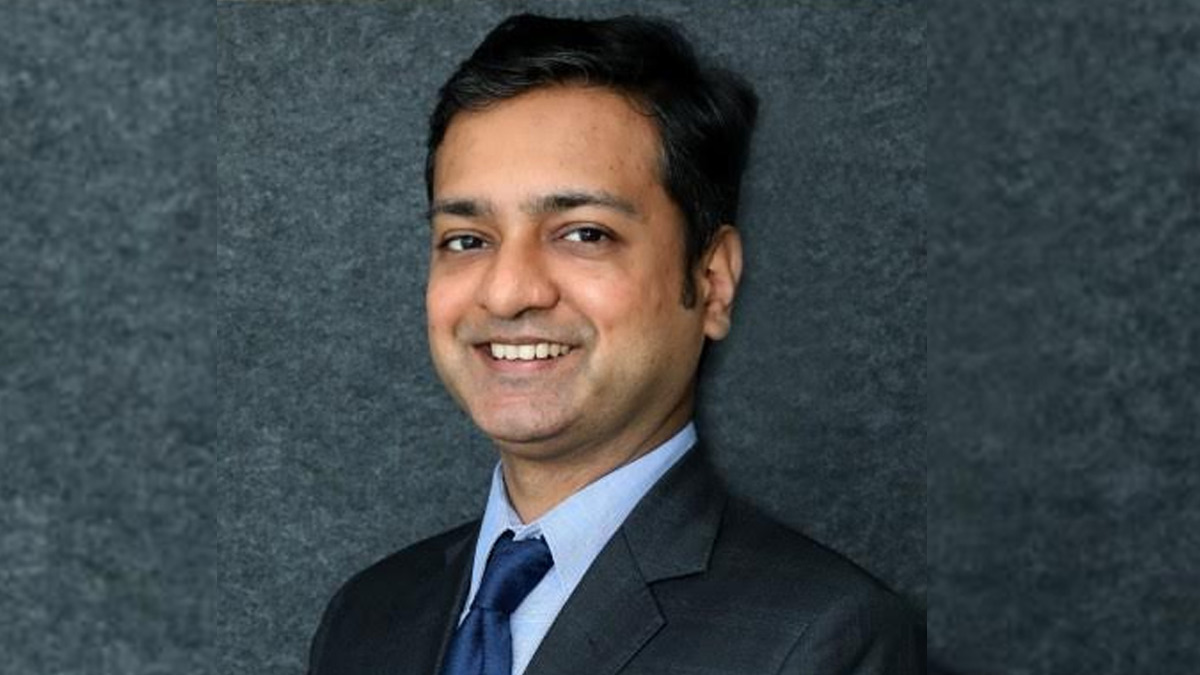
MUMBAI: Emami Limited has appointed Dhruv Aggarwal as its chief growth officer, effective 25 March 2026, following the resignation of Giriraj Bagri.
Aggarwal joins the FMCG major from Bain & Company, where he most recently served as partner. With over two decades of experience across consulting and strategy, he brings a global perspective shaped by work across India, the US, the UK and Germany.
During his tenure at Bain, Aggarwal advised consumer, retail and media companies on large-scale transformations, business turnarounds and growth strategies. He was also closely involved with India’s startup ecosystem, guiding early-stage ventures on scaling and digital expansion, while supporting private equity and venture capital firms on investment decisions.
His earlier stints include a brief role at Barclays Capital and operational experience at Jindal Power, giving him a mix of financial and industry exposure.
Academically, Aggarwal holds an MBA from Indian Institute of Management Bangalore and has also been associated with University of Illinois Urbana-Champaign as a PhD candidate and teaching assistant.
The appointment comes at a time when Emami Limited is looking to sharpen its growth strategy in a competitive consumer market. With a seasoned strategist now at the helm of growth, the company appears set to double down on transformation and expansion in the months ahead.








