Brands
Reliance Consumer takes majority stake in Australia’s Goodness Group

MUMBAI: The FMCG arm of Reliance Industries has acquired a majority stake in Australia-based Goodness Group Global, marking its entry into the country’s consumer goods market and extending its ambitions well beyond India and its neighbourhood.
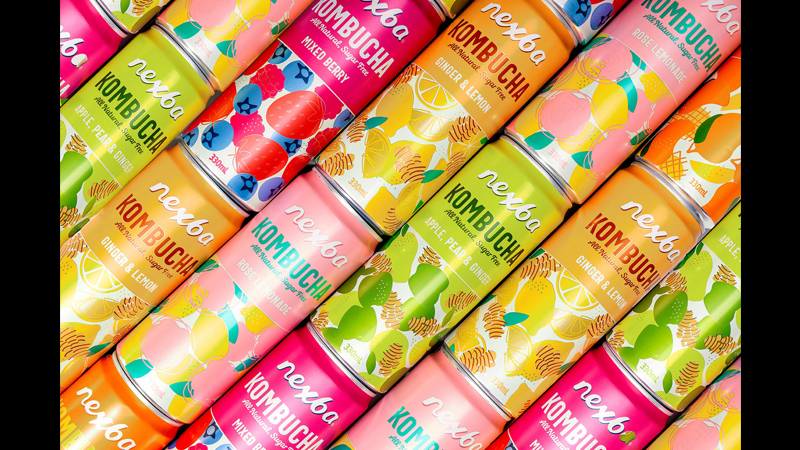
The deal hands Reliance Consumer Products Limited control of a business best known for Nexba, a “better-for-you” beverage brand built around gut health, and Pace, a hydration drink co-created with Australian cricket captain Pat Cummins. Financial terms were not disclosed.
The acquisition adds Australia to a growing list of overseas markets for Reliance Consumer, which has already expanded into the UAE, Qatar, Oman, Bahrain, Nepal and Sri Lanka. With Goodness Group under its wing, the company plans to push Nexba and Pace into new markets, including India, using its distribution scale and supply-chain heft.

For Reliance Consumer, the move sharpens its focus on health-led beverages, a segment it has been quietly building through brands such as Raskik and Sun Crush juices, zero-sugar carbonated soft drinks, and the herbal-natural line Shunya. The company is positioning itself as a challenger FMCG player offering global formats at mass-market prices.
Reliance Consumer Products director T Krishnakumar, said the partnership was aimed at building a global FMCG business from India, with healthier beverage brands playing a central role. He added that Reliance’s distribution network would be used to widen Goodness Group’s reach and availability, particularly in the Indian market.
Goodness Group founder Troy Douglas said the tie-up would accelerate the company’s international expansion, with plans to enter up to 50 western markets over the next five years. He described Reliance Consumer as a “strong and sophisticated” partner capable of scaling the brands globally.
Founded in Sydney, Goodness Group Global operates across Australia and 21 international markets, pitching itself at consumers seeking lower-sugar, plant-based alternatives. Its flagship brand Nexba is sweetened using Goodsweet, a proprietary, plant-derived, zero-calorie sweetener. Other brands include Bison, a protein-based beverage, and Good Brekkie, a liquid breakfast offering.






Brands
Wipro hires 7,500 freshers, withholds FY27 hiring outlook
Profit rises to Rs 3,522 crore, Rs 15,000 crore buyback announced.
MUMBAI- Hiring may be on, but visibility is off, Wipro is adding talent even as it pauses the crystal ball. The company hired 7,500 freshers in FY26 but stopped short of offering any hiring outlook for FY27, underscoring the uncertainty gripping the IT services sector as it pivots towards an AI-led operating model.
The disclosure came alongside its fourth-quarter earnings, where management flagged volatile demand conditions and refrained from committing to future workforce expansion. Chief human resources officer Saurabh Govil noted that over 3,000 of the total hires were onboarded in the March quarter alone, signalling continued intake despite a lack of clarity on deployment pipelines.
This divergence active hiring without forward guidance reflects a broader industry pattern where talent acquisition continues even as deal conversions remain uneven and client spending cycles stretch. Wipro expects its IT services revenue for the June quarter to range between a decline of 2 per cent and flat growth sequentially in constant currency terms, reinforcing near-term caution.
Chief executive officer Srini Pallia pointed to artificial intelligence as both a disruptor and an opportunity. He said evolving client priorities are pushing the company towards outcome-driven engagements, with Wipro increasingly focusing on a services-as-software model through its AI Native Business and Platforms unit. The shift marks a structural change from traditional headcount-led growth to AI-enabled delivery frameworks.
The company has already committed over $1 billion to its AI ecosystem, with investors closely watching how these investments translate into revenue. For now, the numbers present a mixed picture. Net profit rose sequentially to Rs 3,522 crore, while revenue grew 3 per cent to Rs 24,236 crore. However, core IT services performance remained under pressure, with full-year revenue declining 0.3 per cent in dollar terms and 1.6 per cent in constant currency.
Large deal bookings offered a counterpoint, rising 45.4 per cent year-on-year to $7.8 billion, highlighting a widening gap between deal wins and actual revenue realisation. On a quarterly basis, IT services revenue slipped 1.2 per cent sequentially, signalling continued softness in execution.
Margins, however, told a more optimistic story. Operating margins expanded to 17.3 per cent in the fourth quarter, up from 14.8 per cent in the previous quarter, reflecting improved cost discipline. That said, the company cautioned that upcoming wage hikes and the ramp-up of large deals could exert pressure going forward.
Attrition stood at 13.8 per cent in the March quarter, indicating stabilisation after periods of elevated churn. Alongside its earnings, Wipro also announced a Rs 15,000 crore share buyback, reinforcing its focus on shareholder returns, with a payout ratio of 88 per cent over the past three years.
Taken together, the numbers capture a company in transition investing in AI, maintaining hiring momentum, but navigating a demand environment where growth is uneven and visibility remains limited.