MAM
Ratna Widhani takes charge as VP, business operations at Dentsu Merkle Sokrati


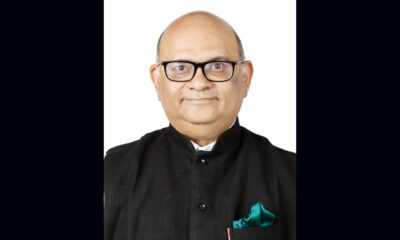
MUMBAI: Ratna Widhani has been elevated to vice president, business operations at Dentsu’s Merkle Sokrati after a nearly two-year stint as associate vice president. With over two decades of experience in retail, ecommerce, and performance marketing, Widhani brings a potent mix of operational rigour and brand-building savvy to her new role.
Her career arc spans global and Indian heavyweights — from Nike and Timberland to Bata, Royal Enfield, and Vedix — where she has driven retail turnarounds and ecommerce sprints with enviable consistency. At Incnut Lifestyle, Widhani led ecommerce marketplace relationships, pushing toplines from Rs 10 crore to Rs 40 crore in a single year across Amazon, Flipkart, Nykaa, and more.
She has also helmed business strategy and marketplace growth at brands like Age Ayurveda and National Geographic’s travel gear, fine-tuning delivery timelines, catalogue hygiene, search marketing, and margin optimisation. Her P&L grasp is rooted in years of retail buying and merchandising leadership, from launching CAT footwear across India to running the Rs 250-crore Power brand portfolio for Bata.

Widhani, an IIM Ahmedabad-certified ecommerce strategist, now shoulders broader responsibilities across Dentsu’s digital commerce clients. With a strategic eye on Amazon ecosystems, D2C scaling, and agile operations, she’s poised to push the growth lever harder in her new capacity.
Outside boardrooms, she’s a budding writer, culinary enthusiast, and proud mum to a pre-teen artist.






MAM
Kantar report shows what Indians are searching for in 2026
Google search data reveals a nation juggling aspiration and anxiety, from AI-powered religion to micro-retirements
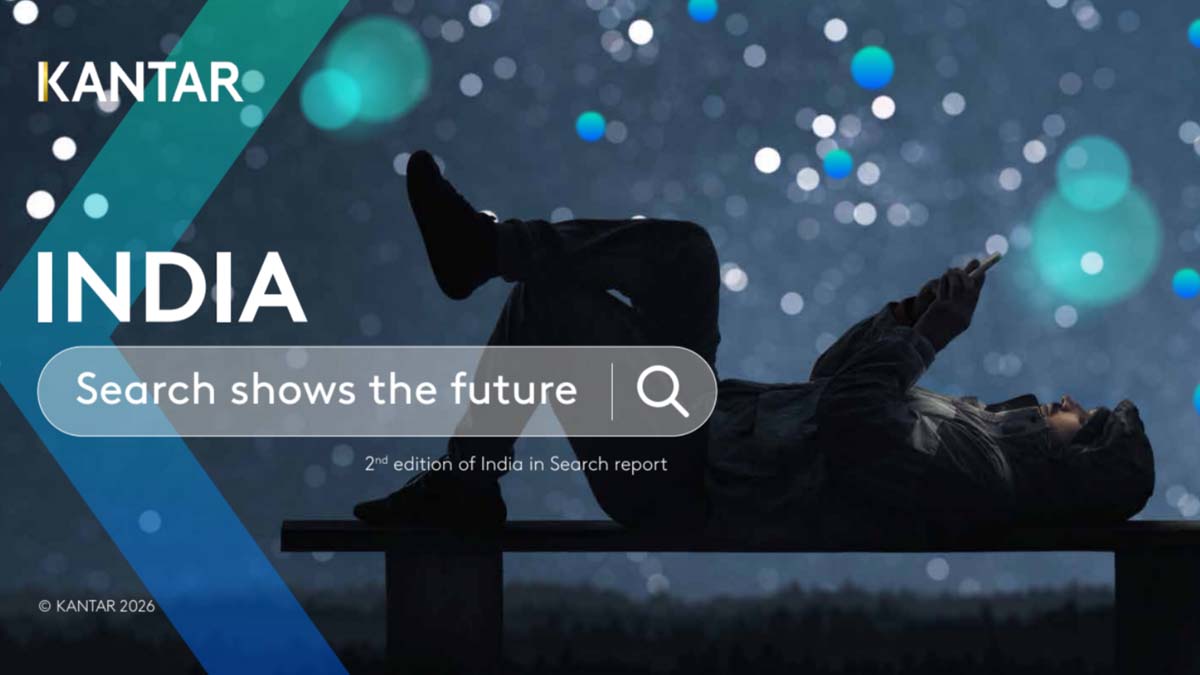
MUMBAI: India is changing fast, and its search bar is giving the game away. Kantar, the marketing data and analytics company, has released the 2026 edition of its India in Search report, mining Google search data to map how 1.4 billion people are thinking, spending, ageing and believing right now.
The report, built on hundreds of validated search topics and anchored to Kantar’s own trend framework, identifies seven cultural trajectories and 11 sectoral trends. The picture it paints is of a country pulling in several directions at once, seeking convenience yet craving slowness, chasing digital tools yet retreating into the physical world.
The headline numbers are striking. AI searches have exploded to 235 million average monthly searches, up 154 per cent year on year. Beauty searches, at 131 million monthly and growing at 3 per cent, reflect a move toward science-backed efficacy over aspiration alone. Food culture searches hit 94 million, up 7 per cent, blending convenience with experimentation. Quick delivery queries reached 29 million, up 61 per cent. Climate adaptation searches climbed 22 per cent to 14 million. Digital safety queries rose 9 per cent to 17 million.
Faith, one of India’s most enduring forces, is getting a technological makeover. Searches for Mahabharat AI surged 400 per cent, while Gita GPT rose 83 per cent. More telling still, searches for female pandits for weddings jumped 100 per cent and Navratri gift searches shot up 267 per cent. Religion is no longer purely institutional. It is being personalised, digitised and consumed on demand.
Indian parents, meanwhile, are building digital fortresses around their children. Searches for safe search filters rose 241 per cent, Android parental controls jumped 124 per cent, and Google’s Family Link gained 22 per cent. Gen Alpha is growing up in a world where curiosity is mediated through guardrails.
Ageing is being reinvented too. Searches for strength training for the elderly surged 324 per cent, perimenopause queries climbed 22 per cent, and searches for senior-friendly smartphones, specifically the iPhone senior, rocketed 1,043 per cent. Indians in their 40s and beyond are not managing decline. They are training for independence.
In a culture saturated by algorithmic speed, a counter-movement is building. Lego searches reached 165,000 a month, up 22 per cent. Searches for homemade dog treats jumped an extraordinary 122,000 per cent. The report labels this “slow joy,” a deliberate turn toward effort-based pleasure and tactile creativity.
The physical world is also making a comeback after years of digital saturation. Searches for escape rooms near the user rose 49 per cent, live music queries climbed 124 per cent, and coffee rave party searches surged 540 per cent. Indians, it appears, want to show up rather than scroll.
On identity, the report tracks a generation stepping outside traditional frameworks. Searches for Karl Marx rose 123 per cent and the term neurodivergent gained 50 per cent. Searches for borderline personality disorder jumped 421 per cent, reflecting a deeper public engagement with psychological self-understanding.
The workplace, too, is being renegotiated on workers’ terms. Job hugging, the practice of clinging to a stable role out of anxiety, surged 2,300 per cent in searches. Micro-retirements gained 800 per cent. Occupational burnout queries rose 86 per cent. Searches for AI and machine learning courses climbed 49 per cent, suggesting that even as workers seek respite, they are not standing still.
Soumya Mohanty, managing director and chief client and solutions officer for South Asia at Kantar, said search behaviour remains one of the most honest signals of national mood. “This year’s findings reflect a nation negotiating multiple tensions; speed and slowness, protection and experimentation, aspiration and anxiety,” she said. “For brands, the opportunity lies in understanding these cultural undercurrents and responding with empathy, intelligence, and cultural precision. The 2026 edition of India in Search is a strategic compass for anyone seeking to decode consumer truth.”
The report covers January to December 2025. The data, drawn from Google search topics and queries and mapped against Kantar’s proprietary trend framework, offers brands across every category a live feed of what India actually wants, not what it says it wants in a survey. In a country this complex and this fast-moving, that may be the only market research that matters.






