MAM
RAK Ceramics now embraced by Ayodhya Project – A continuing legacy


Mumbai: RAK Ceramics has a long-standing history of partnering with prestigious projects across India, including the Kashi Vishwanath temple complex, the UP PWD project, airports of Lucknow, Chennai, Bangalore, and Delhi, prominent IITs like Kanpur, Tirupati, and Patna, medical colleges like AIIMS, and important projects like BHU, ISRO, and NTPC to name a few. However, the Ram Mandir project is considered the grandest of them all. This project strengthens the relationship between Indian consumers and RAK Ceramics, highlighting the company’s commitment to excellence and consistent quality. RAK Ceramics has a state-of-the-art manufacturing facility in Samalkot, Andhra Pradesh, with 30,000 square meters of vitrified tiles and 3000 pieces of sanitary ware production daily. The company also has two joint venture plants at Morbi, Gujarat, which have played a pivotal role in India’s story.
Speaking about this, RAK Ceramics India Pvt Ltd CEO Anil K Beejawat said, “While our products are used in tens of thousands of projects globally every year, this prestigious association is one of a kind. To be associated with a project embedded in the cultural, religious, and social life of the people of Bharat is a matter of great pride for RAK Ceramics.”
As a part of the project, high-quality products are used in various key areas of the Ram Temple Complex, including the pilgrim’s facility centre, fire post, pilgrims toilet, main receiving substation, staff locker male/female, waiting hall, and UPS room, etc. These are high-footfall areas that will serve millions of visitors each year. The project demanded nothing less than the best quality of products, and that’s where RAK Ceramics prevailed.

Furthermore, Beejawat said, “The Ram Mandir at the Ram Janmabhoomi at Ayodhya is much more than a modern architectural marvel. It is the epitome of faith of all Indians the world over. It’s symbolic of the real identity of Bharat and the re-emergence of one of the oldest civilizations on this planet. We have participated in numerous globally renowned projects such as Wembley Stadium, Atlantis – The Palm, Burj Khalifa, Burj Al Arab, Grand Hyatt Washington, and iconic airports like Heathrow and Dubai. With this opportunity to be a part of the Ram Temple Complex, we have added another unmatched accomplishment to our repertoire. We are keenly looking forward to the grand opening of the temple on 22 January.”
RAK Ceramics is one of the largest ceramic brands in the world, with the capacity to produce 118 million square meters of tiles, 5.7 million pieces of sanitaryware, 26 million pieces of porcelain tableware, and 2.6 million faucets yearly at their state-of-the-art plants across the United Arab Emirates, India, Bangladesh & Europe. The company is gearing up for more exciting projects and other important associations in the near future.



Brands
Philips Avent appoints Yami Gautam Dhar as brand ambassador
New campaign urges parents to choose science-backed sterilization over traditional boiling.
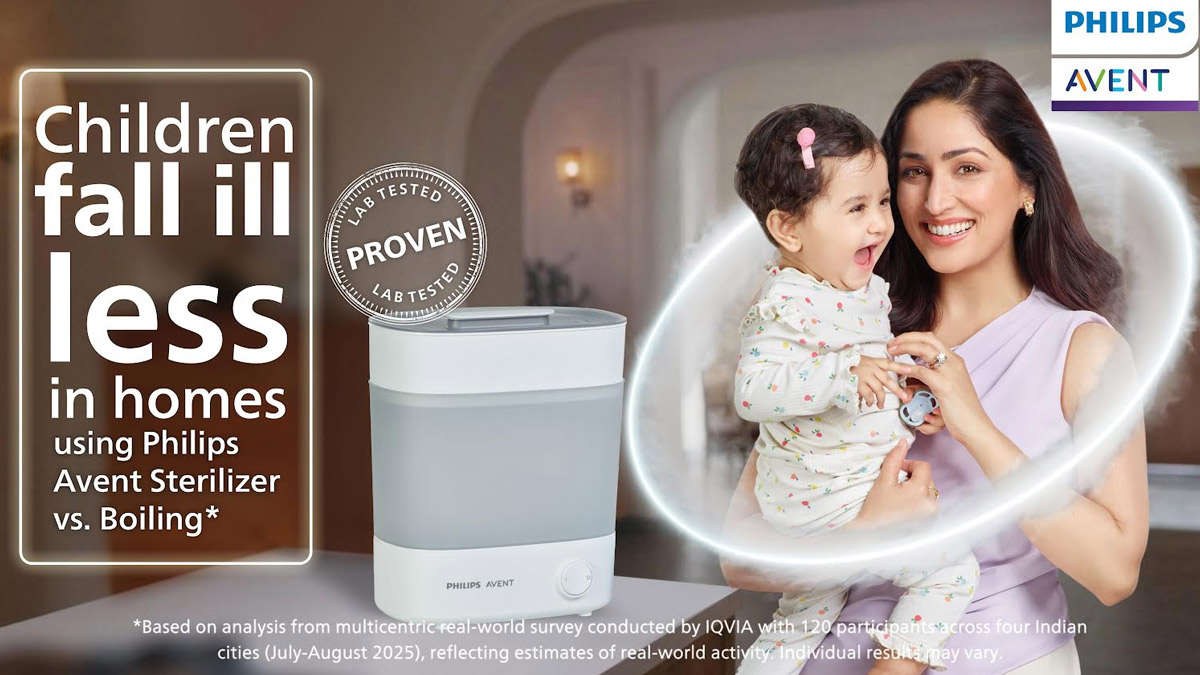
MUMBAI: Indian parents have long believed that boiling baby bottles keeps germs at bay, but Philips Avent is gently suggesting it’s time to turn up the heat on that tradition with science. Philips has launched a new campaign highlighting the importance of sterilization in infant care, positioning its Philips Avent Sterilizer as a more effective solution than the age-old practice of boiling. The campaign, which also announces acclaimed actor and new mother Yami Gautam Dhar as the brand ambassador for Philips Avent in India, draws on a powerful cultural insight: the deep-rooted Indian tradition of protecting children from the evil eye (nazar).
The film cleverly connects familiar customs such as using salt, chillies, applying a black tika, or evil eye bracelets with modern parenting realities. While these traditions offer emotional comfort, the campaign gently points out that they may not be enough to protect against germs and infections. Backed by a recent survey, Philips claims the Avent Sterilizer delivers up to 2X better germ protection compared to boiling, along with fewer reported illness episodes among infants.
Philips Personal Health, Country Head Shukla said many parents still rely on boiling without realising the difference in effectiveness. “Our survey findings indicate fewer reported infant illness episodes in homes using the Philips Avent Sterilizer. With this campaign, we want to empower parents with knowledge and solutions that combine science with care,” he noted.
Welcoming Yami Gautam Dhar, Shukla added that as a new mother herself, she brings authenticity and relatability to the message, balancing trusted traditions with informed choices.
Yami Gautam Dhar said motherhood makes every decision feel significant. “Learning about proper sterilization was an important part of my journey. The Philips Avent Sterilizer offers up to 2x better germ protection compared to boiling, making everyday baby care safer and easier. I’m proud to partner with a brand that supports parents in making informed choices.”
The Philips Avent Sterilizer is available across leading e-commerce and quick commerce platforms including Amazon and Firstcry, major baby care retailers, and select electronics stores across India.
In a country where protecting little ones is both a cultural duty and a daily ritual, Philips Avent is serving up a modern twist: keep the love, add the science because when it comes to germs, a little extra protection can go a long way.









