MAM
Radio one’s renaissance man gets bigger brief

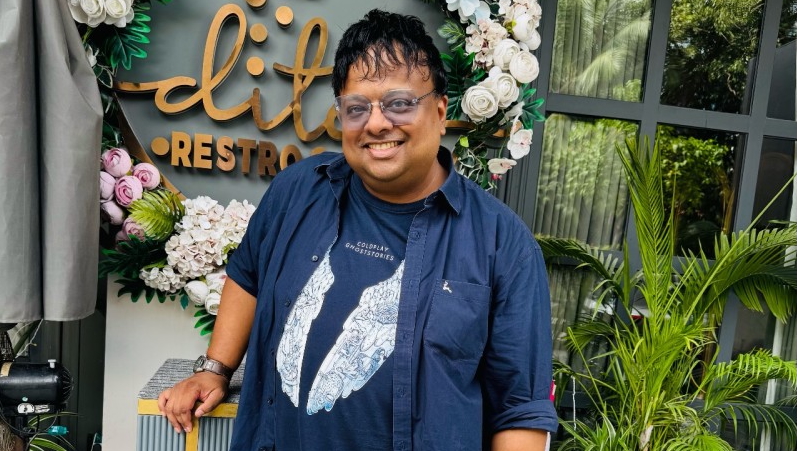
MUMBAI: Some people struggle to manage a single job. Hrishikesh Kannan is doing four—and has just been handed a fifth.
The radio veteran, better known as Hrishi K to his listeners, has spent September expanding his writ across HT Media’s entire radio portfolio. Already national brand head at Radio One, where he dreams up 360-degree branded solutions and chases revenue whilst hosting a daily morning show, Kannan now oversees brand strategy for Fever FM and Radio Nasha as well. It is an empire-building exercise that would exhaust most mortals.
The 30-year broadcasting stalwart has mastered the art of role accretion. He started as a radio host in 1994 at Times FM Delhi and never really stopped. Even as he climbed the ranks—national programming head, brand solutions architect, revenue rainmaker—he refused to abandon the microphone. Every weekday morning, without fail, he presents a show that beams across Radio One’s India network. It is a peculiar form of professional gluttony, and it appears to be working.

Kannan’s latest promotion, effective September 2025, makes him chief brand solutions officer and head of intellectual properties for HT Media’s radio business. Translation: he now devises money-spinning ideas for three radio brands instead of one, coordinates sponsorships and branded content across platforms (radio, YouTube, Instagram, live events), and still finds time to supervise national programming at Radio One. Oh, and host that morning show.
The portfolio is impressive. Radio One targets the English-speaking urban elite. Fever FM chases the Hindi heartland. Radio Nasha trafficks in retro Hindi cinema nostalgia. Each brand has its own audience, its own quirks, its own revenue streams. Kannan’s job is to extract maximum value from all three without letting any ball drop.
His track record suggests he might just pull it off. At Radio One, his branded solutions work has won awards and pulled in sponsorships for bespoke client campaigns. Revenue generation, he notes with characteristic immodesty, became “daily fodder” for him to “work on and succeed.” The man is not troubled by false humility.
Kannan also runs Radiohead, a maverick audio production outfit he founded in 2004 that churns out podcasts, audio plays, radio promos and book narrations. Because apparently running three radio brands whilst hosting a daily show was not quite enough to fill the diary.
His career spans the entire arc of Indian private radio, from Times FM’s pioneering days in the 1990s through the satellite radio experiment at WorldSpace to the current digital-plus-terrestrial era. He has worked for Radio Mirchi, All India Radio, Win 94.6 FM and just about every other frequency on the dial. If Indian radio has a living memory, Kannan is it.
Whether one man can sustain this level of professional plate-spinning indefinitely is an open question. For now, though, HT Media is betting that its busiest executive can handle an even busier brief. If anyone can turn three radio brands into a unified revenue juggernaut whilst still turning up for the breakfast shift, it is probably him.





MAM
Lego brings Messi, Ronaldo, Mbappé, Vinicius together
Campaign clocks 314 million views ahead of FIFA World Cup 2026 buzz.
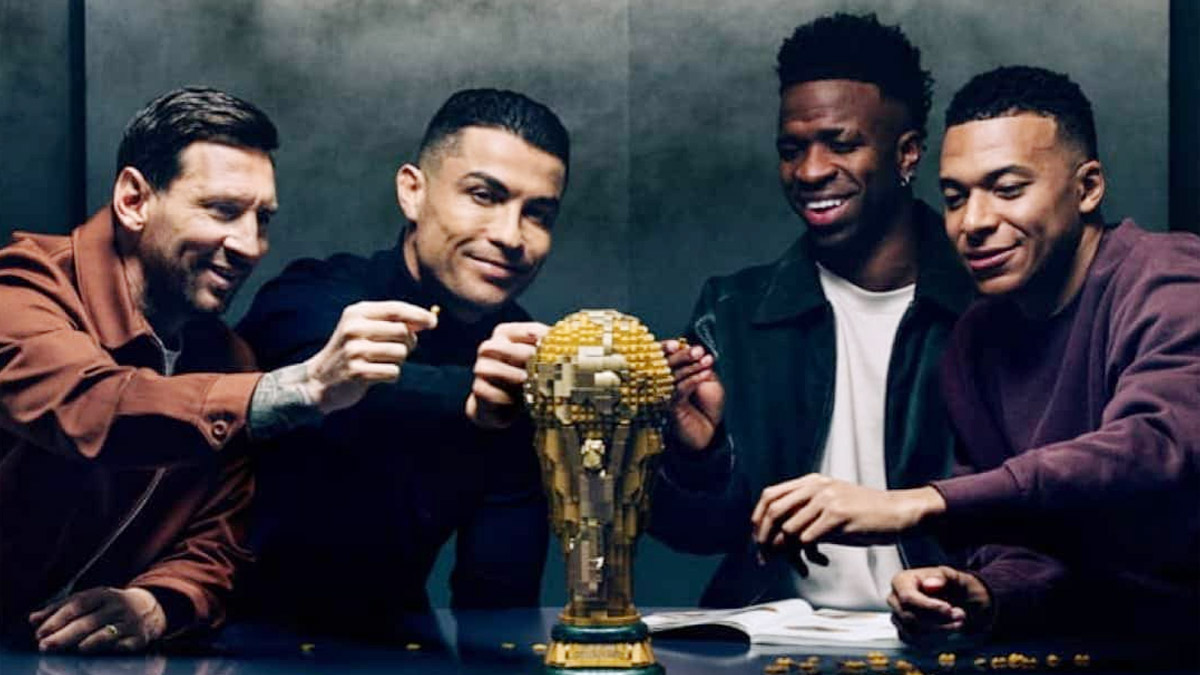
MUMBAI: Four legends, one frame and not a single tackle in sight. Lego has pulled off a crossover few thought possible, uniting Lionel Messi, Cristiano Ronaldo, Kylian Mbappé and Vinícius Júnior in a single campaign ahead of the FIFA World Cup 2026 only this time, they’re building dreams brick by brick.
Titled “Everyone wants a piece”, the campaign features the quartet assembling a Lego version of the World Cup trophy, before placing miniature versions of themselves atop it, a playful nod to football’s ultimate prize. Shared widely across social media, the ad carries a pointed disclaimer: it is not AI-generated, a subtle but telling signal in an era where even reality is often questioned.
The numbers tell their own story. The campaign has already crossed 314 million views on Instagram across the players’ accounts, with fans hailing it as a rare, almost nostalgic moment particularly for the reunion of Messi and Ronaldo, whose last shared campaign ahead of the 2022 World Cup became one of the platform’s most-liked posts.
Beyond the film, Lego is extending the play with exclusive, player-themed sets tied to each of the four stars, part of a broader football-led programme designed to ride the global momentum building towards 2026. The idea, as echoed by the players themselves, leans into the parallels between football and play experimentation, creativity, failure, and triumph.
Messi described the sets as a way to bring on-pitch moments into an imaginative, hands-on world, while Ronaldo called the transformation into a Lego figure a rare honour, blending sport with storytelling. Vinícius, meanwhile, struck a more personal note, recalling childhood moments of building with Lego and framing creativity as a universal language that transcends borders.
The timing is no accident. With the 2026 World Cup set to run from June 11 to July 19 across the United States, Canada and Mexico, and featuring an expanded 48-team format, global anticipation is already building. Argentina, led by Messi, will enter as defending champions, adding another layer of intrigue.
For Lego, the campaign does more than celebrate football, it taps into its mythology. Because when icons become figurines and rivalries turn into play, the beautiful game finds a new kind of pitch. one built, quite literally, by hand.






