MAM
R K Swamy, BBDO to end long-term partnership

Mumbai: Leading advertising agencies R K Swamy and BBDO have ended their 37-year partnership with each other. The announcement was made through an internal memo.
As per the agreement, R K Swamy will buy out BBDO’s stake in R K Swamy BBDO, and BBDO will buy out R K Swamy’s stake in BBDO India.
The partnership, which started merely after a handshake between RK Swamy and the then global CEO of BBDO Allen Rosenshine in 1985, has ended for strategic reasons.

According to an official statement, R K Swamy Hansa Group is planning to bring its various businesses under one umbrella. The group presently has over one thousand employees working on four different ventures and the split plans to bring them all under one roof.
R K Swamy Hansa Group group CEO Shekar Swamy said, “We started the relationship when R K Swamy and I shook hands with the then CEO of BBDO Allen Rosenshine, in New York in 1985. We worked for four years together on a simple understanding without a formal contract. BBDO invested in us up to a majority, which we then bought back in 2009. They have held a significant minority since then. At that point, BBDO India was created and we took a similar minority stake in it. BBDO is a great company and it has been a fantastic journey. The phrase ‘all good things come to an end’ is so true in this case.”
Adding to it, BBDO Worldwide CEO Andrew Robertson said, “R K Swamy has been a great partner. We extend to them our very best wishes and cheers as they move forward with plans for their Group. I have always admired their conviction in, and commitment to the future of India and the part they can play in it. I am sure it will be great. We have a strong agency in BBDO India. We remain committed to great work, and this will be the same in India as elsewhere.”
R K Swamy Hansa Group chairperson Srinivasan K Swamy remarked, “R K Swamy BBDO is primarily in marketing communications. However our extended activities go beyond marketing communications to span interactive and digital, media planning and buying, media and market research, CRM, data analytics and martech, healthcare communication, and continuing medical education, events, and outdoor. We are bringing these together under one structure for greater synergy. The future is very exciting as we consolidate.”





Brands
Tessolve lands a semiconductor veteran to drive its next big push
Ravi Kumar Chirugudu, who started his career at ISRO and has spent 35 years building chips and companies, joins the Bengaluru-based firm as president and chief operating officer
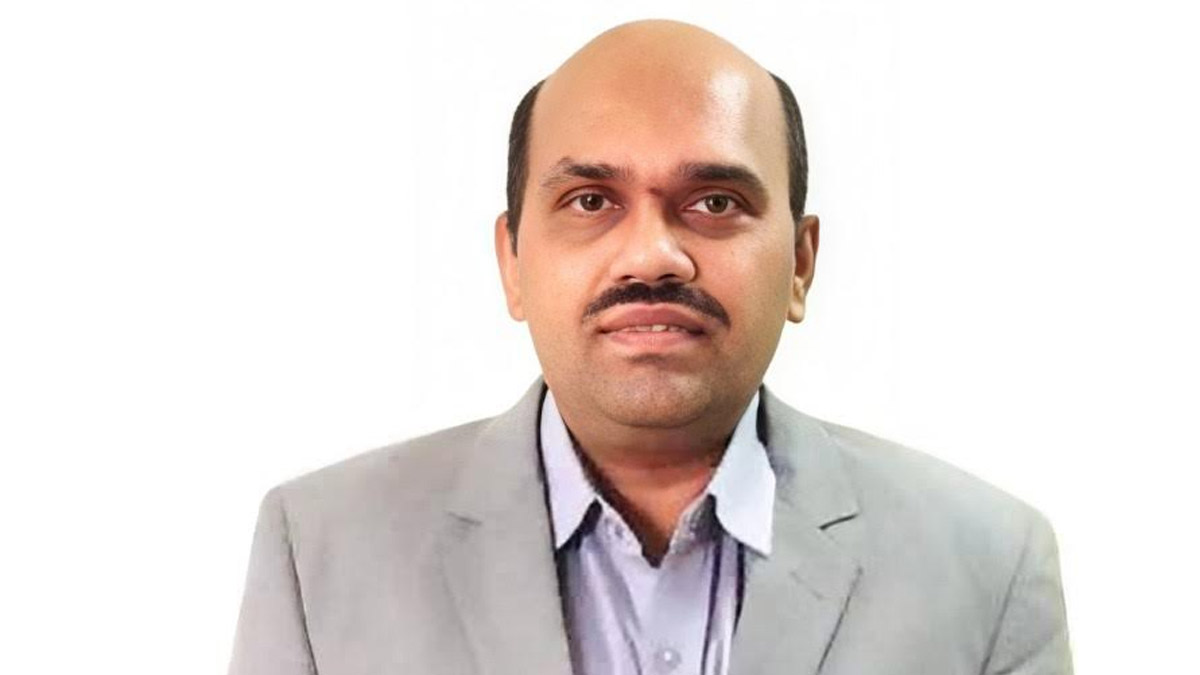
BENGALURU: Tessolve has never been shy about its ambitions. The Bengaluru-based engineering services firm already counts 18 of the world’s top 20 semiconductor companies among its clients, employs more than 3,500 engineers across 12 countries, and last year pocketed a $150m investment from TPG. Now it has hired the executive it believes can turn those assets into something bigger. Ravi Kumar Chirugudu, a 35-year semiconductor veteran who once built satellite payloads for ISRO and has since scaled engineering organisations across three continents, joins as president and chief operating officer, effective immediately.
THE MAN AND THE MANDATE
The appointment is, by any measure, a serious hire. Ravi Kumar Chirugudu comes to Tessolve after senior leadership stints at HCL Technologies, Altran and Wipro, where he managed large profit-and-loss portfolios and oversaw cross-regional teams. Over the course of his career, he has been instrumental in bringing more than 1,000 new products to market across the high-tech, energy and manufacturing verticals. Before the private sector claimed him, he began his working life as a scientist at the Indian Space Research Organisation, contributing to research and development in charge-coupled device technology and satellite payloads, a foundation that shaped everything that followed.
In his new role, he will lead Tessolve’s global growth strategy: expanding its engineering capabilities, deepening customer relationships and accelerating innovation across semiconductor and high-performance computing domains. The brief is broad, but the context is specific. Tessolve operates in the $550 billion global semiconductor market, and its recent moves, the acquisition of Germany’s Dream Chip Technologies and the TPG funding round, have sharpened both its reach and its expectations.
Srini Chinamilli, co-founder and chief executive of Tessolve, is characteristically direct about why Ravi Kumar Chirugudu was the choice:
“As we scale our global semiconductor and system engineering capabilities, Ravi’s appointment marks an important step forward. As global semiconductor demand continues to accelerate across industries, it is creating significant opportunities across the semiconductor lifecycle, from design, packaging, validation and systems integration. Ravi’s deep knowledge and leadership in this ecosystem brings the right mix of industry expertise, customer connect and execution capability, which will play a key role in strengthening our position as a trusted global engineering partner and reinforcing our market leadership.”
THE NEW ARRIVAL SPEAKS
Ravi Kumar Chirugudu, for his part, frames the move in terms of timing and culture, two factors that veteran executives tend to weigh as heavily as title or compensation:
“I am happy to join Tessolve at a time when the industry is rapidly evolving towards more complex, AI-driven systems. What stands out to me is its strong people-first culture and its commitment to bringing value to its customers. The strength of its global team, combined with its deep expertise in semiconductor innovation and next-generation product engineering, creates a solid foundation to build differentiated, scalable solutions. I look forward to working closely with the team to drive strategic growth and strengthen its role in shaping the global semiconductor ecosystem.”
The reference to AI-driven systems is not incidental. The semiconductor industry is in the midst of a structural reshaping, driven by the insatiable compute demands of artificial intelligence. For engineering services firms like Tessolve, which offers end-to-end capabilities from silicon design to packaged parts and invests in high-performance computing, high-speed interfaces, photonics and 5G, the moment is both an opportunity and a test. The company says it is well positioned to capture the next wave of industry growth. Ravi Kumar Chirugudu is now the person who has to prove it.
He came in from outer space, literally, and spent three decades learning how the semiconductor industry works from the inside out. Now Tessolve is betting that accumulated knowledge can help it cross the next frontier. In the $550 billion global chip market, the gap between ambition and execution is measured in engineering hours and leadership quality. Tessolve has just gone shopping for both.






