Brands
Q1-2016: Bajaj Corp marketing spends up 33%


BENGALURU: Bajaj Corp Limited spent Rs 40.60 crore (18.5 per cent of Operating Revenue or Total Income from Operations or TIO) in the quarter ended 30 June, 2015 (Q1-2016), which was 33 per cent more than the Rs 30.53 crore (16 per cent of TIO) in the corresponding quarter of the previous year and almost flat (less by 0.8 per cent) as compared to the Rs 40.92 crore (17.3 per cent of TIO) in Q4-2015. Please refer to Fig A below.
Note:
(1) Bajaj Corp’s Limited (Bajaj Corp) Advertisement and Sales Promotion (ASP) expense comprises of two parts – Advertisement Spends and Sales Promotion Spends. The ASP figures have been obtained from the Company’s investors’ presentations over various quarters and the Ad Exp from its financial results. Sales Promotion results have been obtained by deducting the Ad Expenses from the ASP. The figures in the investors’ presentations have been rounded off by the company and hence are assumed as approximate. Consequently the Sales Promotion figures are assumed to be approximate.

(2) Bajaj Corp Limited is a subsidiary of Bajaj Resources Limited (BRL) and is an exclusive licensee of the brands owned by BRL for a period of 99 years starting 2008.
(3) 100,00,000 = 100 lakh = 10 million = 1 crore
Marketing Expenses
The company’s Ad spends in the current quarter at Rs 15.28 crore (seven per cent of TIO) was 16 per cent more than the Rs 13.17 crore (6.9 per cent of TIO) in Q1-2015 and 0.9 per cent more than the Rs 15.15 crore (6.4 per cent of TIO) in Q4-2015.
Bajaj Corp’s Sales Promotion spends in Q1-2016 at Rs 25.32 crore (11.6 per cent of TIO) was 45.8 per cent more than the Rs 17.36 crore (9.1 per cent of TIO) in Q1-2015 and was 1.75 per cent lower than the Rs 25.77 crore (10.9 per cent of TIO) in the immediate trailing quarter.
During the fourteen quarter period starting Q4-2012 until Q1-2016 (current quarter), Bajaj Corp’s ASP has been the highest in terms of absolute rupees in the previous quarter (Q4-2015) at Rs 40.92 crore (17.6 per cent of TIO). The company’s highest ASP during the period under consideration in terms of percentage of TIO was in Q3-2015 at 19.6 per cent of TIO (Rs 40.24 crore). The lowest ASP during the period under consideration in terms of absolute rupees as well as percentage of TIO was in Q1-2013 at Rs 17.36 crore and 12.6 per cent of TIO.
Bajaj Corp’s highest Ad spends in absolute rupees during the period under consideration was in Q3-2015 at Rs 17.56 crore (8.5 per cent of TIO), while the highest Ad spends in terms of percentage of TIO was in Q1-2014 at 8.8 per cent (Rs 14.98 crore).
The company’s highest Sales Promotion spends in terms of absolute rupees during the period under consideration was Rs 25.77 crore(10.9 per cent of TIO) in the previous quarter, while the highest Sales Promotion spends in terms of percentage of TIO was in Q3-2014 at 12.4 per cent (Rs 19.70 crore).
During the fourteen quarter period under consideration, both ASP and Sales Promotion spends show a linear increasing trend in terms of percentage of TIO, while Ad spends in terms of percentage of TIO shows a slight declining trend.

Revenue, profits
Bajaj Corp TIO in Q1-2016 at Rs 219.1 crore was 14.5 per cent more than the Rs 191.32 crore in Q1-2015, but was 7.2 per cent lower than the TIO in Q4-2015 at Rs 236.17.
Profit after Tax (PAT) in Q1-2016 at Rs 47.51 crore (21.7 per cent of TIO) was 19.9 per cent more than the Rs 39.62 crore (20.7 per cent of TIO) in Q1-2015 but was 12.7 per cent lower than the PAT in Q4-2015 at Rs 54.42 crore (23 per cent of TIO). PAT in the previous quarter was the highest in absolute rupees during the period under consideration. PAT in terms of percentage of TIO was highest at 28.5 per cent (Rs 42.20 crore) in Q3-2013.
During the fourteen quarter period under consideration, both TIO and PAT in absolute rupees show a linear increasing trend, while PAT in terms of percentage of TIO shows a linearly declining trend.

Brands
Bajaj Corp’s mother brand is Bajaj with sub brands/products such as Bajaj Almond Drops Hair Oil, Bajaj Kailash Parbhat Cooling Oil, Bajaj Brahmi Amla Hair Oil, Bajaj Amla Shikakai, Bajaj Jasmine Hair Oil, Bajaj Kala Dant Manjan, and creams, soaps, face washes and face scrubs under the brand name Nomarks.
Market Share of Hair Oils
The company is a market leader in the light hair oil and the almond drop hair oil categories in India as per its investor presentation. Bajaj Corp claims a market share in the country of 58.9 per cent in terms of volume Q1-2016, same as the market share in FY-2015 in the light hair oil category. In value terms the company claims a 60.9 per cent, up 20 basis points as compared to the 60.7 per cent during fiscal 2015. On an all India basis, Bajaj Corp reports proportion of 62.8 per cent urban market share and a 37.8 per cent rural market share for light hair oil in terms of volume.
In the previous fiscal, the company’s market share had improved by 100 basis points in terms of volume from the 57.9 per cent in FY-2014. In value terms, the company’s market share had increased 120 basis points as compared to the 59.5 per cent in FY-2014.
Light hair oil category in India has grown by 6.9 per cent in volume and has grown by 10.2 per cent in value Q1-2016 as compared to the corresponding year ago quarter.
In the Almond drop hair oil category, the company claims an urban market volume share of 59 per cent in the country with an urban/rural market share of 56.5 per cent and 63.1 per cent respectively. Growth rates for the current period for almond drop hair oil have not been mentioned by the company in its investor presentation for Q1-2016.
Click here to read unaudited financial results



Brands
GUEST COLUMN: Beyond layoffs, India emerges as creative-tech hub
Shift in hiring and AI-led workflows is reshaping global media and marketing
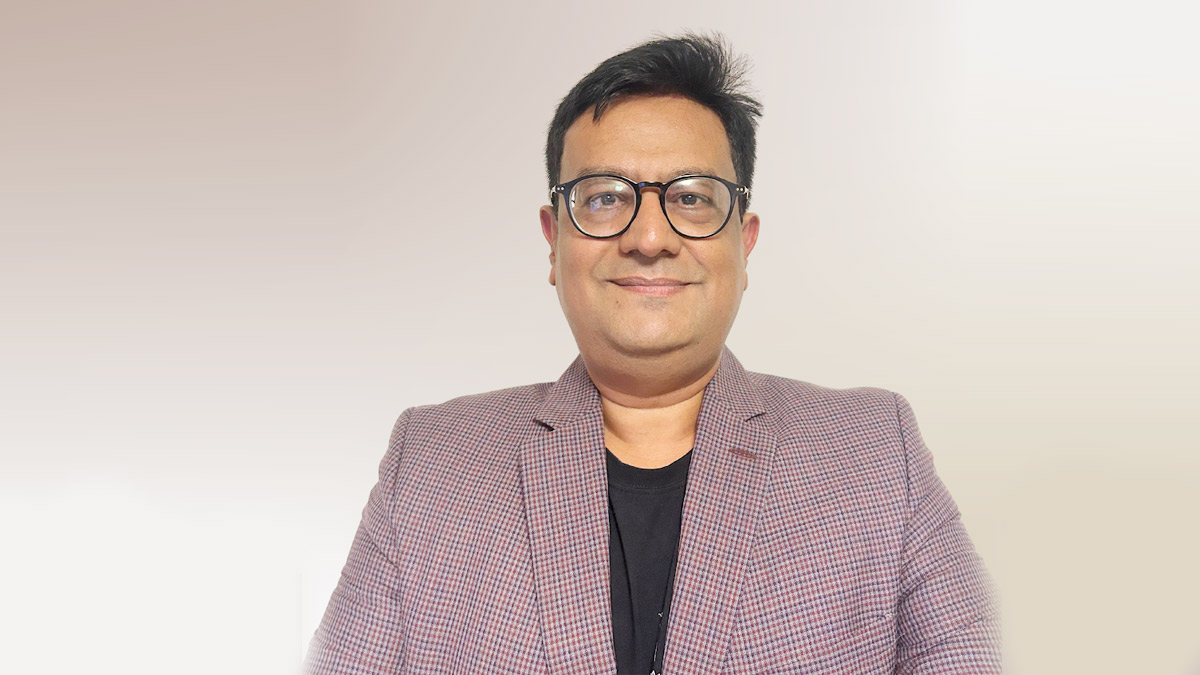
MUMBAI:The global narrative around layoffs in media and technology may suggest contraction, but a deeper transformation is reshaping how creative and tech capabilities are built and deployed. For Sanjil Zaveri, general manager – India at Brandtech+, this shift is less about decline and more about redistribution, one that is positioning India at the centre of a new global operating model. In this piece, Zaveri explores how integrated workflows, AI-powered production, and evolving talent demands are redefining the creative-tech ecosystem, why India is emerging as a strategic hub for global content and innovation, and what this means for the future of media, marketing, and talent.
The global headlines around layoffs in technology and media continue to dominate industry conversations. From platform restructuring to reduced marketing spends, the narrative suggests a slowdown across the creative and digital ecosystem.
But beneath these headlines, a different shift is underway, one that is quietly redefining how creative and technology work is delivered globally.
Hiring is not disappearing; it is being redistributed. And India is increasingly at the centre of this transition.
A structural shift in the creative-tech ecosystem
The media and marketing landscape is undergoing a fundamental reset. Brands today are moving away from fragmented agency models and siloed teams toward more integrated, agile structures.
Creative, technology, and media are no longer operating in isolation. Campaigns are now built through connected workflows, where ideation, production, and optimisation happen simultaneously.
This shift is forcing organisations to rethink where and how teams are built. Increasingly, the focus is on capability, speed, and scalability, rather than geography alone.
India’s emergence as a creative-tech hub
India’s role in this evolving ecosystem has expanded significantly.
Traditionally positioned as a backend execution market, India is now playing a far more central role in global campaign delivery. Teams based here contribute not just to production, but also to strategy, content development, and performance optimisation.
This is particularly relevant in a market where content velocity has increased dramatically. With the rise of digital platforms, OTT, and always-on marketing, brands require high volumes of creative assets without compromising on quality.
Industry insights from Ernst & Young point to India’s growing strength as a global content hub, while NASSCOM continues to highlight the scale and depth of the country’s digital talent pool. Together, these factors create a compelling case for India as a foundation for more efficient, integrated content ecosystems serving global markets.
A global company’s perspective on India
At Brandtech+, this shift is already shaping how we operate.
As a global organisation working across creative, marketing, and technology, our talent strategy is increasingly driven by capability rather than location. India has therefore become a key market for both scale and strategic talent.
In the first quarter of this year, we have significantly accelerated hiring in India across creative, technology, and operations roles, moving well ahead of plan and continuing to build strong momentum. We are actively hiring across multiple functions, with India playing a central role in delivering integrated creativetech solutions for global brands.
These signals reflect a broader change in how global companies view India, not as a delivery centre, but as a hub for connected creative, data, and technology capabilities.
“While much of the global narrative is centred on contraction, what we are seeing in India is a different kind of growth,” says Sanjil Zaveri. “As a global company, we are investing in talent that can work across creative, data, and technology, because that is where the future of marketing is headed.”
AI and the new content economy
Artificial intelligence is playing a critical role in enabling this transformation.
In today’s media environment, the demand for content has scaled exponentially. Brands are expected to create, adapt, and optimise creative assets across multiple platforms in real time. The scale of this demand would be difficult to sustain through traditional production models alone.
AI is helping make this possible.
Rather than replacing roles, AI is streamlining workflows, automating repetitive tasks, accelerating production timelines, and enabling faster experimentation. This allows creative and strategy teams to focus on higher-value outputs.
“AI removes the mundane and elevates the meaningful,” says Zaveri. “It allows teams to focus on ideas and storytelling, while technology drives efficiency.”
For media platforms and advertisers, this is redefining how campaigns are built, moving from linear production cycles to continuous, data-driven content creation.
What this means for media talent
For professionals across media, advertising, and digital, this shift is redefining skill requirements.
The traditional boundaries between creative, media planning, and technology are blurring. Content creators are expected to understand performance metrics. Media professionals are working more closely with data, platforms, and automation. Collaboration across disciplines is becoming a core skill.
This is creating demand for hybrid talent, professionals who can operate across disciplines and adapt to rapidly changing workflows.
India’s talent ecosystem is particularly well suited to this environment. With strong capabilities across content, design, engineering, and analytics, the market offers a unique combination of scale and versatility.
Importantly, global exposure is no longer tied to relocation. Professionals in India are increasingly working on international brands and campaigns, collaborating with teams across markets in real time.
Looking ahead: India at the centre of the reset
What we are witnessing today is not a temporary phase; it is a structural reset in the global creative-tech ecosystem.
Layoffs may continue to shape short-term narratives, but they do not capture where long-term growth is being built. That growth lies in new operating models, integrated workflows, and markets that can deliver both scale and innovation.
India is firmly at the centre of this transformation.
As global media and marketing organisations continue to evolve, India’s role will only become more critical, not as a support market, but as a strategic hub for content, creativity, and technology-led innovation.
The future of creative-tech will be defined by collaboration, speed, and adaptability. And increasingly, it will be shaped from India.
Note: The views expressed in this article are solely the author’s and do not necessarily reflect our own.






