AD Agencies
Publicis Global Delivery was awarded Best Workplace in Media, India by Great Place to Work

Mumbai – Publicis Global Delivery (PGD) India, part of the Publicis Groupe India, has announced that it is ranked among the Best Workplaces in Media 2024 by Great Place to Work®. This marks the third consecutive year that PGD India has been included in the winning list for their workplace practices, which is a recognition of PGD India’s steadfast efforts to foster a high-trust, high-performance work culture. Additionally, PGD India also won the Great Places to Work certification in 2024
PGD India is a world-class capabilities centre of expertise catering to international markets on a full spectrum of media, data, technology, creative and production services. It is one of the largest capability centres of the Groupe with a presence across Mumbai, Gurgaon, Pune, Bengaluru, and Hyderabad. It also has one of the largest teams of certified professionals on various global platforms.
“PGD India, one of the largest Delivery Centres within the Publicis Global Delivery network, has been the backbone of PGD from day one. Delivering expertise of Publicis’ capabilities at scale with an unwavering commitment to excellence. Our talent, teams, and culture drive our business and enable industry-defining work each day. PGD India being recognised as a Best Place to Work for a third year in a row highlights our commitment to our people and the enthusiasm and passion they bring to our business and Publicis clients.” said PGD Global chief delivery officer Theodore Hadjis.

“Earning a spot on the Best Workplace list means that PGD India has surpassed rigorous benchmarks, establishing ourselves as one of the best workplaces among our peers across the industry. Receiving this honour thrice in a row highlights our continued commitment towards prioritising a people-first culture, and the advancement and growth of our talent. It is a continuous journey, and we are proud of our efforts in building an inclusive, diverse, collaborative, and cohesive work culture at PGD India. Recognition such as this is a wonderful testament to our commitment in building a progressive, exceptional workplace.” said PGD India CEO Sunish Jose.


AD Agencies
AdTrust Summit 2026 to examine trust, AI and Gen Alpha in advertising
Two-day summit in Mumbai to explore ethics, regulation and the future of advertising trust
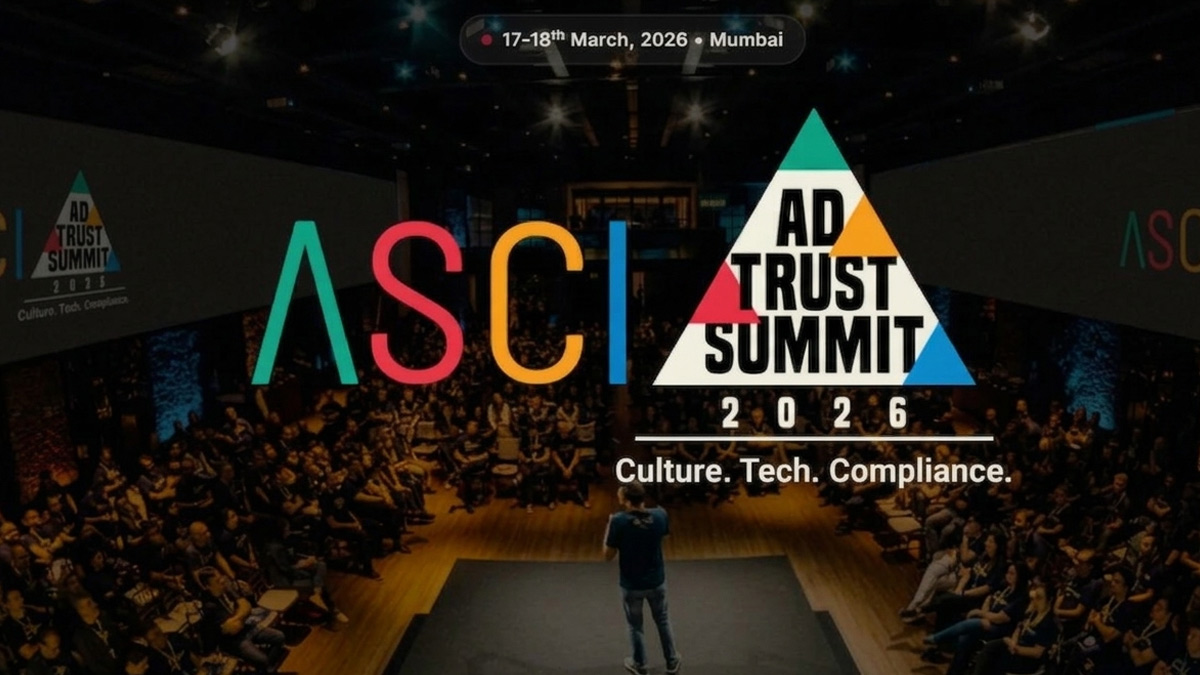
MUMBAI: At a time when advertising is navigating a delicate trust deficit, the Advertising Standards Council of India is preparing to bring the industry to the table. On 17 and 18 March, the body will host the inaugural AdTrust Summit 2026 in Mumbai, a two-day gathering designed to spark conversation around responsibility, regulation and credibility in modern advertising.
The summit, to be held at the Jio World Convention Centre in Bandra Kurla Complex, will bring together leaders from advertising, media, technology and policy to examine how brands can build trust in a marketplace increasingly shaped by algorithms, influencers and artificial intelligence.
In an age of deepfakes, dark patterns and blurred lines between content and commerce, the question is no longer just how brands capture attention, but whether audiences believe what they see. The AdTrust Summit aims to unpack that challenge.
Day one will turn its attention to the youngest digital natives. Titled Decoding Gen Alpha, the session will unveil ‘What the Sigma?’, a study by ASCI and Futurebrands Consulting that explores how children growing up in a hyper-digital environment encounter advertising and commercial messaging.
The report presentation will be delivered by Santosh Desai, founder and director at Think9 Consumer Technologies and a social commentator known for his insights into consumer behaviour. The discussion that follows will attempt to decode how Gen Alpha consumes media, interacts with brands and navigates the growing overlap between entertainment and marketing.
In a move that mirrors the subject itself, two Gen Alpha students will also join the conversation, offering a rare perspective from the generation advertisers are trying to understand.
The second panel of the day will shift the focus from observation to implication, asking what the report’s findings mean for brands, agencies and society. Speakers include Karthik Srinivasan, communications strategy consultant; Preeti Vyas, president at Mythik; and Abigail Dias, associate president planning at Ogilvy. The session will be moderated by Sonali Krishna, editor at ET Brand Equity.
Day two moves from insight to regulation. Under the theme From Compliance to Trust, ASCI will release its Ad Law Compendium, a comprehensive guide to India’s advertising regulations.
The day will open with a keynote by Sudhanshu Vats, chairman at ASCI and managing director at Pidilite Industries, followed by a chief guest address by Sanjay Jaju, secretary at the Ministry of Information and Broadcasting.
Legal experts from Khaitan & Co., including Haigreve Khaitan, senior partner, and Tanu Banerjee, partner, will present an overview of the current advertising law landscape in India and examine whether existing frameworks are equipped to deal with emerging technologies and formats.
Subsequent panels will explore issues increasingly shaping the industry’s ethical compass. Conversations will range from the limits of persuasive design and the rise of dark patterns, to the growing scrutiny brands face from digital creators and consumer watchdogs.
One session will also feature Revant Himatsingka, widely known online as the Food Pharmer, whose critiques of packaged food brands have sparked debate around transparency and corporate accountability.
Later discussions will turn toward media literacy among Gen Alpha, asking how children can be equipped to navigate a digital world where gaming, content and commerce are becoming indistinguishable.
The summit will conclude with a final panel on the future of advertising, bringing together voices from agencies, legal circles and technology platforms to discuss how innovation, intelligence and integrity can coexist.
For an industry built on persuasion, trust has always been its quiet currency. But as audiences grow more sceptical and digital ecosystems more complex, that currency is under pressure.
Events like the AdTrust Summit suggest the advertising world knows it cannot afford to take credibility for granted. The real challenge now is turning conversation into commitment.