Ad Campaigns
Printer TVC shows printing cheaper than price of toffee per page

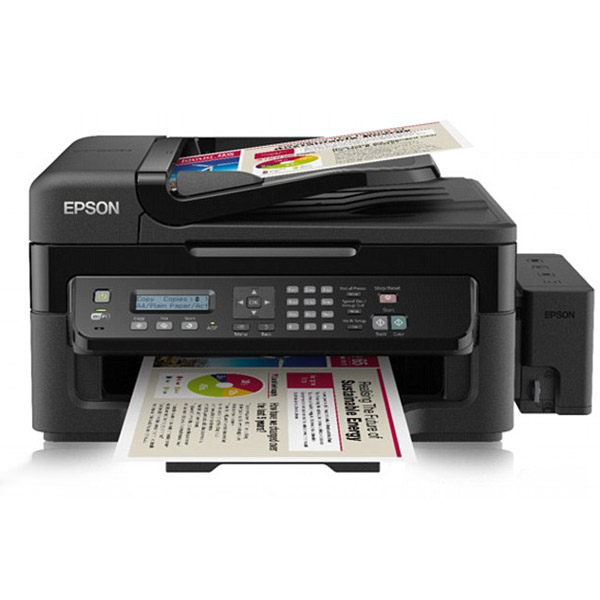
New Delhi: Digital Imaging and printing solutions company Epson has launched a new TVC for what it terms as its ‘revolutionary’ InkTank Inkjet printers in India.
The new commercial targets value-conscious working professionals with children who have their own printing needs (SOHO, small office, self-employed) and who are keen for their child to be ‘ahead’ and to ‘have the best’. The key message for the TVC is focused on the unified cost advantage (8 and 28 paise per print), which now allows everyone to print without any worries.
Epson says its ultimate objective is to develop a brand Image as a ‘lifestyle technology brand’ and to grow brand affinity (or ‘likeability’) with a wider audience base. The creative idea was intended to communicate with anyone who has a printing requirement, across segments, with a bias towards the Home/SOHO/Professional segment.

The television commercial was conceived by Bangalore-based OpusCDM, Epson’s Brand and Marcom agency for several years, and produced by Mumbai-based Equinox.
Epson India Brand & Communication senior general manager Tushad Talati said, “Having made massive, successfully inroads into the business and commercial market with our InkTank printers we felt the time was right to open up the larger home market to the benefits of ultra-economical and convenient Epson InkTank printing. While a large number of evolved consumers had caught on early and were already buying Epson InkTank printers for home use, we needed to get the message out to a larger base of home users in a simple, effective and easily understood way. The “Keya” commercial very simply and effectively conveys the benefit of low cost printing to the home user while continuing to appeal to the existing base of commercial and business users. The response to the ad so far has been phenomenal and we expect to build on our current market share of 51% in the Inkjet printer segment.”
OpusCDM strategy planning Nagesh Manay said, “Printers is a challenging category – consumer involvement is low, consumable buying is an issue, and it historically ran on price points. Epson took a bold leap by introducing InkTanks at a higher-than-traditional price point, forcing a dramatic shift in the category. The key in this film is, of course, the toffee that Keya holds. We discovered that people don’t really know how much it costs for a print. Everyone’s been using expensive cartridges but never quite knew how many prints it gave them and at what cost. The toffee is the trigger for low cost, and it’s something everyone can relate to. Keya is more than just a little girl. She is a metaphor for the freedom we wish to exercise everyday. Smart and obvious. This is where our creative connect from product to consumer was. Not to have to say that choosing an Epson is the smart and obvious thing to do, but to show it. That’s why she has an attitude that’s easy and witty. Keya is relevant even to the little DTP shop owner. We had quite a task finding the right actor for the film, someone who could pull off the conversation with the somewhat absurd, theatrical context and inter-play. We needed a natural, instinctive child who is not fazed by moment, and Nitin Parmar, the director, did a great job in making it all come alive.”
While the idea was to convey that the freedom to print without thinking or worry is now truly here, it was essential to lift the low cost per print advantage to an everyday benefit. This is done with a little girl called Keya, who clearly has a mind of her own. She has an almost normal conversation with an unseen adult male, but instead of responding to his questions with her voice, she uses words and symbols on printouts, holding them up instantly, without thinking.
This drives home the ease of printing, emphasized by her saying in one of her printouts – “it’s more fun this way”. Finally, when she is asked about why she is wasting her father’s money, she whips out a colourful condiment from her pocket, licks it, and says, “no no, it costs less than my toffee!” This introduces the benefit in a simple way for everyone, people young and old and across regional boundaries, to understand. This was an important consideration in the creative approach. Keya has today become the “cheeky toffee girl with the infectious laugh” as the commercial, which has been aired in multiple languages, has resonated with consumers across various markets.
A combination of media – with TV for affinity, and Print and Online for rationale, creates a complete, optimum, emotio-rational connect. On the ground, the Keya campaign has been extended into retail as well.
With a market share of close to 80% in the Business and Commercial segments, Epson intends through its new television commercial to expand its appeal to the Home & SOHO segment as well, without disturbing its core business and Commercial franchise.



NATIONAL: Amazon Ads has laid out a sharply tech-led vision for the advertising industry in 2026, arguing that artificial intelligence, streaming TV and creator partnerships will combine to turn brand building into a more precise, performance-driven business.
At the heart of the shift, the company says, is the fusion of AI with Amazon’s vast trove of shopping, browsing and streaming signals, allowing advertisers to move beyond blunt reach metrics to campaigns designed around real customer behaviour.
“The future of advertising is not about reaching more people, but the right people with messages that resonate,” said Amazon Ads India head and vice president Girish Prabhu. “By combining AI with deep customer insights, we help brands move from broadcasting campaigns to having meaningful conversations wherever audiences spend their time.”
One of the biggest changes, according to Amazon Ads, will be the collapse of the wall between media planning and creative development. Retail media, powered by first-party data, is increasingly shaping everything from brand discovery to final purchase, pushing marketers to design campaigns around audience insight rather than internal instinct.
AI is also moving from a support tool to a creative engine. Agentic AI, which automates and accelerates production, is expected to make high-quality creative accessible even to small businesses, compressing weeks of work into hours and giving challengers the ability to compete with larger brands on speed and scale.
Behind the scenes, AI-driven analytics will take on a bigger role in campaign optimisation, identifying patterns, spotting opportunities and recommending actions that would previously have required teams of analysts.
Streaming TV is another big battleground. With India’s video streaming audience now above 600 million and connected TV users at 129.2 million in 2025, advertisers are set to treat streaming not just as a branding channel but as a performance engine, measured increasingly by sales, sign-ups and bookings rather than just reach.
Finally, Amazon Ads sees creators and contextual advertising reshaping how brands tell stories. Creators will act less like influencers and more like long-term partners, while scene-aware ads on streaming platforms will allow brands to insert hyper-relevant offers into the flow of what viewers are watching.
Taken together, Amazon Ads argues, these shifts mark a move towards advertising that is both more human and more measurable, where AI handles the complexity, and creativity does the persuading.






