Brands
Pokemon Go craze: A brand insight

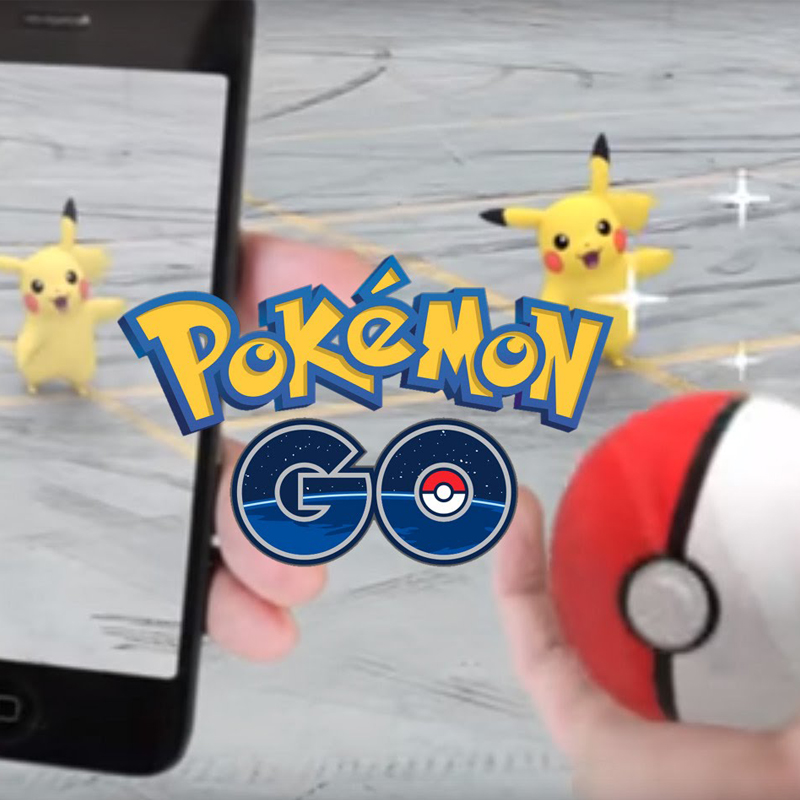
MUMBAI: They are on the streets, right outside posh coffee shops, in temples and churches, in your offices, on your desk and are even invading your bedrooms, seducing you to catch ‘em all. And if you still don’t know about this illusive ‘them’, you are missing out on one of the biggest ‘game’ changers of this decade : this phenomenon called Pokemon Go.
Quite like Schrodinger’s paradox, Pokemons are everywhere and nowhere at the same time — thanks to the ingenious fusion of Augmented Reality and Google Maps with gamification devised by California based former Google startup Niantic.
Folks at Niantic remastered their existing idea of a mobile game based on augmented reality (Ingress) and launched it on the back of the twenty year of Pokemon franchise that Nintendo co-owns. Nintendo, together with its affiliate Pokemon Co. and Google, last year had invested in Niantic. The game is both an opportunity as well as a leap of faith for Nintendo in the mobile game market given its initial reluctance to move away from console driven games.

Eat, Catch, Play, Repeat:
For the gaming and mobile marketing fraternity and brands at large it is a success story worth taking notes of. Since the game launched in select countries on 6 July, it has reportedly rivaled social media giant Twitter in daily use as per SimilarWeb, and jumped to become the most downloaded app on Google Play in the US.
Nintendo basked in this sudden craze for the game and saw its stock pricing skyrocketing and gaining 86 percent since its US launch earlier this month, adding $39 billion to its market value as of Tuesday’s stock market close as reported by Reuters. And that is after the prices showed cooling down after the initial doubling of the share rates. Nonetheless, Nintendo has surpassed long time rival and technology ace Sony.
All this, and the app hasn’t even been officially launched across the world and is currently officially limited to only 26 countries.
But that hasn’t stopped Pokemon lovers and Nintendo loyalists from downloading the app outside Google Play and iTunes. India too has joined the bandwagon.
Suddenly teenagers and young adults are walking away from stores with discounted limited edition items in a mall and flocking to a mirage-like ‘Pokestop’ that is only virtually visible to them through their smartphones. People are taking breaks during lunch hours to hunt for Pokemons around their workplace.
In fact, the game’s popularity has also earned it a viral ‘Pokemons Of New York’ page on the social media, quite in tandem with the famous ‘Humans Of New York.’ Creators of the page — Abhishek Singh Kadian, Avish Revis, Abhi Nash, and Aakash Shah hailing from different parts of the country — share that their largest traction come from India.
“Given the initial response brands are on my mind, but we need to feel that we have earned them (followers) enough. Therefore, first we want some good content out there,” shared Kadian.
If all these facts and figures don’t impress you, wait till you hear of the number of marketing possibilities the game has for your brand.
A dream IP for marketers:
According to MindShift Interactive creative lead Randal Gomes, the game may have made records on online usage, it’s the retail store owners and brands with an offline touch base with consumers that will reap the most benefits.
“From a brand perspective, there is an advantage to those who have an offline store. Because there is this thing called Pokestops in the game that attracts gamers to it. These are real world locations and could be anything from coffee shops to malls. In other words, stores or shops who don’t have a Pokestop have a disadvantage. Several shops in the US are doing some innovative ongoing marketing campaigns based on this. They are inviting people to come play Pokemon at the shops while they try out the products, and are even giving discounts and other gratifications to those who catch them. It is a wonderful way to engage consumers.”
Another fine example how brands are leveraging the Pokemon fandom to gain traction for themselves is GOQii. The California based fitness band manufacturer founded by former Indiagames head honcho Vishal Gondal has used the game’s requirement for people to walk and hunt and given it a fitness twist. “We are organising Pokemon related events throughout the city where people are expected to turn up with the game installed and walk around to catch Pokemon Go. Along with that we have ‘Poke Trainers’ who will make you exercise and get healthy. Since GOQii is all about being fit and healthy, we are encouraging people to play the game to start walking,” shared Gondal.
Nintendo is aware of the game’s implications for the advertising world and is quickly acting on it to monetise it in every possible way. Niantic CEO John Hanke has asserted that Niantic would augment the already significant revenue that the game is making from in-app purchases by allowing selective partners to become “sponsored locations” in the game. A sponsor can create “gyms” — where Pokémon can be battled or trained by gamers — at their retail store or locations, a move that could drive real-world traffic and potential sales to their business.
Nintendo is in fact launching the app in Japan with its first sponsored location. McDonald’s will be the first launch partner in a tie-in that will see its 3,000 plus fast food restaurants across Japan become gyms for would-be Pokémon collectors. Given the talks of brand integration between the fast food giant and Pokemon Go and it’s Pokemon-branded Happy Meal sales, McDonald’s share prices in Japan have already seen positive growth. It is a take away for all the brands, especially those that target kids, to jump on the gravy train to sign merchandising deals with Pokemon Go.
In India, the merchandising and licensing agency owned and operated by Jiggy George has already prepared a road map for licensing different product categories once Pokemon launches. The agency is the answer to brands’ Pokemon Go related merchandising requirements, as it is representing the franchise in India and South Asia. Recently, George, through an informal post on social media, has called in brands to add ‘Pokemon Power’ to their portfolio.
Meanwhile, there are also some marketers who prefer to wait out this initial craze to find real value to invest time, money and creative energy on the property.
“Pokemon Go per se may or may not become a fad. More likely the former. So it is not about what would now brands do with this new shiny thing. What Pokemon Go has done is to bring AR back into the mainstream conversations. Developers and marketers will now explore possibilities of AR in creating consumer engagement programs. In the short term, as the fever of Pokemon Go peaks, brands might use tactical methods to drive footfalls to designated areas or leverage some possibilities with virtual currencies,” said Maxus South Asia chief digital officer Unny Radhakrishnan.
Pokemon trainers in the industry:
As the old marketing gurus used to say, best marketing practices comes from real life experienced. Therefore, many within the industry are trying the game first hand.
“We had some business visitors yesterday who said on their way to us somewhere around UB city etc, they also caught a few Pokemons. My nieces are going crazy over it as well. When Pokemon first happened to India in the 90s, I was a twenty something boy. It is interesting that the makers have revived what was an old video game on the back of smartphones and made it app based and therefore more relevant for today’s generation. Would Kingfisher do any integration with the franchise or do anything Pokemon related? Too early to say. Honestly the game became popular overnight so we haven’t really sat around to discuss it in detail… so for now, we can’t tell,” United Beverages marketing SVP Samar Singh Sheikhawat shared.
Folks at different agencies too are trying their hands at the game. Rediffusion Y & R India president Dhunji S Wadia, informed that several at his agency have been enjoying the game. “Although I haven’t gotten into it very seriously, I have been fooling around the game with all the online content,” Wadia said. “It is definitely a rage. It is spreading like a wildfire in the States, and soon catching up in India. From what I have observed, two kinds of people are trying it out: the loyal teens and twenty somethings who are seriously getting into it and the adults and others who are emulating the former because it is cool to be associated with the game.”
Leo Burnett India CCO Raj Deepak Das blamed his laziness for not being able to download the app. “Have been travelling a lot lately therefore haven’t really got around to download it.” But Das is on top of the game on anything Pokemon Go related. “I am constantly following the development on Twitter and Facebook. I am reading many interesting stories related to this and it is all very exciting,” Das revealed.
While Das needs a spark of self motivation to join the hunt for Pokemons, the industry continues to keep its eyes trained on where Pokemon Go is headed. Some are already projecting its fate in India post the promised launched in September 2016, and are ‘hatching’ strategies to make the most of it.





Brands
Thermocool rolls out Navratri campaign on trains and stations
Nine day digital push blends devotion and storytelling for travellers
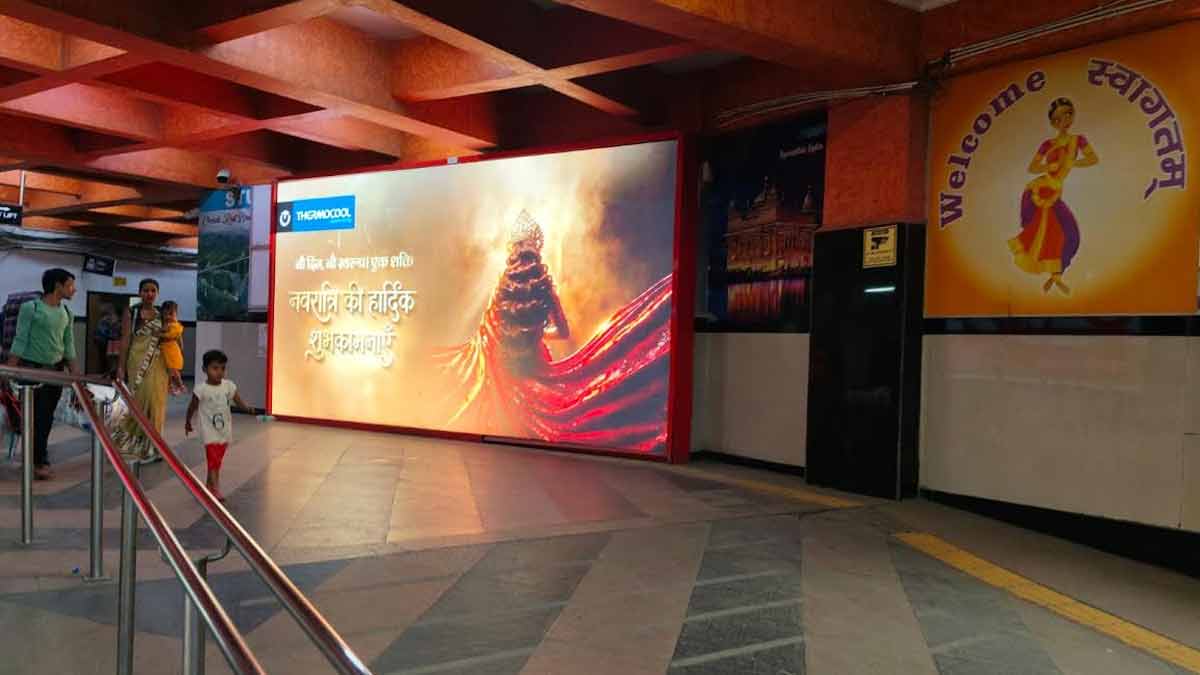
NEW DELHI: Thermocool Home Appliances has launched a high-visibility digital campaign during Navratri, turning railway stations and trains into storytelling spaces that blend culture with brand engagement.
The nine-day campaign spans key high-footfall locations including Katra, Anand Vihar, Gorakhpur, Prayagraj and Moradabad, along with the Vande Bharat Express on the Delhi-Katra route. Travellers encounter the campaign across station screens, concourses and onboard infotainment systems, making it hard to miss.
What sets the initiative apart is its narrative approach. Each day of Navratri is dedicated to one of the nine forms of Goddess Durga, with digital content explaining the significance and stories behind each day. The result is a campaign that does more than advertise, it informs and engages passengers in the middle of their journeys.
For director of sales and marketing Tanuj Gupta, the idea was to go beyond visibility. He noted that while Navratri is widely celebrated, awareness of its deeper meaning is often limited, and the campaign aims to bridge that gap in a simple and accessible way.
By tapping into high-traffic transit spaces, Thermocool is placing its message where audiences naturally gather, from busy platforms to train compartments. The repeated exposure across these touchpoints is designed to build familiarity while creating a more meaningful connection with consumers.
In a season marked by devotion and festivity, the campaign finds a clever middle ground. It turns everyday travel into a cultural moment, where storytelling travels alongside the passenger.